Metabolomic Quantitative Trait Loci (mQTL) Mapping Implicates the Ubiquitin Proteasome System in Cardiovascular Disease Pathogenesis
- PMID: 26540294
- PMCID: PMC4634848
- DOI: 10.1371/journal.pgen.1005553
Metabolomic Quantitative Trait Loci (mQTL) Mapping Implicates the Ubiquitin Proteasome System in Cardiovascular Disease Pathogenesis
Abstract
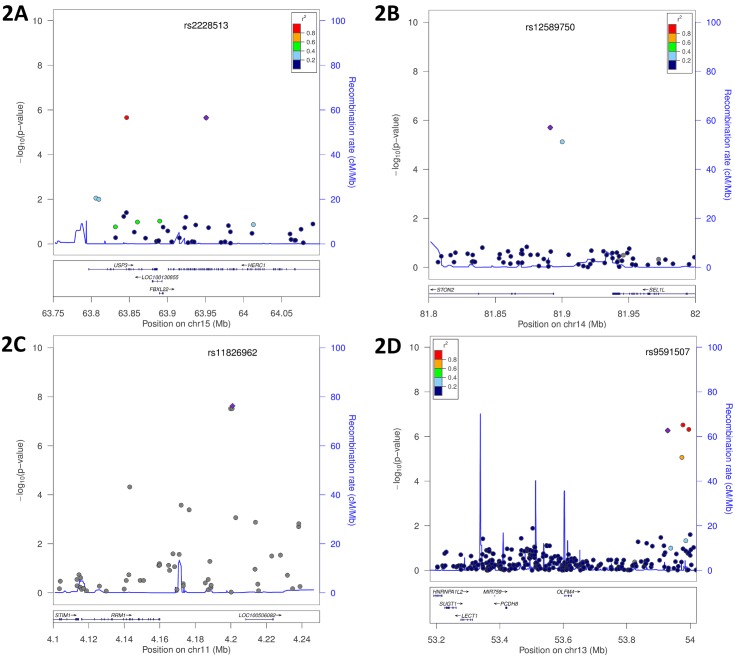
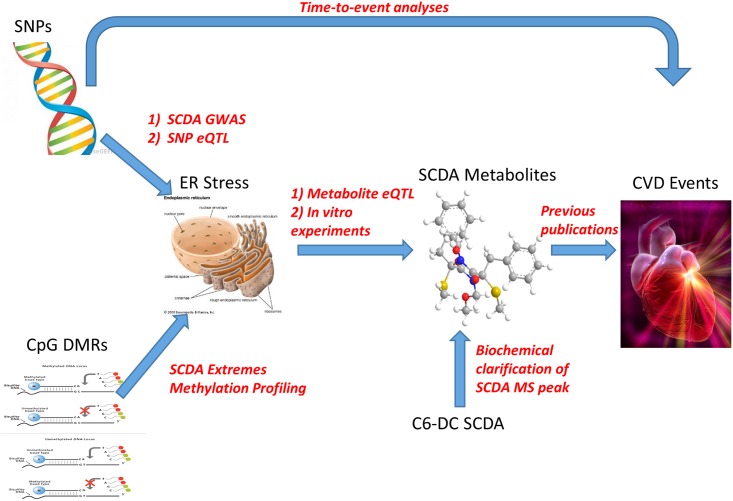
Levels of certain circulating short-chain dicarboxylacylcarnitine (SCDA), long-chain dicarboxylacylcarnitine (LCDA) and medium chain acylcarnitine (MCA) metabolites are heritable and predict cardiovascular disease (CVD) events. Little is known about the biological pathways that influence levels of most of these metabolites. Here, we analyzed genetics, epigenetics, and transcriptomics with metabolomics in samples from a large CVD cohort to identify novel genetic markers for CVD and to better understand the role of metabolites in CVD pathogenesis. Using genomewide association in the CATHGEN cohort (N = 1490), we observed associations of several metabolites with genetic loci. Our strongest findings were for SCDA metabolite levels with variants in genes that regulate components of endoplasmic reticulum (ER) stress (USP3, HERC1, STIM1, SEL1L, FBXO25, SUGT1) These findings were validated in a second cohort of CATHGEN subjects (N = 2022, combined p = 8.4x10⁻⁶-2.3x10⁻¹⁰). Importantly, variants in these genes independently predicted CVD events. Association of genomewide methylation profiles with SCDA metabolites identified two ER stress genes as differentially methylated (BRSK2 and HOOK2). Expression quantitative trait loci (eQTL) pathway analyses driven by gene variants and SCDA metabolites corroborated perturbations in ER stress and highlighted the ubiquitin proteasome system (UPS) arm. Moreover, culture of human kidney cells in the presence of levels of fatty acids found in individuals with cardiometabolic disease, induced accumulation of SCDA metabolites in parallel with increases in the ER stress marker BiP. Thus, our integrative strategy implicates the UPS arm of the ER stress pathway in CVD pathogenesis, and identifies novel genetic loci associated with CVD event risk.
Conflict of interest statement
I have read the journal's policy and the authors of this manuscript have the following competing interests: SHS, CBN, ERH and WEK are named on a patent owned by Duke University for related findings.
Figures


References
-
- Helgadottir A, Thorleifsson G, Manolescu A, Gretarsdottir S, Blondal T, Jonasdottir A, et al. A common variant on chromosome 9p21 affects the risk of myocardial infarction. Science. 2007;316(5830):1491–3. - PubMed
-
- Shah SH, Bain JR, Muehlbauer MJ, Stevens RD, Crosslin DR, Haynes C, et al. Association of a peripheral blood metabolic profile with coronary artery disease and risk of subsequent cardiovascular events. Circulation Cardiovascular genetics. 2010;3(2):207–14. 10.1161/CIRCGENETICS.109.852814 - DOI - PubMed
Publication types
MeSH terms
Substances
Grants and funding
LinkOut - more resources
Full Text Sources
Other Literature Sources