


doi: 10.15585/mmwr.mm6443a3.
Gestational Weight Gain - United States, 2012 and 2013
- PMID: 26540367
- PMCID: PMC4862652
- DOI: 10.15585/mmwr.mm6443a3
Item in Clipboard
Gestational Weight Gain - United States, 2012 and 2013
MMWR Morb Mortal Wkly Rep.
.
No abstract available
Figures
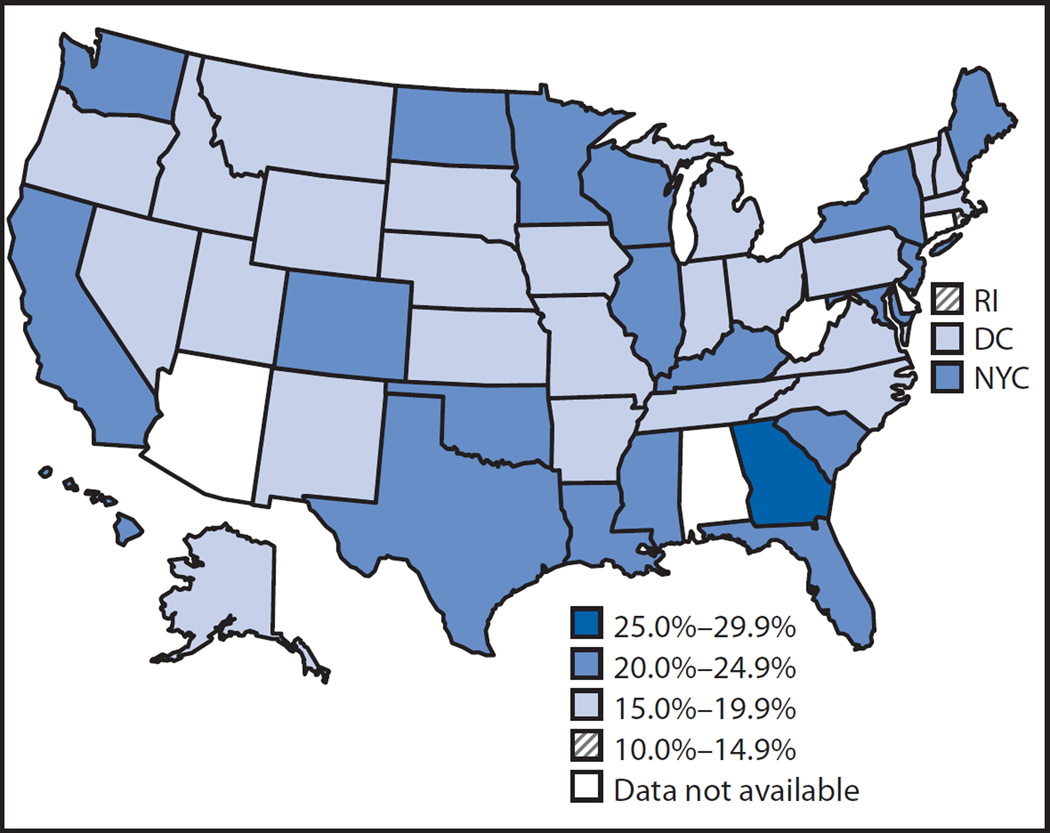
Sources: 2012 Pregnancy Risk Assessment Monitoring Systems for five states (Arkansas, Hawaii, Maine, New Jersey, Rhode Island) and 2013 birth certificates for 41 states, New York City, and District of Columbia. *Gestational weight gain below Institute of Medicine recommendations, which are based on prepregnancy body mass index (BMI): 28–40 pounds for underweight women (BMI <18.5), 25–35 pounds for normal-weight women (BMI = 18.5–24.9), 15–25 pounds for overweight women (BMI =25.0–29.9), and 11–20 pounds for obese women (BMI ≥30.0).
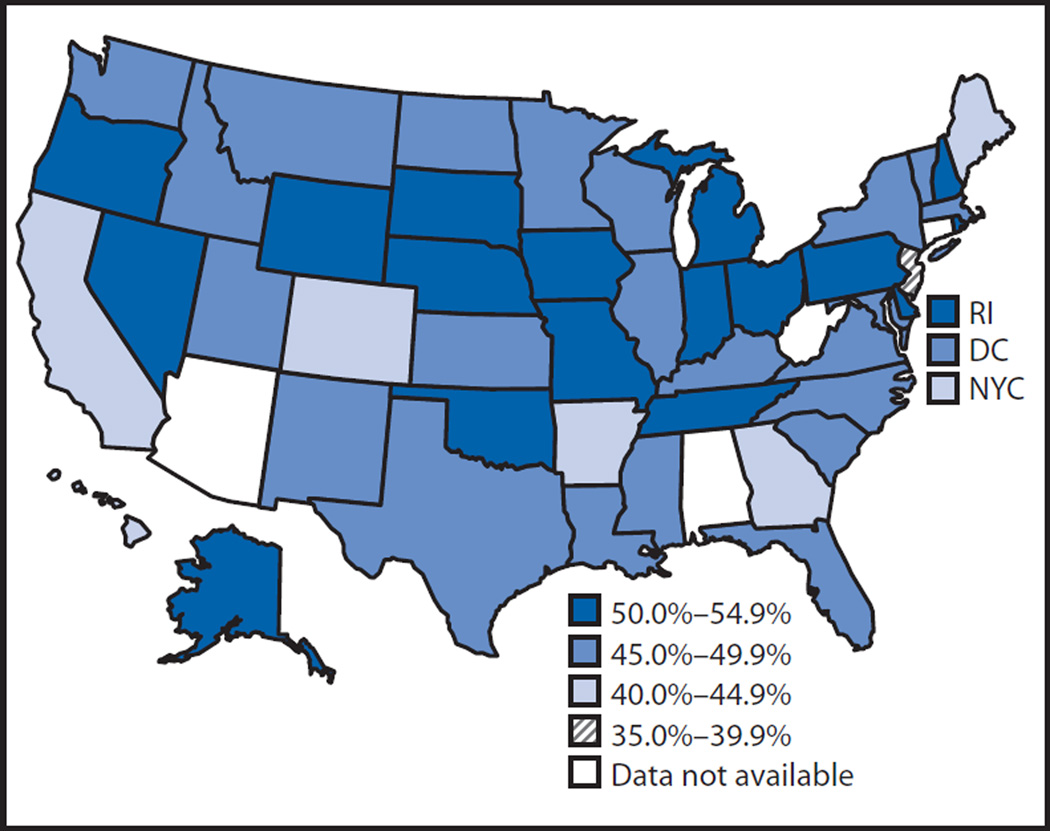
Sources: 2012 Pregnancy Risk Assessment Monitoring Systems for five states (Arkansas, Hawaii, Maine, New Jersey, Rhode Island) and 2013 birth certificates for 41 states, New York City, and District of Columbia. *Gestational weight gain above Institute of Medicine recommendations, which are based on prepregnancy body mass index (BMI): 28–40 pounds for underweight women (BMI <18.5), 25–35 pounds for normal-weight women (BMI = 18.5–24.9), 15–25 pounds for overweight women (BMI = 25.0–29.9), and 11–20 pounds for obese women (BMI ≥30.0).
References
-
- Rasmussen KM, Yaktine AL, editors. Weight gain during pregnancy: reexamining the guidelines. Washington, DC: The National Academies Press; 2009. - PubMed
-
- American College of Obstetricians and Gynecologists. ACOG committee opinion no. 548: weight gain during pregnancy. Obstet Gynecol. 2013;121:210–212. - PubMed
-
- Phelan S, Jankovitz K, Hagobian T, Abrams B. Reducing excessive gestational weight gain: lessons from the weight control literature and avenues for future research. Womens Health (Lond Engl) 2011;7:641–661. - PubMed
MeSH terms
Grants and funding
LinkOut - more resources
Full Text Sources
Other Literature Sources
Medical
