


Laparoscopic fundoplication surgery versus medical management for gastro-oesophageal reflux disease (GORD) in adults
- PMID: 26544951
- PMCID: PMC8278567
- DOI: 10.1002/14651858.CD003243.pub3
Laparoscopic fundoplication surgery versus medical management for gastro-oesophageal reflux disease (GORD) in adults
Abstract
Background: Gastro-oesophageal reflux disease (GORD) is a common condition with 3% to 33% of people from different parts of the world suffering from GORD. There is considerable uncertainty about whether people with GORD should receive an operation or medical treatment for controlling the condition.
Objectives: To assess the benefits and harms of laparoscopic fundoplication versus medical treatment for people with gastro-oesophageal reflux disease.
Search methods: We searched the Cochrane Upper Gastrointestinal and Pancreatic Diseases Group (UGPD) Trials Register (June 2015), Cochrane Central Register of Controlled Trials (CENTRAL) (The Cochrane Library Issue 6, 2015), Ovid MEDLINE (1966 to June 2015), and EMBASE (1980 to June 2015) to identify randomised controlled trials. We also searched the references of included trials to identify further trials.
Selection criteria: We considered only randomised controlled trials (RCT) comparing laparoscopic fundoplication with medical treatment in people with GORD irrespective of language, blinding, or publication status for inclusion in the review.
Data collection and analysis: Two review authors independently identified trials and independently extracted data. We calculated the risk ratio (RR) or standardised mean difference (SMD) with 95% confidence intervals (CI) using both fixed-effect and random-effects models with RevMan 5 based on available case analysis.
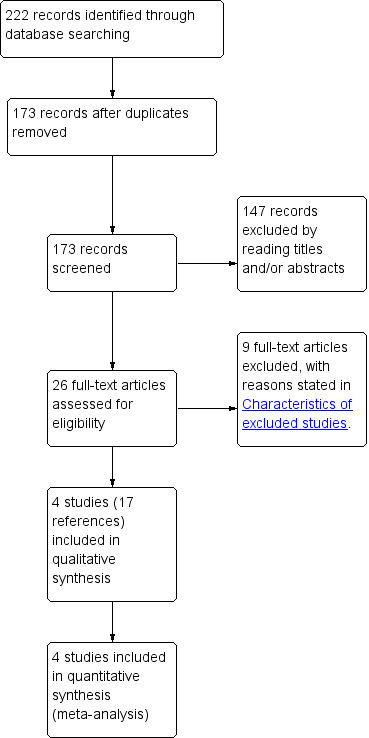
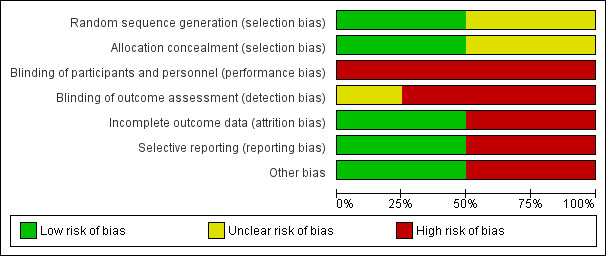
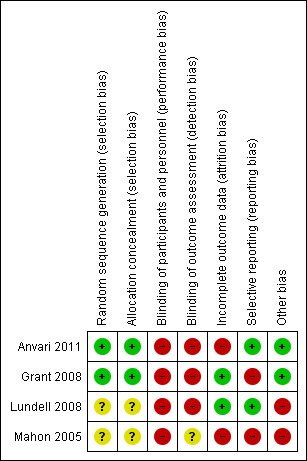
Main results: Four studies met the inclusion criteria for the review, and provided information on one or more outcomes for the review. A total of 1160 participants in the four RCTs were either randomly assigned to laparoscopic fundoplication (589 participants) or medical treatment with proton pump inhibitors (571 participants). All the trials included participants who had had reflux symptoms for at least six months and had received long-term acid suppressive therapy. All the trials included only participants who could undergo surgery if randomised to the surgery arm. All of the trials were at high risk of bias. The overall quality of evidence was low or very low. None of the trials reported long-term health-related quality of life (HRQoL) or GORD-specific quality of life (QoL).The difference between laparoscopic fundoplication and medical treatment was imprecise for overall short-term HRQOL (SMD 0.14, 95% CI -0.02 to 0.30; participants = 605; studies = 3), medium-term HRQOL (SMD 0.03, 95% CI -0.19 to 0.24; participants = 323; studies = 2), medium-term GORD-specific QoL (SMD 0.28, 95% CI -0.27 to 0.84; participants = 994; studies = 3), proportion of people with adverse events (surgery: 7/43 (adjusted proportion = 14.0%); medical: 0/40 (0.0%); RR 13.98, 95% CI 0.82 to 237.07; participants = 83; studies = 1), long-term dysphagia (surgery: 27/118 (adjusted proportion = 22.9%); medical: 28/110 (25.5%); RR 0.90, 95% CI 0.57 to 1.42; participants = 228; studies = 1), and long-term reflux symptoms (surgery: 29/118 (adjusted proportion = 24.6%); medical: 41/115 (35.7%); RR 0.69, 95% CI 0.46 to 1.03; participants = 233; studies = 1).The short-term GORD-specific QoL was better in the laparoscopic fundoplication group than in the medical treatment group (SMD 0.58, 95% CI 0.46 to 0.70; participants = 1160; studies = 4).The proportion of people with serious adverse events (surgery: 60/331 (adjusted proportion = 18.1%); medical: 38/306 (12.4%); RR 1.46, 95% CI 1.01 to 2.11; participants = 637; studies = 2), short-term dysphagia (surgery: 44/331 (adjusted proportion = 12.9%); medical: 11/306 (3.6%); RR 3.58, 95% CI 1.91 to 6.71; participants = 637; studies = 2), and medium-term dysphagia (surgery: 29/288 (adjusted proportion = 10.2%); medical: 5/266 (1.9%); RR 5.36, 95% CI 2.1 to 13.64; participants = 554; studies = 1) was higher in the laparoscopic fundoplication group than in the medical treatment group.The proportion of people with heartburn at short term (surgery: 29/288 (adjusted proportion = 10.0%); medical: 59/266 (22.2%); RR 0.45, 95% CI 0.30 to 0.69; participants = 554; studies = 1), medium term (surgery: 12/288 (adjusted proportion = 4.2%); medical: 59/266 (22.2%); RR 0.19, 95% CI 0.10 to 0.34; participants = 554; studies = 1), long term (surgery: 46/111 (adjusted proportion = 41.2%); medical: 78/106 (73.6%); RR 0.56, 95% CI 0.44 to 0.72); participants = 217; studies = 1) and those with reflux symptoms at short-term (surgery: 6/288 (adjusted proportion = 2.0%); medical: 53/266 (19.9%); RR 0.10, 95% CI 0.05 to 0.24; participants = 554; studies = 1) and medium term (surgery: 6/288 (adjusted proportion = 2.1%); medical: 37/266 (13.9%); RR 0.15, 95% CI 0.06 to 0.35; participants = 554; studies = 1) was less in the laparoscopic fundoplication group than in the medical treatment group.
Authors' conclusions: There is considerable uncertainty in the balance of benefits versus harms of laparoscopic fundoplication compared to long-term medical treatment with proton pump inhibitors. Further RCTs of laparoscopic fundoplication versus medical management in patients with GORD should be conducted with outcome-assessor blinding and should include all participants in the analysis. Such trials should include long-term patient-orientated outcomes such as treatment-related adverse events (including severity), quality of life, and also report on the social and economic impact of the adverse events and symptoms.
Conflict of interest statement
SG: none known
KG: none known
Figures
Update of
-
Medical versus surgical management for gastro-oesophageal reflux disease (GORD) in adults.Cochrane Database Syst Rev. 2010 Mar 17;(3):CD003243. doi: 10.1002/14651858.CD003243.pub2. Cochrane Database Syst Rev. 2010. Update in: Cochrane Database Syst Rev. 2015 Nov 05;(11):CD003243. doi: 10.1002/14651858.CD003243.pub3. PMID: 20238321 Updated.
References
References to studies included in this review
Anvari 2011 {published data only}
-
- Anvari M, Allen C, Goldsmith C. A randomized controlled trial of laparoscopic Nissen fundoplication (LNF) versus proton pump inhibitors for treatment of patients with chronic gastro‐esophageal reflux disease (GERD) who complained of cough. Gastroenterology 2010;138(5 SUPPL):S885.
-
- Anvari M, Allen C, Marshall J, Armstrong D, Goeree R, Ungar W, et al. A randomized controlled trial of laparoscopic Nissen fundoplication versus proton pump inhibitors for the treatment of patients with chronic gastroesophageal reflux disease (GERD): 3‐year outcomes. Surgical Endoscopy 2011;25(8):2547‐54. - PubMed
-
- Anvari M, Allen C, Marshall J, Armstrong D, Goeree R, Ungar W, et al. A randomized controlled trial of laparoscopic Nissen fundoplication versus proton pump inhibitors for treatment of patients with chronic gastroesophageal reflux disease: one‐year follow‐up. Surgical Innovation 2006;13(4):238‐49. - PubMed
-
- Goeree R, Hopkins R, Marshall JK, Armstrong D, Ungar WJ, Goldsmith C, et al. Cost‐utility of laparoscopic Nissen fundoplication versus proton pump inhibitors for chronic and controlled gastroesophageal reflux disease: a 3‐year prospective randomized controlled trial and economic evaluation. Value in Health 2011;14(2):263‐73. - PubMed
Grant 2008 {published data only}
-
- Grant A, Wileman S, Ramsay C, Bojke L, Epstein D, Sculpher M, et al. The effectiveness and cost‐effectiveness of minimal access surgery amongst people with gastro‐oesophageal reflux disease ‐ a UK collaborative study. The REFLUX trial. Health Technology Assessment 2008;12(31):1‐181. - PubMed
-
- Grant AM, Boachie C, Cotton SC, Faria R, Bojke L, Epstein DM, et al. Clinical and economic evaluation of laparoscopic surgery compared with medical management for gastro‐oesophageal reflux disease: 5‐year follow‐up of multicentre randomised trial (the REFLUX trial). Health Technology Assessment 2013;17(22):1‐167. - PMC - PubMed
Lundell 2008 {published data only}
-
- Attwood SE, Lundell L, Hatlebakk JG, Eklund S, Junghard O, Galmiche JP, et al. Medical or surgical management of GERD patients with Barrett's Esophagus: the LOTUS trial 3‐year experience. Journal of Gastrointestinal Surgery 2008;12(10):1646‐54. - PubMed
-
- Attwood SEA, Lundell L, Ell C, Galmiche JP, Hatlebakk J, Fiocca R, et al. Standardization of surgical technique in antireflux surgery: the LOTUS trial experience. World Journal of Surgery 2008;32(6):995‐8. - PubMed
-
- Fiocca R, Mastracci L, Engstrom C, Attwood S, Ell C, Galmiche JP, et al. Long‐term outcome of microscopic esophagitis in chronic GERD patients treated with esomeprazole or laparoscopic antireflux surgery in the LOTUS trial. American Journal of Gastroenterology 2010;105(5):1015‐23. - PubMed
-
- Galmiche JP, Hatlebakk JG, Attwood SE, Ell C, Fiocca R, Eklund S, et al. Laparoscopic antireflux surgery vs long‐term esomeprazole treatment for chronic GERD. Final results after 5 yrs of follow up in the LOTUS study. Gastroenterology 2010;138(5 SUPPL):S53.
Mahon 2005 {published data only}
-
- Mahon D, Rhodes M, Decadt B, Hindmarsh A, Lowndes R, Beckingham I, et al. Randomized clinical trial of laparoscopic Nissen fundoplication compared with proton‐pump inhibitors for treatment of chronic gastro‐oesophageal reflux. British Journal of Surgery 2005;92(6):695‐9. - PubMed
-
- Mehta S, Bennett J, Mahon D, Rhodes M. Prospective trial of laparoscopic Nissen fundoplication versus proton pump inhibitor therapy for gastroesophageal reflux disease: seven‐year follow‐up. Journal of Gastrointestinal Surgery 2006;10(9):1312‐7. - PubMed
References to studies excluded from this review
Gutschow 2009 {published data only}
-
- Gutschow CA, Schroder W, Bludau M, Leers J, Bollschweiler E, Holscher AH. Azide and non‐azide intraoesophageal bolus movements after Nissen fundoplication and under high‐dose ppi: Evaluation using combined 24‐hour impedance‐ph‐monitoring of the oesophagus. Zeitschrift für Gastroenterologie 2009;47(9):867.
Lundell 2000 {published data only}
-
- Lundell L, Miettinen P, Myrvold HE, Pedersen SA, Thor K, Lamm M, et al. Long‐term management of gastro‐oesophageal reflux disease with omeprazole or open antireflux surgery: results of a prospective, randomized clinical trial. European Journal of Gastroenterology and Hepatology 2000;12(8):879‐87. - PubMed
Lundell 2007 {published data only}
-
- Lundell L, Miettinen P, Myrvold HE, Hatlebakk JG, Wallin L, Malm A, et al. Seven‐year follow‐up of a randomized clinical trial comparing proton‐pump inhibition with surgical therapy for reflux oesophagitis. British Journal of Surgery 2007;94(2):198‐203. - PubMed
Lundell 2009 {published data only}
-
- Lundell L, Miettinen P, Myrvold HE, Hatlebakk JG, Wallin L, Engstrom C, et al. Comparison of outcomes twelve years after antireflux surgery or omeprazole maintenance therapy for reflux esophagitis. Clinical Gastroenterology and Hepatology 2009;7(12):1292‐8. - PubMed
Rantanen 2013 {published data only}
-
- Rantanen T, Kiljander T, Salminen P, Ranta A, Oksala N, Kellokumpu I. Reflux symptoms and side effects among patients with gastroesophageal reflux disease at baseline, during treatment with PPIs, and after Nissen fundoplication. World Journal of Surgery 2013;37(6):1291‐6. - PubMed
Spechler 2001 {published data only}
-
- Spechler SJ, Lee E, Ahnen D, Goyal RK, Hirano I, Ramirez F, et al. Long‐term outcome of medical and surgical therapies for gastroesophageal reflux disease: follow‐up of a randomized controlled trial. Journal of the American Medical Association 2001;285(18):2331‐8. - PubMed
Trad 2013 {published data only}
-
- Trad KS, Barnes WE, Simoni G, Shughoury AB, Raza M, Heise JA, et al. Transoral fundoplication vs. proton pump inhibitor therapy for treatment of chronic gastroesophageal reflux: short‐term results from a multicenter, randomized, open label clinical trial. Gastroenterology 2013;144(5 SUPPL):S163‐S4. - PMC - PubMed
Trad 2014 {published data only}
-
- Trad KS, Fox MA, Simoni G, Shughoury AB, Mavrelis PG, Raza M, et al. Efficacy of transoral fundoplication for treatment of chronic gastroesophageal reflux disease incompletely controlled with high‐dose PPI therapy: a randomized, multicenter, open label, crossover study. Gastroenterology 2014;146(5 SUPPL):S127‐S8. - PMC - PubMed
Witteman 2013 {published data only}
-
- Witteman BP, Conchillo JM, Koek GH, Peeters A, Stassen LP, Bouvy ND. Randomized controlled trial of transoral incisionless fundoplication versus proton pump inhibitors for treatment of GERD; an interim analysis. Gastrointestinal Endoscopy 2013;77(5 SUPPL):AB459.
Additional references
Achem 1998
-
- Achem SR, Robinson M. A prokinetic approach to treatment of gastroesophageal reflux disease. Digestive Diseases 1998;16(1):38‐46. - PubMed
Boeckxstaens 2014a
Boeckxstaens 2014b
-
- Boeckxstaens GE, Rohof WO. Pathophysiology of gastroesophageal reflux disease. Gastroenterology Clinics of North America 2014;43(1):15‐25. - PubMed
Cook 2014
Darba 2011
-
- Darba J, Kaskens L, Plans P, Elizalde JI, Coma M, Cuomo R, et al. Epidemiology and societal costs of gastroesophageal reflux disease and Barrett's syndrome in Germany, Italy and Spain. Expert Review of Pharmacoeconomics & Outcomes Research 2011;11(2):225‐32. - PubMed
Demets 1987
-
- Demets DL. Methods for combining randomized clinical trials: strengths and limitations. Statistics in Medicine 1987;6:341‐8. [DOI: ] - PubMed
Dent 2005
Dent 2008
-
- Dent J. Endoscopic grading of reflux oesophagitis: the past, present and future. Best Practice & Research Clinical Gastroenterology 2008;22(4):585‐99. - PubMed
DerSimonian 1986
-
- DerSimonian R, Laird N. Meta‐analysis in clinical trials. Controlled Clinical Trials 1986;7:177‐88. - PubMed
Egger 1997
El‐Serag 2014
FDA 2006
-
- Center for Biologics Evaluation and Research, U.S. Food, Drug Administration. Guidance for industry adverse reactions section of labeling for human prescription drug and biological products — Content and format. http://www.fda.gov/downloads/Drugs/GuidanceComplianceRegulatoryInformati... 2006 (accessed on 4 July 2014).
Funch‐Jensen 2008
-
- Funch‐Jensen P, Bendixen A, Iversen MG, Kehlet H. Complications and frequency of redo antireflux surgery in Denmark: a nationwide study, 1997‐2005. Surgical Endoscopy 2008;22(3):627‐30. - PubMed
Gordon 2004
-
- Gordon C, Kang JY, Neild PJ, Maxwell JD. The role of the hiatus hernia in gastro‐oesophageal reflux disease. Alimentary Pharmacology and Therapeutics 2004;20(7):719‐32. - PubMed
GRADEpro GDT [Computer program]
-
- McMaster University (developed by Evidence Prime, Inc). GRADEpro GDT: GRADEpro Guideline Development Tool. Available from www.gradepro.org, 2015.
Gray 2010
Herzig 2009
-
- Herzig SJ, Howell MD, Ngo LH, Marcantonio ER. Acid‐suppressive medication use and the risk for hospital‐acquired pneumonia. JAMA 2009;301(20):2120‐8. - PubMed
Higgins 2003
Higgins 2011a
-
- Higgins JPT, Green S (editors). Cochrane Handbook for Systematic Reviews of Interventions Version 5.1.0 [updated March 2011]. The Cochrane Collaboration, 2011. Available from www.cochrane‐handbook.org. The Cochrane Collaboration, Available from www.cochrane‐handbook.org.
Higgins 2011b
-
- Higgins JPT, Altman DG, Sterne JAC (editors). Chapter 8: Assessing risk of bias in included studies. In: Higgins JPT, Green S (editors). Cochrane Handbook for Systematic Reviews of Interventions Version 5.1.0 (updated March 2011). The Cochrane Collaboration, 2011. Available from www.cochrane‐handbook.org.
Higgins 2011c
-
- Higgins JPT, Deeks JJ, Altman DG (editors). Chapter 7: Selecting studies and collecting data . In: Higgins JPT, Green S (editors), Cochrane Handbook for Systematic Reviews of Interventions Version 5.1.0 (updated March 2011). The Cochrane Collaboration, 2011. Available from www.cochrane‐handbook.org.
Howell 2010
-
- Howell MD, Novack V, Grgurich P, Soulliard D, Novack L, Pencina M, et al. Iatrogenic gastric acid suppression and the risk of nosocomial Clostridium difficile infection. Archives of Internal Medicine 2010;170(9):784‐90. - PubMed
ICH‐GCP 1996
-
- International Conference on Harmonisation of Technical Requirements for Registration of Pharmaceuticals for Human Use. Code of Federal Regulation & ICH Guidelines. Media: Parexel Barnett, 1996.
Katz 2010a
-
- Katz PO, Zavala S. Proton pump inhibitors in the management of GERD. Journal of Gastrointestinal Surgery 2010;14 Suppl 1:S62‐6. - PubMed
Katz 2010b
-
- Katz MH. Failing the acid test: benefits of proton pump inhibitors may not justify the risks for many users. Archives of Internal Medicine 2010;170(9):747‐8. - PubMed
Lagergren 1999
-
- Lagergren J, Bergstrom R, Lindgren A, Nyren O. Symptomatic gastroesophageal reflux as a risk factor for esophageal adenocarcinoma. New England Journal of Medicine 1999;340(11):825‐31. - PubMed
Lambert 2015
Lundell 2001
-
- Lundell L, Miettinen P, Myrvold HE, Pedersen SA, Liedman B, Hatlebakk JG, et al. Continued (5‐year) followup of a randomized clinical study comparing antireflux surgery and omeprazole in gastroesophageal reflux disease. Journal of the American College of Surgeons 2001;192(2):172‐9. - PubMed
MacKay 2010
Martindale 2011
-
- Sweetman S (editor). Martindale: the complete drug reference (online version), 37th edition. www.pharmpress.com/product/MC_MART/martindale‐the‐complete‐drug‐reference 2011 (accessed 23 September 2014).
MHRA 2013
-
- Medicines and Healthcare products Regulatory Agency (MHRA). Clinical trials for medicines: Safety reporting ‐ SUSARs and DSURs. http://www.mhra.gov.uk/Howweregulate/Medicines/Licensingofmedicines/Clin... 2013 (accessed on 4 July 2014).
Moayyedi 2008
Parmar 1998
-
- Parmar MK, Torri V, Stewart L. Extracting summary statistics to perform meta‐analyses of the published literature for survival endpoints. Statistics in Medicine 1998;17(24):2815‐34. - PubMed
Peery 2012
Review Manager 2014 [Computer program]
-
- Copenhagen, The Nordic Cochrane Centre: The Cochrane Collaboration. Review Manager (RevMan) Version 5.3. Copenhagen, The Nordic Cochrane Centre: The Cochrane Collaboration, 2014.
Sandler 2002
-
- Sandler RS, Everhart JE, Donowitz M, Adams E, Cronin K, Goodman C, et al. The burden of selected digestive diseases in the United States. Gastroenterology 2002;122(5):1500‐11. - PubMed
Schünemann 2011
-
- Schünemann HJ, Oxman AD, Vist GE, Higgins JPT, Deeks JJ, Glasziou P, et al. Chapter 12: Interpreting results and drawing conclusions. In: Higgins JPT, Green S (editors), Cochrane Handbook for Systematic Reviews of Interventions Version 5.1.0 (updated March 2011). The Cochrane Collaboration, 2011. Available from www.cochrane‐handbook.org.
Singhal 2009
Smith 2005
Solaymani‐Dodaran 2004
Vakil 2006
-
- Vakil N, Zanten SV, Kahrilas P, Dent J, Jones R, Global Consensus G. The Montreal definition and classification of gastroesophageal reflux disease: a global evidence‐based consensus. American Journal of Gastroenterology 2006;101(8):1900‐20. - PubMed
Van Meer 2013
-
- Meer S, Bogte A, Siersema PD. Long‐term follow up in patients with gastroesophageal reflux disease with specific emphasis on reflux symptoms, use of anti‐reflux medication and anti‐reflux surgery outcome: a retrospective study. Scandinavian Journal of Gastroenterology 2013;48(11):1242‐8. - PubMed
Watson 1998
-
- Watson A. Update: total versus partial laparoscopic fundoplication. Digestive Surgery 1998;15(2):172‐80. - PubMed
Zacherl 2014
-
- Zacherl J, Roy‐Shapira A, Bonavina L, Bapaye A, Kiesslich R, Schoppmann SF, et al. Endoscopic anterior fundoplication with the Medigus Ultrasonic Surgical Endostapler (MUSE) for gastroesophageal reflux disease: 6‐month results from a multi‐center prospective trial. Surgical Endoscopy 2015;29(1):220‐9. - PMC - PubMed
Zhou 2015
-
- Zhou T, Harnsberger C, Broderick R, Fuchs H, Talamini M, Jacobsen G, et al. Reoperation rates after laparoscopic fundoplication. Surgical Endoscopy 2015;29(3):510‐4. - PubMed
References to other published versions of this review
Publication types
MeSH terms
Substances
Grants and funding
LinkOut - more resources
Full Text Sources
Medical
Miscellaneous
