


Nitrous oxide-based techniques versus nitrous oxide-free techniques for general anaesthesia
- PMID: 26545294
- PMCID: PMC9326975
- DOI: 10.1002/14651858.CD008984.pub2
Nitrous oxide-based techniques versus nitrous oxide-free techniques for general anaesthesia
Abstract
Background: Nitrous oxide has been used for over 160 years for the induction and maintenance of general anaesthesia. It has been used as a sole agent but is most often employed as part of a technique using other anaesthetic gases, intravenous agents, or both. Its low tissue solubility (and therefore rapid kinetics), low cost, and low rate of cardiorespiratory complications have made nitrous oxide by far the most commonly used general anaesthetic. The accumulating evidence regarding adverse effects of nitrous oxide administration has led many anaesthetists to question its continued routine use in a variety of operating room settings. Adverse events may result from both the biological actions of nitrous oxide and the fact that to deliver an effective dose, nitrous oxide, which is a relatively weak anaesthetic agent, needs to be given in high concentrations that restrict oxygen delivery (for example, a common mixture is 30% oxygen with 70% nitrous oxide). As well as the risk of low blood oxygen levels, concerns have also been raised regarding the risk of compromising the immune system, impaired cognition, postoperative cardiovascular complications, bowel obstruction from distention, and possible respiratory compromise.
Objectives: To determine if nitrous oxide-based anaesthesia results in similar outcomes to nitrous oxide-free anaesthesia in adults undergoing surgery.
Search methods: We searched the Cochrane Central Register of Controlled Trials (CENTRAL; 2014 Issue 10); MEDLINE (1966 to 17 October 2014); EMBASE (1974 to 17 October 2014); and ISI Web of Science (1974 to 17 October 2014). We also searched the reference lists of relevant articles, conference proceedings, and ongoing trials up to 17 October 2014 on specific websites (http://clinicaltrials.gov/, http://controlled-trials.com/, and http://www.centerwatch.com).
Selection criteria: We included randomized controlled trials (RCTs) comparing general anaesthesia where nitrous oxide was part of the anaesthetic technique used for the induction or maintenance of general anaesthesia (or both) with any general anaesthesia using a volatile anaesthetic or propofol-based maintenance of anaesthesia but no nitrous oxide for adults undergoing surgery. Our primary outcome was inhospital case fatality rate. Secondary outcomes were complications and length of stay.
Data collection and analysis: Two review authors independently assessed trial quality and extracted the outcome data. We used meta-analysis for data synthesis. Heterogeneity was examined with the Chi² test and by calculating the I² statistic. We used a fixed-effect model if the measure of inconsistency was low for all comparisons (I² statistic < 50%); otherwise we used a random-effects model for measures with high inconsistency. We undertook subgroup analyses to explore inconsistency and sensitivity analyses to evaluate whether the results were robust. We assessed the quality of evidence of the main outcomes using the Grading of Recommendations, Assessment, Development and Evaluation (GRADE) system.
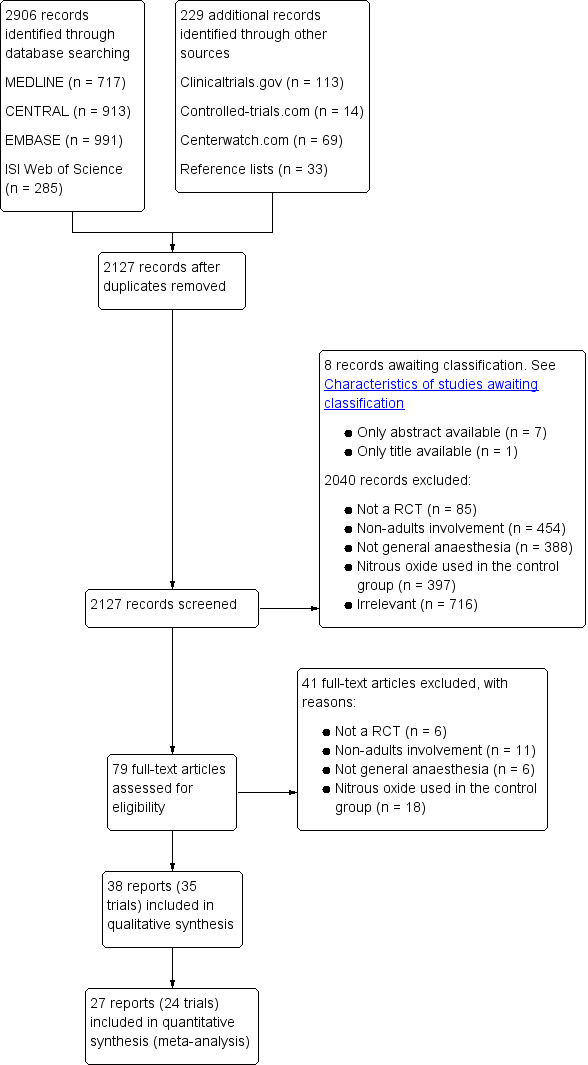
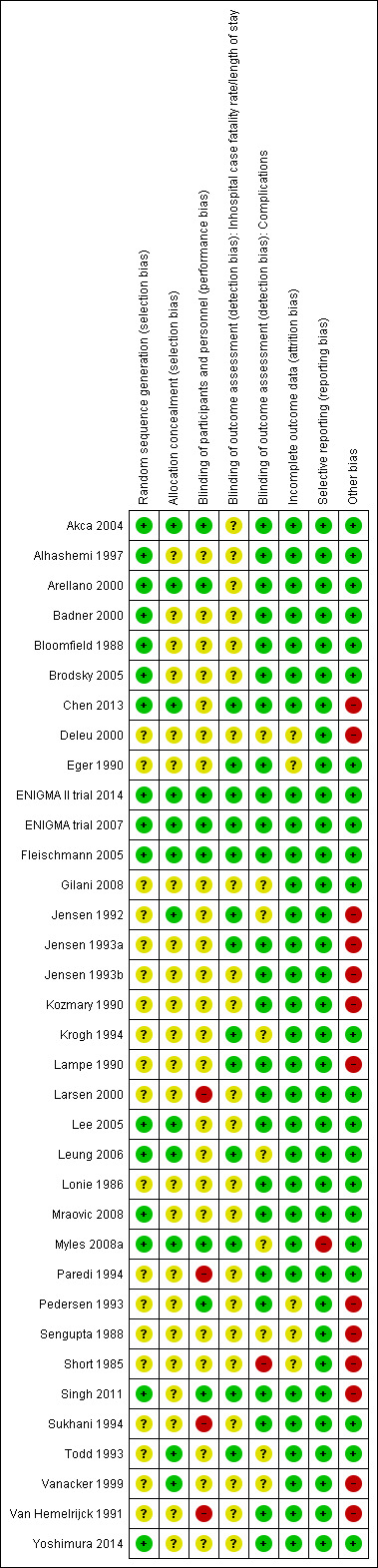
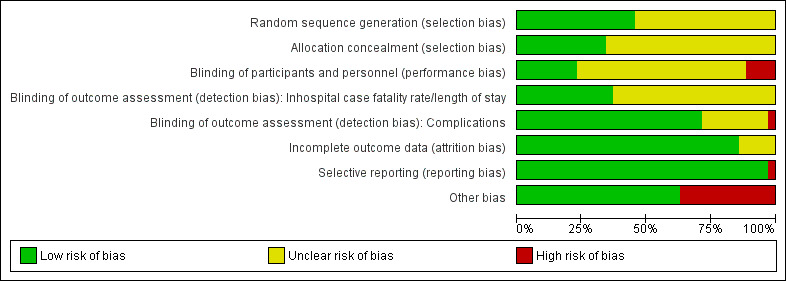
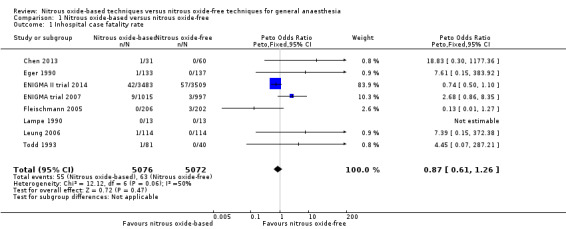
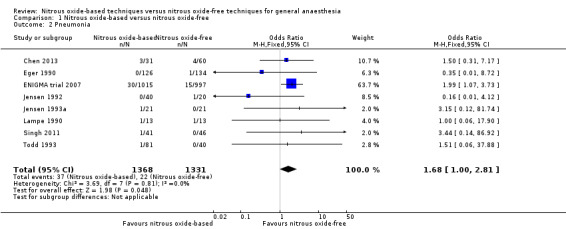
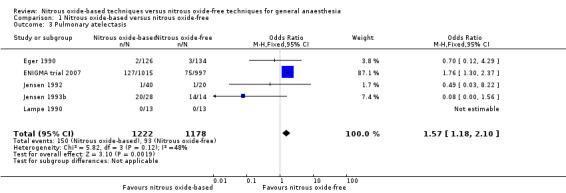
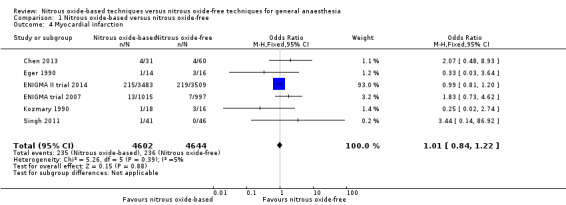
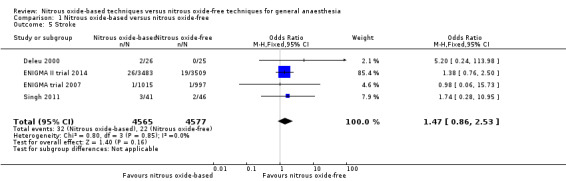
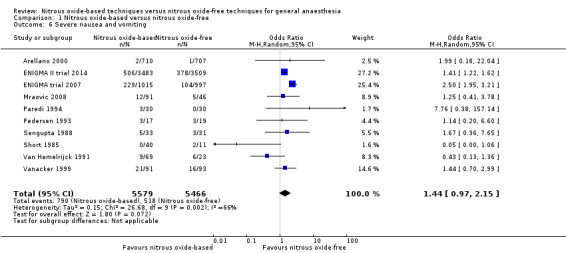
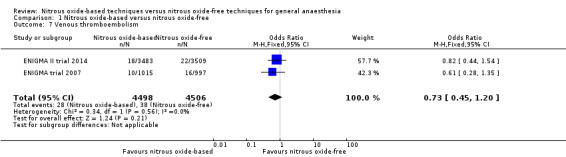
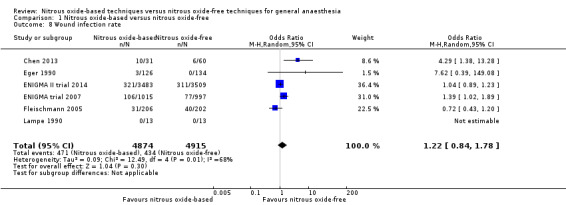
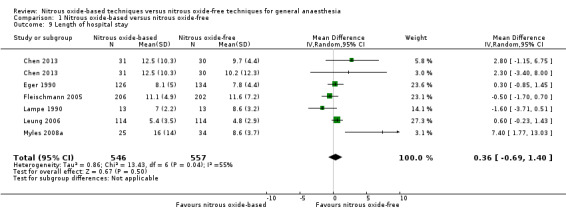
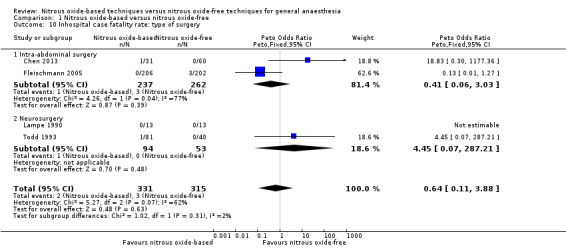
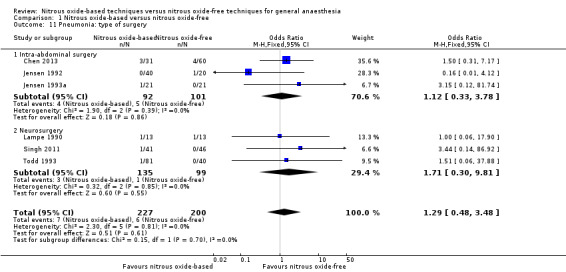
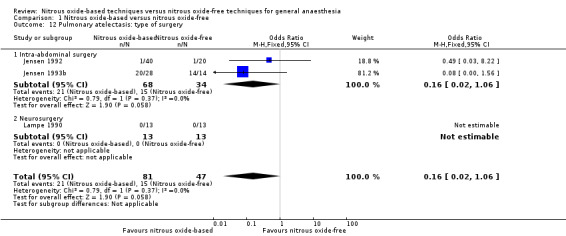
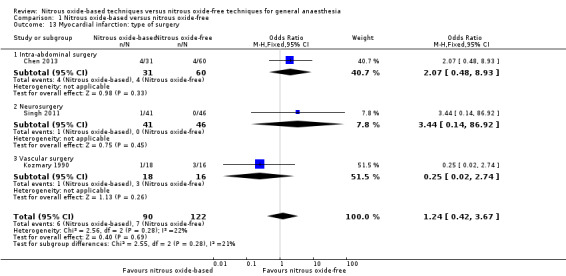
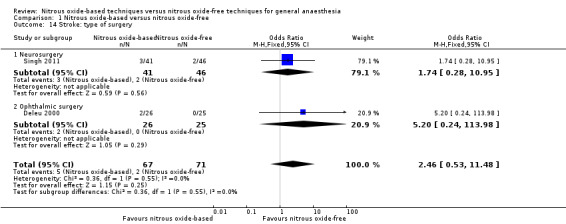
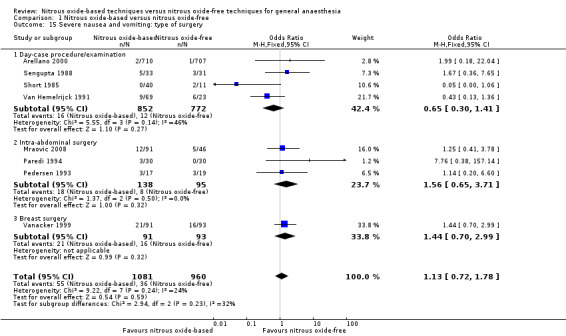
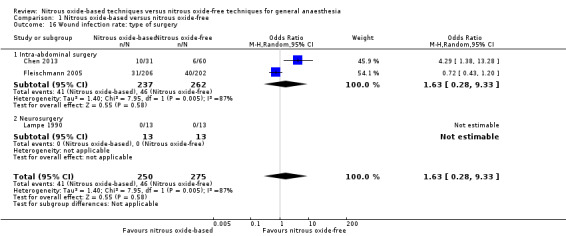
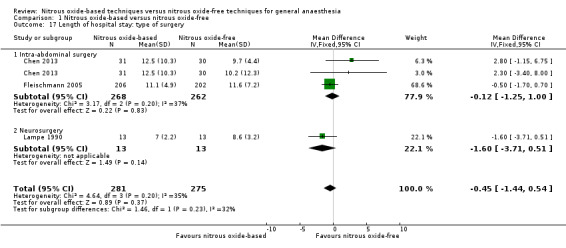
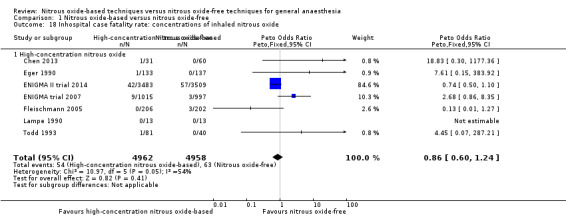
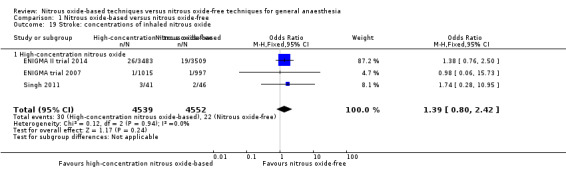
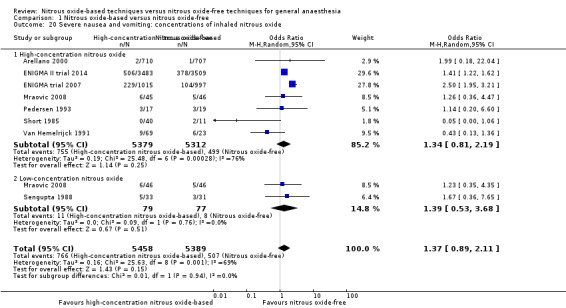
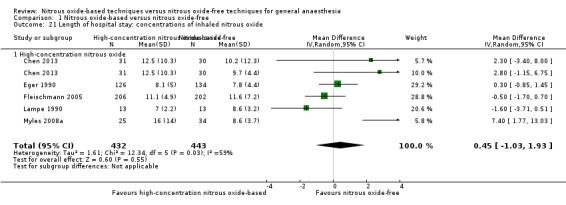
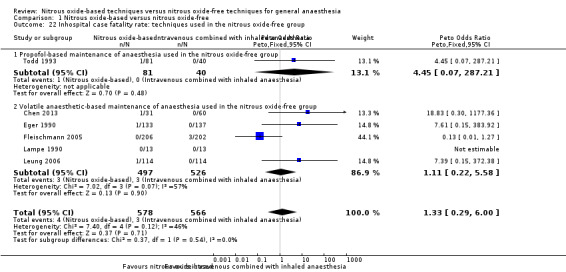
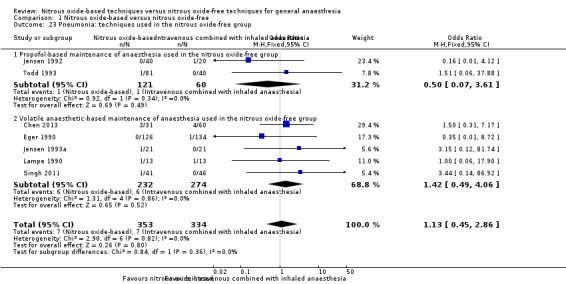
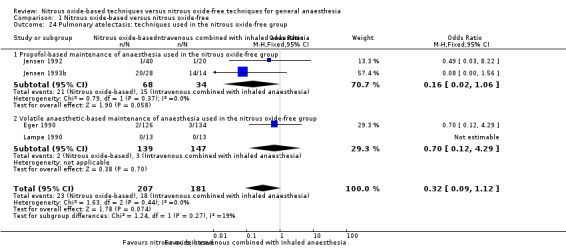
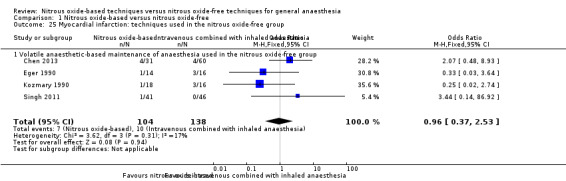
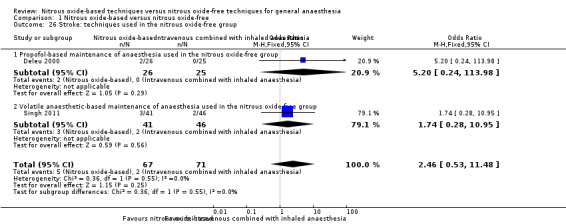
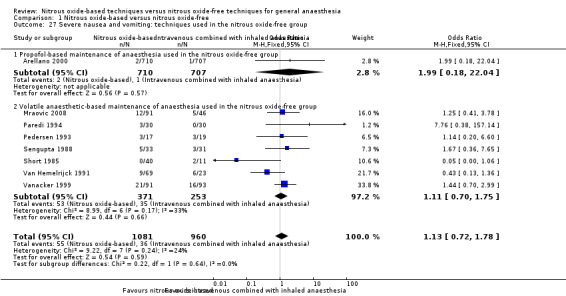
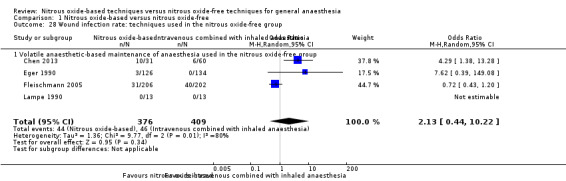
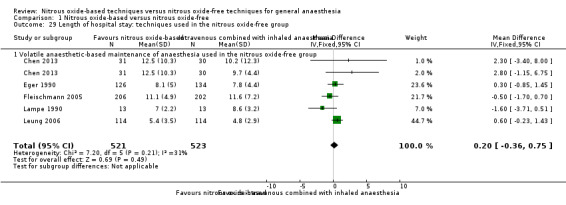
Main results: We included 35 trials (13,872 adult participants). Seven included studies were at low risk of bias. We identified eight studies as awaiting classification since we could not obtain the full texts, and had insufficient information to include or exclude them. We included data from 24 trials for quantitative synthesis. The results of meta-analyses showed that nitrous oxide-based techniques increased the incidence of pulmonary atelectasis (odds ratio (OR) 1.57, 95% confidence interval (CI) 1.18 to 2.10, P = 0.002), but had no effects on the inhospital case fatality rate, the incidence of pneumonia, myocardial infarction, stroke, severe nausea and vomiting, venous thromboembolism, wound infection, or the length of hospital stay. The sensitivity analyses suggested that the results of the meta-analyses were all robust except for the outcomes of pneumonia, and severe nausea and vomiting. Two trials reported length of intensive care unit (ICU) stay but the data were skewed so were not pooled. Both trials reported that nitrous oxide-based techniques had no effects on the length of ICU stay. We rated the quality of evidence for two outcomes (pulmonary atelectasis, myocardial infarction) as high, four outcomes (inhospital case fatality rate, stroke, venous thromboembolism, length of hospital stay) as moderate, and three (pneumonia, severe nausea and vomiting, wound infection rate) as low.
Authors' conclusions: Given the evidence from this Cochrane review, the avoidance of nitrous oxide may be reasonable in participants with pre-existing poor pulmonary function or at high risk of postoperative nausea and vomiting. Since there are eight studies awaiting classification, selection bias may exist in our systematic review.
Conflict of interest statement
Rao Sun: none known. Wen Qin Jia: none known. KeHu Yang: none known. Jin Hui Tian: none known. Bin Ma: none known. Yali Liu: none known. Run H Jia: none known. Peng Zhang: none known. Xiao F Luo: none known. Akira Kuriyama: none known.
Figures
Update of
References
References to studies included in this review
Akca 2004 {published data only}
Alhashemi 1997 {published data only}
-
- Alhashemi JA, Miller DR, O'Brien HV, Hull KA. Cost‐effectiveness of inhalational, balanced and total intravenous anaesthesia for ambulatory knee surgery. Canadian Journal of Anaesthesia 1997;44(2):118‐25. [PUBMED: 9043722] - PubMed
Arellano 2000 {published data only}
-
- Arellano RJ, Pole ML, Rafuse SE, Fletcher M, Saad YG, Friedlander M, et al. Omission of nitrous oxide from a propofol‐based anesthetic does not affect the recovery of women undergoing outpatient gynecologic surgery. Anesthesiology 2000;93(2):332‐9. [PUBMED: 10910478] - PubMed
Badner 2000 {published data only}
-
- Badner NH, Beattie WS, Freeman D, Spence JD. Nitrous oxide‐induced increased homocysteine concentrations are associated with increased postoperative myocardial ischemia in patients undergoing carotid endarterectomy. Anesthesia and Analgesia 2000;91(5):1073‐9. [PUBMED: 11049886] - PubMed
Bloomfield 1988 {published data only}
-
- Bloomfield E, Hilberman M, Brown P, Noe H, Gaydos J, Miller G, et al. Postoperative nausea and vomiting. A comparison of sufentanil, nitrous oxide, and isoflurane. Cleveland Clinic Journal of Medicine 1988;55(6):549‐52. [PUBMED: 2976325] - PubMed
Brodsky 2005 {published data only}
-
- Brodsky JB, Lemmens HJ, Collins JS, Morton JM, Curet MJ, Brock‐Utne JG. Nitrous oxide and laparoscopic bariatric surgery. Obesity Surgery 2005;15(4):494‐6. [PUBMED: 15946427] - PubMed
Chen 2013 {published data only}
-
- Chen Y, Liu X, Cheng CH, Gin T, Leslie K, Myles P, et al. Leukocyte DNA damage and wound infection after nitrous oxide administration: a randomized controlled trial. Anesthesiology 2013;118(6):1322‐31. [PUBMED: 23549382] - PubMed
Deleu 2000 {published data only}
-
- Deleu D, Louon A, Sivagnanam S, Sundaram K, Okereke P, Gravell D, et al. Long‐term effects of nitrous oxide anaesthesia on laboratory and clinical parameters in elderly Omani patients: A randomized double‐blind study. Journal of Clinical Pharmacy and Therapeutics 2000;25(4):271‐7. [PUBMED: 10971777] - PubMed
Eger 1990 {published data only}
-
- Eger EI 2nd, Lampe GH, Wauk LZ, Whitendale P, Cahalan MK, Donegan JH. Clinical pharmacology of nitrous oxide: an argument for its continued use. Anesthesia and Analgesia 1990;71(6):575‐85. [PUBMED: 2240627] - PubMed
ENIGMA II trial 2014 {published and unpublished data}
-
- Myles PS, Leslie K, Chan MT, Forbes A, Peyton PJ, Paech MJ, et al. The safety of addition of nitrous oxide to general anaesthesia in at‐risk patients having major non‐cardiac surgery (ENIGMA‐II): a randomised, single‐blind trial. Lancet 2014;384(9952):1446‐54. [PUBMED: 25142708] - PubMed
-
- Myles PS, Leslie K, Peyton P, Paech M, Forbes A, Chan MT, et al. ANZCA Trials Group. Nitrous oxide and perioperative cardiac morbidity (ENIGMA‐II) Trial: rationale and design. American Heart Journal 2009;157(3):488‐94.e1. [PUBMED: 19249419] - PubMed
ENIGMA trial 2007 {published and unpublished data}
-
- Chan MT, Wan AC, Gin T, Leslie K, Myles PS. Chronic postsurgical pain after nitrous oxide anesthesia. Pain 2011;152(11):2514‐20. [PUBMED: 21889262] - PubMed
-
- Graham AM, Myles PS, Leslie K, Chan MT, Paech MJ, Peyton P, et al. A cost‐benefit analysis of the ENIGMA trial. Anesthesiology 2011;115(2):265‐72. [PUBMED: 21681081] - PubMed
-
- Myles PS, Leslie K, Chan MTV, Forbes A, Paech MJ, Peyton P, et al. Avoidance of nitrous oxide for patients undergoing major surgery: a randomized controlled trial. Anesthesiology 2007;107(2):221‐31. [PUBMED: 17667565] - PubMed
Fleischmann 2005 {published data only}
-
- Fleischmann E, Lenhardt R, Kurz A, Herbst F, Fülesdi B, Greif R, et al. Outcomes Research Group. Nitrous oxide and risk of surgical wound infection: a randomised trial. Lancet 2005;366(9491):1101‐7. [PUBMED: 16182898] - PubMed
Gilani 2008 {published data only}
-
- Gilani SM, Sofi K. Is nitrous oxide necessary for general anaesthesia?. Journal of Ayub Medical College Abbottabad 2008;20(4):149‐52. [PUBMED: 19999230] - PubMed
Jensen 1992 {published data only}
-
- Jensen AG, Kalman SH, Nyström PO, Eintrei C. Anaesthetic technique does not influence postoperative bowel function: a comparison of propofol, nitrous oxide and isoflurane. Canadian Journal of Anaesthesia 1992;39(9):938‐43. [PUBMED: 1451222] - PubMed
Jensen 1993a {published data only}
-
- Jensen AG, Prevedoros H, Kullman E, Anderberg B, Lennmarken C. Peroperative nitrous oxide does not influence recovery after laparoscopic cholecystectomy. Acta Anaesthesiologica Scandinavica 1993;37(7):683‐6. [PUBMED: 8249558] - PubMed
Jensen 1993b {published data only}
-
- Jensen AG, Kalman SH, Eintrei C, Fransson SG, Morales O. Atelectasis and oxygenation in major surgery with either propofol with or without nitrous oxide or isoflurane anaesthesia. Anaesthesia 1993;48(12):1094‐6. [PUBMED: 8285335] - PubMed
Kozmary 1990 {published data only}
-
- Kozmary SV, Lampe GH, Benefiel D, Cahalan MK, Wauk LZ, Whitendale P, et al. No finding of increased myocardial ischemia during or after carotid endarterectomy under anesthesia with nitrous oxide. Anesthesia and Analgesia 1990;71(6):591‐6. [PUBMED: 2240629] - PubMed
Krogh 1994 {published data only}
-
- Krogh B, Jørn Jensen P, Henneberg SW, Hole P, Kronborg O. Nitrous oxide does not influence operating conditions or postoperative course in colonic surgery. British Journal of Anaesthesia 1994;72(1):55‐7. [PUBMED: 8110552] - PubMed
Lampe 1990 {published data only}
-
- Lampe GH, Wauk LZ, Donegan JH, Pitts LH, Jackler RK, Litt LL, et al. Effect on outcome of prolonged exposure of patients to nitrous oxide. Anesthesia and Analgesia 1990;71(6):586‐90. [PUBMED: 2240628] - PubMed
Larsen 2000 {published data only}
-
- Larsen B, Seitz A, Larsen R. Recovery of cognitive function after remifentanil‐propofol anesthesia: a comparison with desflurane and sevoflurane anesthesia. Anesthesia and Analgesia 2000;90(1):168‐74. [PUBMED: 10624999] - PubMed
Lee 2005 {published data only}
-
- Lee LH, Irwin MG, Lui SK. Intraoperative remifentanil infusion does not increase postoperative opioid consumption compared with 70% nitrous oxide. Anesthesiology 2005;102(2):398‐402. [PUBMED: 15681957] - PubMed
Leung 2006 {published data only}
-
- Leung JM, Sands LP, Vaurio LE, Wang Y. Nitrous oxide does not change the incidence of postoperative delirium or cognitive decline in elderly surgical patients. British Journal of Anaesthesia 2006;96(6):754‐60. [PUBMED: 16670110] - PubMed
Lonie 1986 {published data only}
-
- Lonie DS, Harper NJN. Nitrous oxide anaesthesia and vomiting. The effect of nitrous oxide anaesthesia on the incidence of vomiting following gynaecological laparoscopy. Anaesthesia 1986;41(7):703‐7. [PUBMED: 2944432] - PubMed
Mraovic 2008 {published data only}
-
- Mraovic B, Simurina T, Sonicki Z, Skitarelic N, Gan TJ. The dose‐response of nitrous oxide in postoperative nausea in patients undergoing gynecologic laparoscopic surgery: a preliminary study. Anesthesia and Analgesia 2008;107(3):818‐23. [PUBMED: 18713890] - PubMed
Myles 2008a {published data only}
-
- Myles PS, Chan MT, Kaye DM, McIlroy DR, Lau CW, Symons JA, et al. Effect of nitrous oxide anesthesia on plasma homocysteine and endothelial function. Anesthesiology 2008;109(4):657‐63. [PUBMED: 18813045] - PubMed
Paredi 1994 {published data only}
-
- Paredi G, Sofi G, Bonazzi M, Bianchi de Grazia L, Giacomello R, Paladini C, et al. [Role of nitrous oxide on the incidence of postoperative emesis: Randomized, double blinded study]. Acta Anaesthesiologica Italica 1994;45:239‐42. [EMBASE: 1995129835]
Pedersen 1993 {published data only}
-
- Pedersen FM, Wilken‐Jensen C, Knudsen F, Lindekaer AL, Svare EI. The influence of nitrous oxide on recovery of bowel function after abdominal hysterectomy. Acta Anaesthesiologica Scandinavica 1993;37(7):692‐6. [PUBMED: 8249560] - PubMed
Sengupta 1988 {published data only}
-
- Sengupta P, Plantevin OM. Nitrous oxide and day‐case laparoscopy: effects on nausea, vomiting and return to normal activity. British Journal of Anaesthesia 1988;60(5):570‐3. [PUBMED: 2967712] - PubMed
Short 1985 {published data only}
-
- Short SM, Rutherfoord CF, Sebel PS. A comparison between isoflurane and alfentanil supplemented anaesthesia for short procedures. Anaesthesia 1985;40(12):1160‐4. [PUBMED: 3936374] - PubMed
Singh 2011 {published data only}
-
- Singh GP, Prabhakar H, Bithal PK, Dash HH. A comparative evaluation of nitrous oxide‐isoflurane vs isoflurane anesthesia in patients undergoing craniotomy for supratentorial tumors: A preliminary study. Neurology India 2011;59(1):18‐24. [PUBMED: 21339653] - PubMed
Sukhani 1994 {published data only}
-
- Sukhani R, Lurie J, Jabamoni R. Propofol for ambulatory gynecologic laparoscopy: does omission of nitrous oxide alter postoperative emetic sequelae and recovery?. Anesthesia and Analgesia 1994;78(5):831‐5. [PUBMED: 8160978] - PubMed
Todd 1993 {published data only}
-
- Todd MM, Warner DS, Sokoll MD, Maktabi MA, Hindman BJ, Scamman FL, et al. A prospective, comparative trial of three anesthetics for elective supratentorial craniotomy. Propofol/fentanyl, isoflurane/nitrous oxide, and fentanyl/nitrous oxide. Anesthesiology 1993;78(6):1005‐20. [PUBMED: 8512094] - PubMed
Vanacker 1999 {published data only}
-
- Vanacker BF. The impact of nitrous oxide on postoperative nausea and vomiting after desflurane anesthesia for breast surgery. Acta anaesthesiologica Belgica 1999;50(2):77‐81. [PUBMED: 10418646] - PubMed
Van Hemelrijck 1991 {published data only}
-
- Hemelrijck J, Smith I, White PF. Use of desflurane for outpatient anesthesia. A comparison with propofol and nitrous oxide. Anesthesiology 1991;75(2):197‐203. [PUBMED: 1830462] - PubMed
Yoshimura 2014 {published data only}
-
- Yoshimura T, Ueda K, Kakinuma A, Sawai J, Nakata Y. Bronchial blocker lung collapse technique: nitrous oxide for facilitating lung collapse during one‐lung ventilation with a bronchial blocker. Anesthesia and Analgesia 2014;118(3):666‐70. [PUBMED: 24557112] - PubMed
References to studies excluded from this review
Antonini 1994 {published data only}
-
- Antonini M, D'Errico RR, Della Rocca G, Oliva P, Coccia C, Pastore E. [Anesthesia in laparoscopic cholecystectomy: Evaluation of the use of nitrous oxide]. Acta Anaesthesiologica Italica 1994;45(2 Suppl):243‐9. [EMBASE: 1995129836]
Atanassoff 1994 {published data only}
-
- Atanassoff PG, Alon E, Weiss BM. Intercostal nerve block for lumpectomy: superior postoperative pain relief with bupivacaine. Journal of Clinical Anesthesia 1994;6(1):47‐51. [PUBMED: 8142099] - PubMed
Atassi 2005 {published data only}
-
- Atassi K, Mangiapan G, Fuhrman C, Lasry S, Onody P, Housset B. Prefixed equimolar nitrous oxide and oxygen mixture reduces discomfort during flexible bronchoscopy in adult patients: a randomized, controlled, double‐blind trial. Chest 2005;128(2):863‐8. [PUBMED: 16100179] - PubMed
Barr 1999 {published data only}
-
- Barr G, Jakobsson JG, Owall A, Anderson RE. Nitrous oxide does not alter bispectral index: study with nitrous oxide as sole agent and as an adjunct to i.v. anaesthesia. British Journal of Anaesthesia 1999;82(6):827‐30. [PUBMED: 10562773] - PubMed
Bronco 2010 {published data only}
-
- Bronco A, Ingelmo PM, Aprigliano M, Turella M, Sahillioğlu E, Bucciero M, et al. Xenon anaesthesia produces better early postoperative cognitive recovery than sevoflurane anaesthesia. European Journal of Anaesthesiology 2010;27(10):912‐6. [PUBMED: 20523212] - PubMed
Castéra 2001 {published data only}
-
- Castéra L, Nègre I, Samii K, Buffet C. Patient‐administered nitrous oxide/oxygen inhalation provides safe and effective analgesia for percutaneous liver biopsy: A randomized placebo‐controlled trial. American Journal of Gastroenterology 2001;96(5):1553‐7. [PUBMED: 11374698] - PubMed
Cheong 2000 {published data only}
-
- Cheong KF, Choy JM. Sevoflurane‐fentanyl versus etomidate‐fentanyl for anesthetic induction in coronary artery bypass graft surgery patients. Journal of Cardiothoracic Vascular Anesthesia 2000;14(4):421‐4. [PUBMED: 10972608] - PubMed
Divatia 1996 {published data only}
-
- Divatia JV, Vaidya JS, Badwe RA, Hawaldar RW. Omission of nitrous oxide during anesthesia reduces the incidence of postoperative nausea and vomiting. A meta‐analysis. Anesthesiology 1996;85(5):1055‐62. [PUBMED: 8916823] - PubMed
Dover 1994 {published data only}
Einarsson 1997 {published data only}
-
- Einarsson S, Cerne A, Bengtsson A, Stenqvist O, Bengtson JP. Should nitrous oxide be discontinued before desflurane after anaesthesia with desflurane/N2O?. Acta Anaesthesiologica Scandinavica 1997;41(10):1285‐91. [PUBMED: 9422294] - PubMed
Fredman 1998 {published data only}
-
- Fredman B, Zohar E, Philipov A, Olsfanger D, Shalev M, Jedeikin R. The induction, maintenance, and recovery characteristics of spinal versus general anesthesia in elderly patients. Journal of Clinical Anesthesia 1998;10(8):623‐30. [PUBMED: 9873961] - PubMed
Gozdemir 2007 {published data only}
-
- Gozdemir M, Sert H, Yilmaz N, Kanbak O, Usta B, Demircioglu RI. Remifentanil‐propofol in vertebral disk operations: Hemodynamics and recovery versus desflurane‐n(2)O inhalation anesthesia. Advances in Therapy 2007;24(3):622‐31. [PUBMED: 17660173] - PubMed
Haessler 1993 {published data only}
-
- Haessler R, Schwender D, Leppmeier U, Klasing S, Rindfleisch F, Peter K. Anaesthesia for coronary artery bypass grafting: opioid‐analgesia combined with either flunitrazepam, propofol or isoflurane. Acta Anaesthesiologica Scandinavica 1993;37(6):532‐40. [PUBMED: 8213015] - PubMed
Haraguchi 1995 {published data only}
-
- Haraguchi N, Furusawa H, Takezaki R, Oi K. Inhalation sedation with sevoflurane: a comparative study with nitrous oxide. Journal of Oral and Maxillofacial Surgery 1995;53(1):24‐6; discussion 26‐7. [PUBMED: 7799117] - PubMed
Heath 1996 {published data only}
-
- Heath KJ, Sadler P, Winn JH, McFadzean WA. Nitrous oxide reduces the cost of intravenous anaesthesia. European Journal of Anaesthesiology 1996;13(4):369‐72. [PUBMED: 8842658] - PubMed
Holst 1993 {published data only}
-
- Holst D, Anger C, Bauch HJ. [N2O‐supplemented intravenous anesthesia versus inhalation anesthesia. A comparative study of the sympathoadrenergic reaction and postoperative vigilance]. Anästhesiologie, Intensivmedizin, Notfallmedizin, Schmerztherapie: AINS 1993;28(1):18‐22. [PUBMED: 8467026] - PubMed
Ishii 1994 {published data only}
-
- Ishii K, Kobayashi T, Kitajima T, Ogata H. [Neuromuscular blockade with vecuronium and its reversal with edrophonium during total intravenous anesthesia, neuroleptanalgesia and sevoflurane anesthesia]. Masui. The Japanese Journal of Anesthesiology 1994;43(8):1196‐200. [PUBMED: 7933501] - PubMed
Jastak 1973 {published data only}
-
- Jastak JT, Gorretta C. Ketamine HCl as a continuous‐drip anesthetic for outpatients. Anesthesia and Analgesia 1973;52(3):341‐4. [PUBMED: 4735984] - PubMed
Jellish 1996 {published data only}
-
- Jellish WS, Lien CA, Jerrel Fontenot H, Hall R. The comparative effects of sevoflurane versus propofol in the induction and maintenance of anesthesia in adult patients. Anesthesia and Analgesia 1996;82(3):479‐85. [PUBMED: 8623947] - PubMed
Johnson 1997 {published data only}
-
- Johnson GW, John Gray H. Nitrous oxide inhalation as an adjunct to intravenous induction of general anaesthesia with propofol for day surgery. European Journal of Anaesthesiology 1997;14(3):295‐9. [PUBMED: 9202917] - PubMed
Kryshtalskyj 1990 {published data only}
-
- Kryshtalskyj B, Direnfeld VN, Johnson TW. Use of low‐dose ketamine hydrochloride in outpatient oral surgery. Oral Surgery, Oral Medicine, and Oral Pathology 1990;69(4):413‐9. [PUBMED: 2326032] - PubMed
Lim 1992 {published data only}
-
- Lim BL, Low TC. Total intravenous anaesthesia versus inhalational anaesthesia for dental day surgery. Anaesthesia and Intensive Care 1992;20(4):475‐8. [PUBMED: 1463176] - PubMed
Losasso 1992 {published data only}
-
- Losasso TJ, Muzzi DA, Dietz NM, Cucchiara RF. Fifty percent nitrous oxide does not increase the risk of venous air embolism in neurosurgical patients operated upon in the sitting position. Anesthesiology 1992;77(1):21‐30. [PUBMED: 1609997] - PubMed
Masood 2002 {published data only}
-
- Masood J, Shah N, Lane T, Andrews H, Simpson P, Barua JM. Nitrous oxide (Entonox) inhalation and tolerance of transrectal ultrasound guided prostate biopsy: a double‐blind randomized controlled study. Journal of Urology 2002;168(1):116‐20; discussion 120. [PUBMED: 12050503] - PubMed
Morimoto 1997 {published data only}
-
- Morimoto Y, Matsumoto S, Nakamura M, Makino A, Tamura T, Oka H, et al. [Total intravenous anesthesia with propofol and fentanyl for laparoscopic cholecystectomy]. Masui. The Japanese Journal of Anesthesiology 1997;46(9):1242‐5. [PUBMED: 9311219] - PubMed
Nightingale 1992 {published data only}
-
- Nightingale JJ, Lewis IH. Recovery from day‐case anaesthesia: comparison of total i.v. anaesthesia using propofol with an inhalation technique. British Journal of Anaesthesia 1992;68(4):356‐9. [PUBMED: 1642912] - PubMed
Nishiyama 1998 {published data only}
-
- Nishiyama T, Hanaoka K. [Anesthesia induction for laryngeal mask insertion‐‐comparison among sevoflurane, isoflurane and propofol]. Masui. The Japanese Journal of Anesthesiology 1998;47(11):1320‐4. [PUBMED: 9852695] - PubMed
Ogg 1983 {published data only}
-
- Ogg TW, Jennings RA, Morrison CG. Day‐case anaesthesia for termination of pregnancy. Evaluation of a total intravenous anaesthetic technique. Anaesthesia 1983;38(11):1042‐6. [PUBMED: 6638451] - PubMed
Rocca 2000 {published data only}
-
- Rocca G, Montecchi C, Baisi F, Monaco S, Romboli D, Gasparetto A. [N2O‐free sevoflurane anesthesia. Clinical evaluation]. Minerva Anestesiologica 2000;66(9):611‐9. [PUBMED: 11070960] - PubMed
Saïssy 2000 {published data only}
-
- Saïssy JM. Simplified use of mixed propofol and alfentanil for anesthesia in remote locations. Military Medicine 2000;165(3):195‐9. [PUBMED: 10741082] - PubMed
Simpson 1977 {published data only}
-
- Simpson P, Forsling M. The effects of halothane on plasma vasopressin during cardio‐pulmonary bypass. Clinical Endocrinology (Oxford) 1977;7(1):33‐9. [PUBMED: 328188] - PubMed
Sinha 2006 {published data only}
-
- Sinha PK, Neema PK, Unnikrishnan KP, Varma PK, Jaykumar K, Rathod RC. Effect of lung ventilation with 50% oxygen in air or nitrous oxide versus 100% oxygen on oxygenation index after cardiopulmonary bypass. Journal of Cardiothoracic and Vascular Anesthesia 2006;20(2):136‐42. [PUBMED: 16616650] - PubMed
Smith 1993 {published data only}
-
- Smith I, Ding Y, White PF. Muscle pain after outpatient laparoscopy‐‐influence of propofol versus thiopental and enflurane. Anesthesia and Analgesia 1993;76(6):1181‐4. [PUBMED: 8498652] - PubMed
Taki 2003 {published data only}
-
- Taki K, Sugimura M, Morimoto Y, Hirose Y, Ueda J, Okada K, et al. [The influences of nitrous oxide inhalation during general anesthesia on postoperative nausea and vomiting]. Journal of Japanese Dental Society of Anesthesiology 2003;31(3):268‐73. [EMBASE: 2003322122]
Towey 1979 {published data only}
-
- Towey RM, Stanford BJ, Ballard RM, Gilbert JR. Morbidity of day‐case gynaecological surgery. A comparison of thiopentone and Althesin. British Journal of Anaesthesia 1979;51(5):453‐5. [PUBMED: 444346] - PubMed
Van den Berg 1995 {published data only}
-
- Berg AA, Savva D, Honjol NM, Prabhu NV. Comparison of total intravenous, balanced inhalational and combined intravenous‐inhalational anaesthesia for tympanoplasty, septorhinoplasty and adenotonsillectomy. Anaesthesia and Intensive Care 1995;23(5):574‐82. [PUBMED: 8787257] - PubMed
Vari 2010 {published data only}
-
- Vari A, Gazzanelli S, Cavallaro G, Toma G, Tarquini S, Guerra C, et al. Post‐Operative Nausea and Vomiting (PONV) after thyroid surgery: A prospective, randomized study comparing totally intravenous versus inhalational anesthetics. The American Surgeon 2010;76(3):325‐8. [PUBMED: 20349666] - PubMed
Wesner 2005 {published data only}
-
- Wesner L, Marone LK, Dennehy KC. Anesthesia for lower extremity bypass. International Anesthesiology Clinics 2005;43(1):93‐109. [PUBMED: 15632519] - PubMed
Yamakage 2001 {published data only}
-
- Yamakage M, Chen X, Kamada Y, Tsujiguchi N, Namiki A. [Changes in sedative level during induction of anesthesia using a single volatile anesthetic]. Masui. The Japanese Journal of Anesthesiology 2001;50(4):383‐6. [PUBMED: 11345750] - PubMed
Yang 2004 {published data only}
-
- Yang H, Choi PTL, McChesney J, Buckley N. Induction with sevoflurane‐remifentanil is comparable to propofol‐fentanyl‐rocuronium in PONV after laparoscopic surgery. Canadian Journal of Anaesthesia 2004;51(7):660‐7. [PUBMED: 15310632] - PubMed
Zuurmond 1986 {published data only}
-
- Zuurmond WW, Leeuwen L. Alfentanil v. isoflurane for outpatient arthroscopy. Acta Anaesthesiologica Scandinavica 1986;30(4):329‐31. [PUBMED: 3090845] - PubMed
References to studies awaiting assessment
Adams 1994 {published data only}
-
- Adams HA, Schmitz CS, Baltes‐Götz B. [Endocrine stress reaction, hemodynamics and recovery in total intravenous and inhalation anesthesia. Propofol versus isoflurane]. Der Anaesthesist 1994;43(11):730‐7. [PUBMED: 7840401] - PubMed
Miralles Pardo 1991 {published data only}
-
- Miralles Pardo FS, Robles García E, Moreno Cuesta J, Iranzo Reverter J, Sánchez Ortega JL, López Rodríguez F. [Intravenous perfusion of 2,6‐diisopropylphenol (propofol) in the maintenance of emergency anesthesia]. Revista Española de Anestesiología y Reanimación 1991;38(3):162‐6. [PUBMED: 1961960] - PubMed
Moussa 1995 {published data only}
-
- Moussa AM, Geaisa KN. Comparison of the recovery characteristics of propofol total intravenous anaesthesia and isoflurane inhalation anaesthesia for dental day surgery. Egyptian Dental Journal 1995;41(4):1451‐5. [PUBMED: 9497696] - PubMed
Rashchupkin 2011 {published data only}
-
- Rashchupkin AB, Burov NE. [Low‐flow xenon anesthesia in surgical patients with hypertension]. Anesteziologiia i reanimatologiia 2011;2(2):4‐7. [PUBMED: 21692217] - PubMed
Röpcke 2001 {published data only}
-
- Röpcke H, Wartenberg HC, Konen‐Bergmann M, Hoeft A. [The interaction of desflurane and nitrous oxide on EEG during surgery is additive]. Anästhesiologie und Intensivmedizin 2001;42(1):16‐22. [EMBASE: 2001064587]
Schaffranietz 2000 {published data only}
-
- Schaffranietz L, Rudolph C, Heinke W, Olthoff D. [Is the combination of nitrous oxide and hyperventilation in elective neurosurgical operations useful?]. Anaesthesiologie und Reanimation 2000;25(4):88‐95. [PUBMED: 11132399] - PubMed
Segatto 1993 {published data only}
-
- Segatto A, Vincenti E, Valenti S, Sammons AW, Bianchi E, Morossi M, et al. [TIVA with propofol vs thiopental‐nitrous oxide anaesthesia for uterine cerclage (A prospective randomized clinical study on 200 pregnant patients)]. Acta Anaesthesiologica Italica 1993;44(Suppl 1):59‐65. [EMBASE: 1994014491]
Shulunov 2002 {published data only}
-
- Shulunov MV, Burov NE, Ibragimova GV. [Neurohumoral effect of xenon]. Anesteziologiia i reanimatologiia 2002;3:32‐5. [PUBMED: 12221873] - PubMed
Additional references
Apfel 2004
-
- Apfel CC, Roewer N. [Postoperative nausea and vomiting]. Der Anaesthesist 2004;53(4):377‐89. [PUBMED: 15190867] - PubMed
Becker 2008
Chan 2011
-
- Chan MT, Wan AC, Gin T, Leslie K, Myles PS. Chronic postsurgical pain after nitrous oxide anesthesia. Pain 2011;152(11):2514‐20. [PUBMED: 21889262] - PubMed
Chaparro 2013
Cheney 2007
-
- Cheney FW. An early example of evidence‐based medicine: hypoxemia due to nitrous oxide. Anesthesiology 2007;106(1):186‐8. [PUBMED: 17197861] - PubMed
Culley 2007
-
- Culley DJ, Raghavan SV, Waly M, Baxter MG, Yukhananov R, Deth RC, et al. Nitrous oxide decreases cortical methionine synthase transiently but produces lasting memory impairment in aged rats. Anesthesia and Analgesia 2007;105(1):83‐8. [PUBMED: 17578961] - PubMed
de Vasconcellos 2013
-
- Vasconcellos K, Sneyd JR. Nitrous oxide: are we still in equipoise? A qualitative review of current controversies. British Journal of Anaesthesia 2013;111(6):877‐85. [PUBMED: 23801743] - PubMed
Eger 1965
-
- Eger EI 2nd, Saidman LJ. Hazards of nitrous oxide anaesthesia in bowel obstruction and pneumothorax. Anesthesiology 1965;26:61‐6. [PUBMED: 14257336] - PubMed
Egger 1997
Fernández‐Guisasola 2010
-
- Fernández‐Guisasola J, Gómez‐Arnau JI, Cabrera Y, Valle SG. Association between nitrous oxide and the incidence of postoperative nausea and vomiting in adults: a systematic review and meta‐analysis. Anaesthesia 2010;65(4):379‐87. [PUBMED: 20151955] - PubMed
Gruss 2004
-
- Gruss M, Bushell TJ, Bright DP, Lieb WR, Mathie A, Franks NP. Two‐pore‐domain K+ channels are a novel target for the anesthetic gases xenon, nitrous oxide, and cyclopropane. Molecular Pharmacology 2004;65(2):443‐52. [PUBMED: 14742687] - PubMed
Guirguis 1990
Higgins 2002
-
- Higgins JP, Thompson SG. Quantifying heterogeneity in a meta‐analysis. Statistics in Medicine 2002;21(11):1539‐58. [PUBMED: 12111919] - PubMed
Higgins 2011
-
- Higgins JPT, Green S (editors). Cochrane Handbook for Systematic Reviews of Interventions Version 5.1.0 [updated March 2011]. The Cochrane Collaboration, 2011. Available from www.cochrane‐handbook.org.
Imberger 2014
-
- Imberger G, Orr A, Thorlund K, Wetterslev J, Myles P, Møller AM. Does anaesthesia with nitrous oxide affect mortality or cardiovascular morbidity? A systematic review with meta‐analysis and trial sequential analysis. British Journal of Anaesthesia 2014;112(3):410‐26. [PUBMED: 24408738] - PubMed
Jevtović‐Todorović 1998
-
- Jevtović‐Todorović V, Todorović SM, Mennerick S, Powell S, Dikranian K, Benshoff N, et al. Nitrous oxide (laughing gas) is an NMDA antagonist, neuroprotectant and neurotoxin. Nature Medicine 1998;4(4):460‐3. [PUBMED: 9546794] - PubMed
Khan 2013
Kripke 1987
-
- Kripke BJ, Kupferman A, Luu KC. Suppression of chemotaxis to corneal inflammation by nitrous oxide. Zhonghua Min Guo Wei Sheng Wu Ji Mian Yi Xue Za Zhi [Chinese Journal of Microbiology and Immunology] 1987;20(4):302‐10. [PUBMED: 3130236] - PubMed
Lehmberg 2008
-
- Lehmberg J, Waldner M, Baethmann A, Uhl E. Inflammatory response to nitrous oxide in the central nervous system. Brain Research 2008;1246:88‐95. [PUBMED: 18929548] - PubMed
Linde 1969
-
- Linde HW, Bruce DL. Occupational exposure of anesthetists to halothane, nitrous oxide and radiation. Anesthesiology 1969;30(4):363‐8. [PUBMED: 5773945] - PubMed
Myles 2008b
-
- Myles PS, Chan MT, Leslie K, Peyton P, Paech M, Forbes A. Effect of nitrous oxide on plasma homocysteine and folate in patients undergoing major surgery. British Journal of Anaesthesia 2008;100(6):780‐6. [PUBMED: 18400808] - PubMed
Parbrook 1967
-
- Parbrook GD. Techniques of inhalational analgesia in the postoperative period. British Journal of Anaesthesia 1967;39(9):730‐5. [PUBMED: 6051234 ] - PubMed
Pasternak 2009
-
- Pasternak JJ, McGregor DG, Lanier WL, Schroeder DR, Rusy DA, Hindman B, et al. IHAST Investigators. Effect of nitrous oxide use on long‐term neurologic and neuropsychological outcome in patients who received temporary proximal artery occlusion during cerebral aneurysm clipping surgery. Anesthesiology 2009;110(3):563‐73. [PUBMED: 19212259] - PMC - PubMed
Perry 1983
RevMan 5.3 [Computer program]
-
- The Nordic Cochrane Centre, The Cochrane Collaboration. Review Manager (RevMan). Version 5.3. Copenhagen: The Nordic Cochrane Centre, The Cochrane Collaboration, 2014.
Rowland 1995
-
- Rowland AS, Baird DD, Shore DL, Weinberg CR, Savitz DA, Wilcox AJ. Nitrous oxide and spontaneous abortion in female dental assistants. American Journal of Epidemiology 1995;141(6):531‐8. [PUBMED: 7900720] - PubMed
Schünemann 2009
-
- Schünemann H, Brożek J, Oxman A (editors). GRADE handbook for grading quality of evidence and strength of recommendation. Version 3.2 [updated March 2009]. The GRADE Working Group, 2009. Available from www.cc‐ims.net/gradepro.
Stata 11.0 [Computer program]
-
- StataCorp LP. Stata. Version 11.0. College Station: StataCorp LP, 2009.
Tramèr 1996
-
- Tramèr M, Moore A, McQuay H. Omitting nitrous oxide in general anaesthesia: meta‐analysis of intraoperative awareness and postoperative emesis in randomized controlled trials. British Journal of Anaesthesia 1996;76(2):186‐93. [PUBMED: 8777095] - PubMed
Yamakura 2000
-
- Yamakura T, Borghese C, Harris RA. A transmembrane site determines sensitivity of neuronal nicotinic acetylcholine receptors to general anesthetics. The Journal of Biological Chemistry 2000;275(52):40879‐86. [PUBMED: 11020384] - PubMed
References to other published versions of this review
Publication types
MeSH terms
Substances
LinkOut - more resources
Full Text Sources
