


Extravascular lung water in critical care: recent advances and clinical applications
- PMID: 26546321
- PMCID: PMC4636545
- DOI: 10.1186/s13613-015-0081-9
Extravascular lung water in critical care: recent advances and clinical applications
Abstract
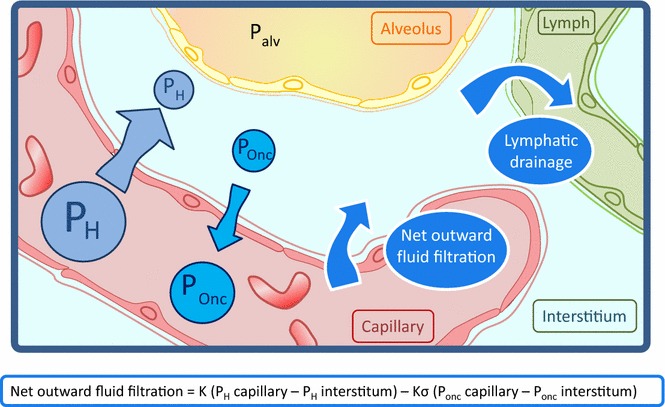
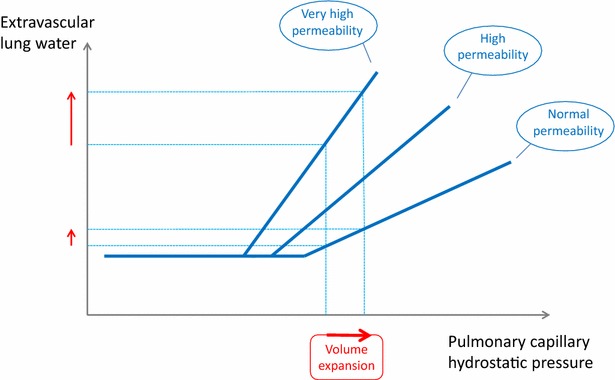
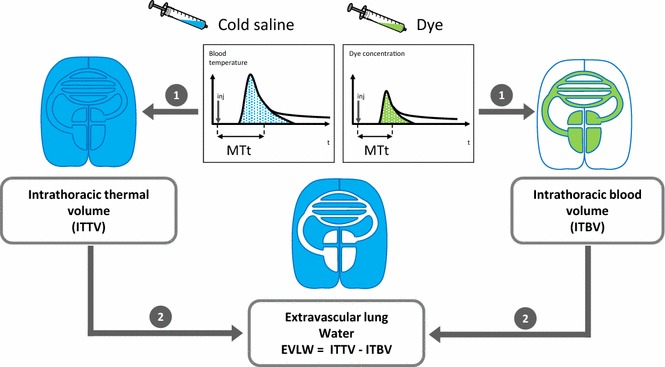
Extravascular lung water (EVLW) is the amount of fluid that is accumulated in the interstitial and alveolar spaces. In lung oedema, EVLW increases either because of increased lung permeability or because of increased hydrostatic pressure in the pulmonary capillaries, or both. Increased EVLW is always potentially life-threatening, mainly because it impairs gas exchange and reduces lung compliance. The only technique that provides an easy measurement of EVLW at the bedside is transpulmonary thermodilution. The validation of EVLW measurements by thermodilution was based on studies showing reasonable correlations with gravimetry or thermo-dye dilution in experimental and clinical studies. EVLW should be indexed to predicted body weight. This indexation reduces the proportion of ARDS patients for whom EVLW is in the normal range. Compared to non-indexed EVLW, indexed EVLW (EVLWI) is better correlated with the lung injury score and the oxygenation and it is a better predictor of mortality of patients with acute lung injury or acute respiratory distress syndrome (ARDS). Transpulmonary thermodilution also provides the pulmonary vascular permeability index (PVPI), which is an indirect reflection of the integrity of the alveolocapillary barrier. As clinical applications, EVLWI and PVPI may be useful to guide fluid management of patients at risk of fluid overload, as during septic shock and ARDS. High EVLWI and PVPI values predict mortality in several categories of critically ill patients, especially during ARDS. Thus, fluid administration should be limited when EVLWI is already high. Whatever the value of EVLWI, PVPI may indicate that fluid administration is particularly at risk of aggravating lung oedema. In the acute phase of haemodynamic resuscitation during septic shock and ARDS, high EVLWI and PVPI values may warn of the risk of fluid overload and prevent excessive volume expansion. At the post-resuscitation phase, they may prompt initiation of fluid removal thereby achieving a negative fluid balance.
Keywords: Acute lung injury; Acute respiratory distress syndrome; Extravascular lung water; Fluid management; Fluid responsiveness; Hemodynamic monitoring; Lung oedema; Pulmonary vascular permeability index; Transpulmonary thermodilution.
Figures

References
-
- Perel A, Monnet X. Extravascular lung water. In: Vincent J, Hall J (eds) Encyclopedia of intensive care medicine. Springer-Verlag, Berlin Heidelberg; 2011.
-
- Kushimoto S, Taira Y, Kitazawa Y, et al. The clinical usefulness of extravascular lung water and pulmonary vascular permeability index to diagnose and characterize pulmonary edema: a prospective multicenter study on the quantitative differential diagnostic definition for acute lung injury/acute respiratory distress syndrome. Crit Care. 2012;16:R232. doi: 10.1186/cc11898. - DOI - PMC - PubMed
LinkOut - more resources
Full Text Sources
Other Literature Sources
Medical
Research Materials
