Review
. 2016 Mar 1:98:19-34.
doi: 10.1016/j.addr.2015.10.022. Epub 2015 Nov 6.

Recent advances of cocktail chemotherapy by combination drug delivery systems

Affiliations
Review

Recent advances of cocktail chemotherapy by combination drug delivery systems

Quanyin Hu et al. Adv Drug Deliv Rev. .

Abstract

Combination chemotherapy is widely exploited for enhanced cancer treatment in the clinic. However, the traditional cocktail administration of combination regimens often suffers from varying pharmacokinetics among different drugs. The emergence of nanotechnology offers an unparalleled opportunity for developing advanced combination drug delivery strategies with the ability to encapsulate various drugs simultaneously and unify the pharmacokinetics of each drug. This review surveys the most recent advances in combination delivery of multiple small molecule chemotherapeutics using nanocarriers. The mechanisms underlying combination chemotherapy, including the synergistic, additive and potentiation effects, are also discussed with typical examples. We further highlight the sequential and site-specific co-delivery strategies, which provide new guidelines for development of programmable combination drug delivery systems. Clinical outlook and challenges are also discussed in the end.

Keywords: Cancer; Chemotherapy; Combination; Drug delivery; Nanocarriers.


Figures

Fig. 1
Fig. 1
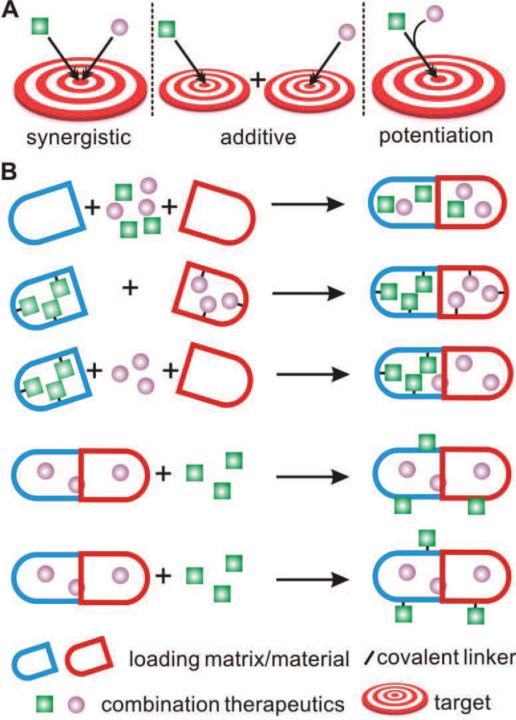
A. Schematic illustration of the mechanisms underlying combination chemotherapy, including synergistic effects, additive effects and potentiation effects. B. Popular implementations of co-encapsulating small molecular drugs in combination delivery systems. Drugs can be loaded into the co-delivery system through different implementations, including physical encapsulation + physical encapsulation, chemical conjugation + chemical conjugation, physical encapsulation + chemical conjugation, physical encapsulation + absorbance on the surface of formulation, physical encapsulation + conjugation on the surface of formulation (from top to down). The loading matrices/materials (in blue and red) can be either different or identical.
Fig. 2
Fig. 2
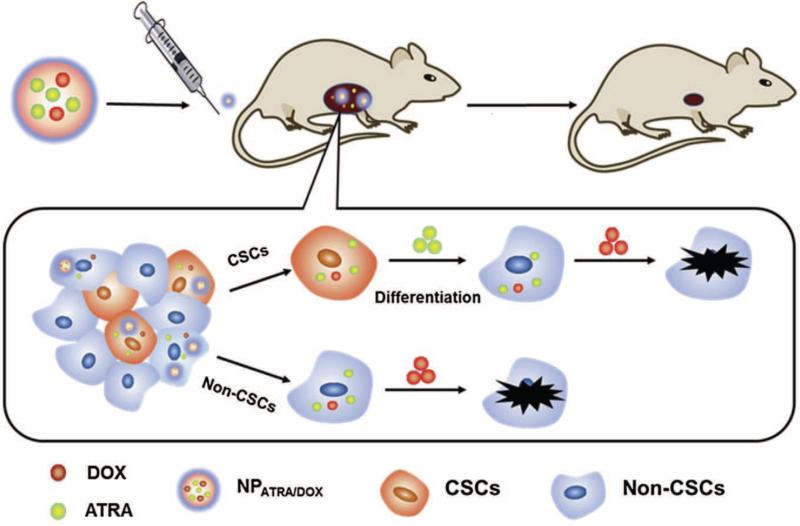
Schematic of the co-delivery of ATRA and Dox to eliminate both CSCs and non-CSCs. Reprinted with permission from [126].
Fig. 3
Fig. 3
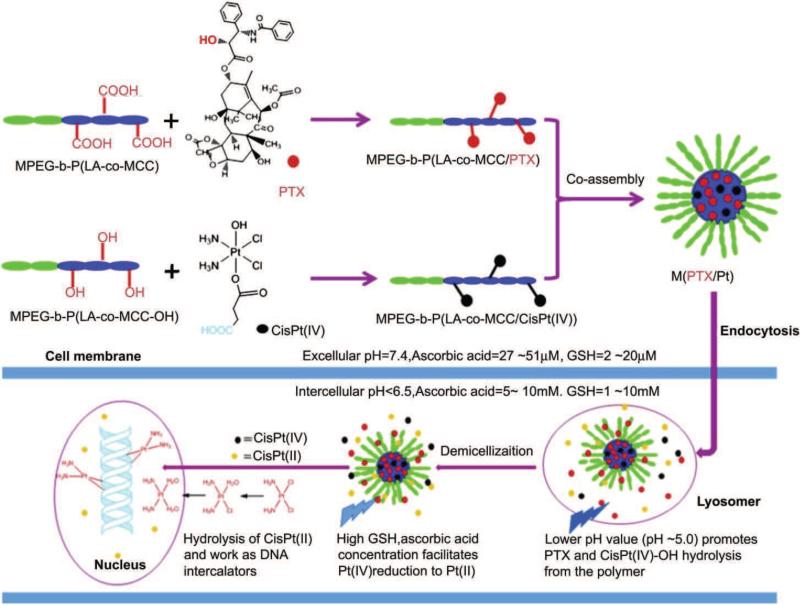
Preparation of the PTX and Pt co-delivery micelle and the anti-cancer mechanism underlying the combination effects. Reprinted with permission from [142].
Fig. 4
Fig. 4
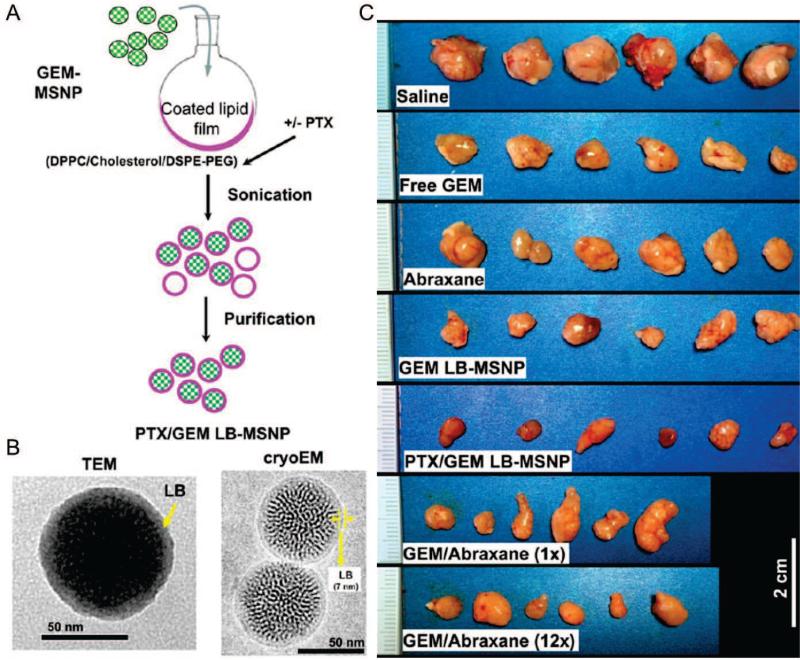
A. Schematic illustration of the preparation of PTX and GEM co-encapsulated LB-MSNP. B. TEM and cryoTEM images of PTX-GEM-LB-MSNP at the ratio of 10:1 (PTX:GEM). C. In vivo antitumor efficacy evaluation after treatment with various drug formulations. Reprinted with permission from [146].
Fig. 5
Fig. 5
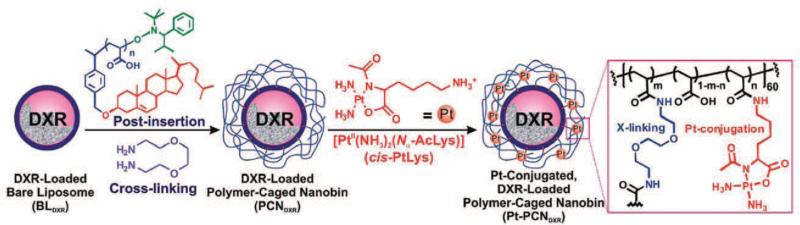
Preparation of platinum-conjugated, Dox-loaded polymer-caged nanobin. Reprinted with permission from [162].
Fig. 6
Fig. 6
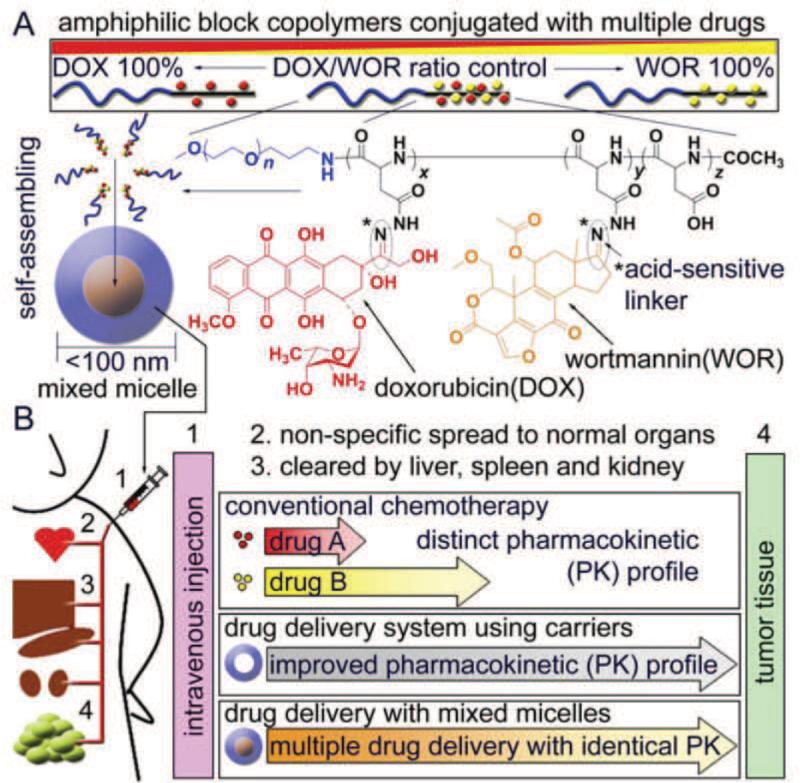
A. Schematic illustration of micelle self-assembled from Dox and WOR conjugated poly(ethylene glycol)-poly(aspartate hydrazide) block copolymer. B. Advantages of the Dox and WOR co-encapsulated micelle DDS compared with free drugs mixture. Reprinted with permission from [163].
Fig. 7
Fig. 7
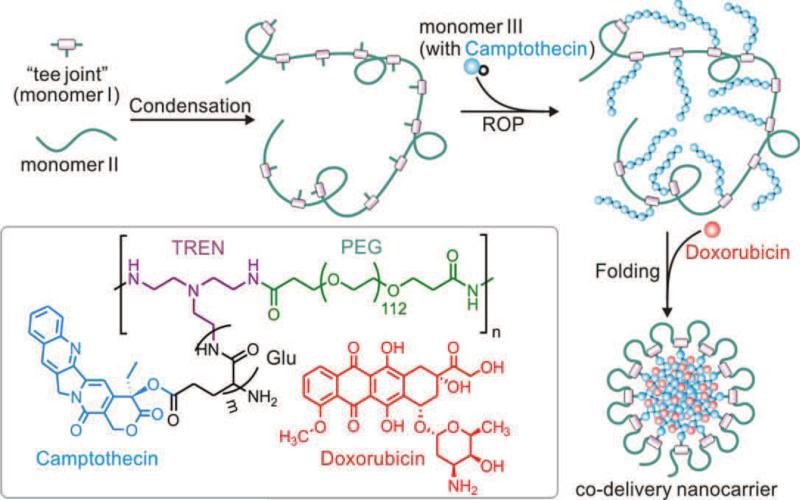
Schematic of synthesis of graft copolymer and formation of stealth nanocarriers. The nanocarriers encapsulated with Dox was self-assembled from graft copolymer with pendant CPT segments. Reprinted with permission from [165].
Fig. 8
Fig. 8
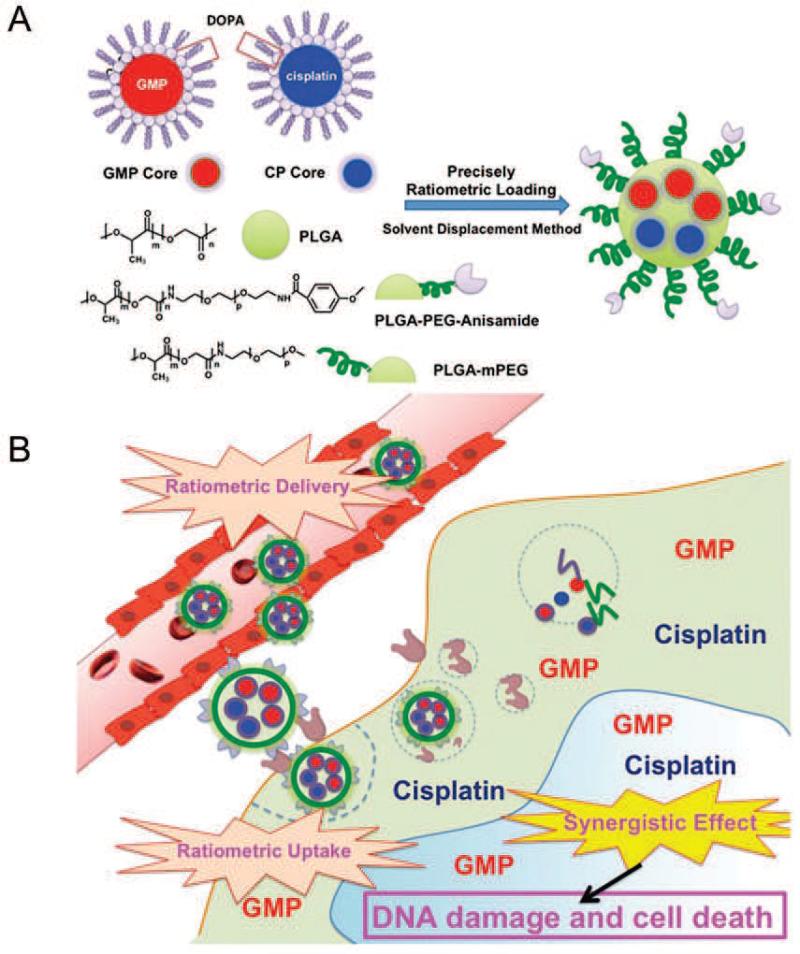
A. Preparation of GMP and Pt co-encapsulated PLGA nanoparticles. B. Ratiometrical delivery of GMP and Pt to tumor site and strong additive anti-tumor efficacy. Reprinted with permission from [166].
Fig. 9
Fig. 9
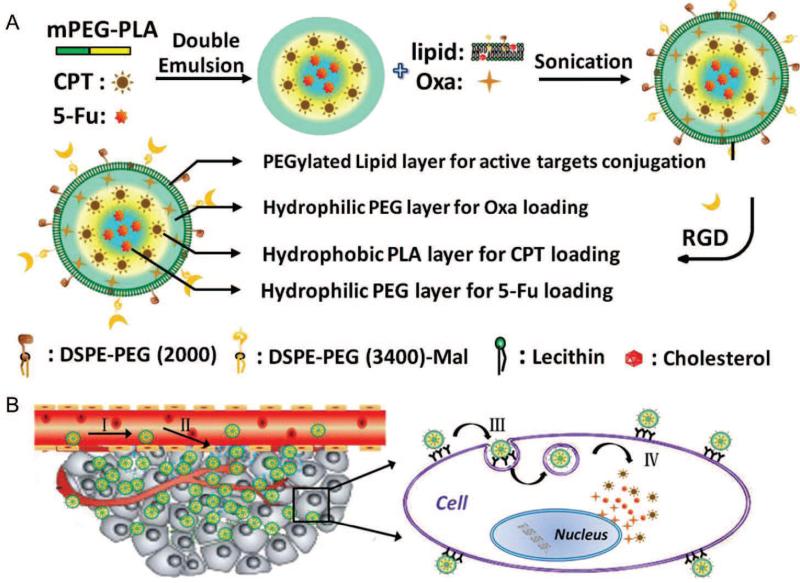
A. Scheme of multiple layer-by-layer structured hybrid nanoparticles co-encapsulated with Oxa, CPT and 5-Fu. B. The accumulation of co-delivery system at the tumor site with a combination of passive and active targeting. I. prolonged circulation time. II. selectively target to tumor cells. III. Endocytosis of co-delivery system. IV. the release of loaded drug. Reprinted with permission from [169].
Fig. 10
Fig. 10
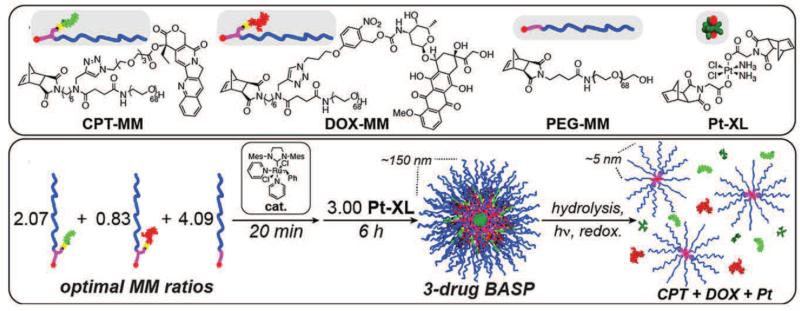
Synthesis of drug-conjugated monomers and preparation of three-drug-loaded co-delivery system. The release of individual drug release is responsive to three distinct triggers. Reprinted with permission from [170].
Fig. 11
Fig. 11
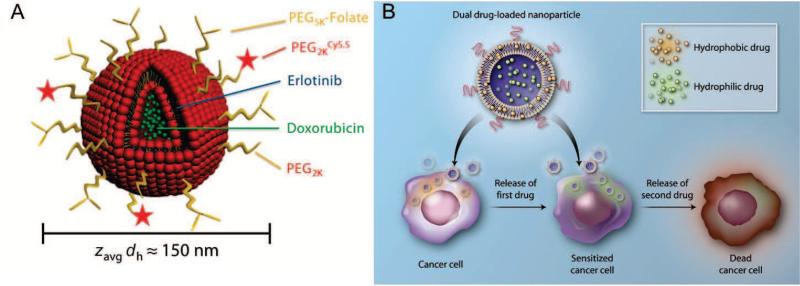
A. Schematic of co-encapsulation of erlotinib and Dox in the liposomal delivery system. B. Rewiring of signaling network enabled by time-staggered release of combination drugs maximizes the potentiation effects of combination chemotherapy. Reprinted with permission from [184, 185].
Fig. 12
Fig. 12
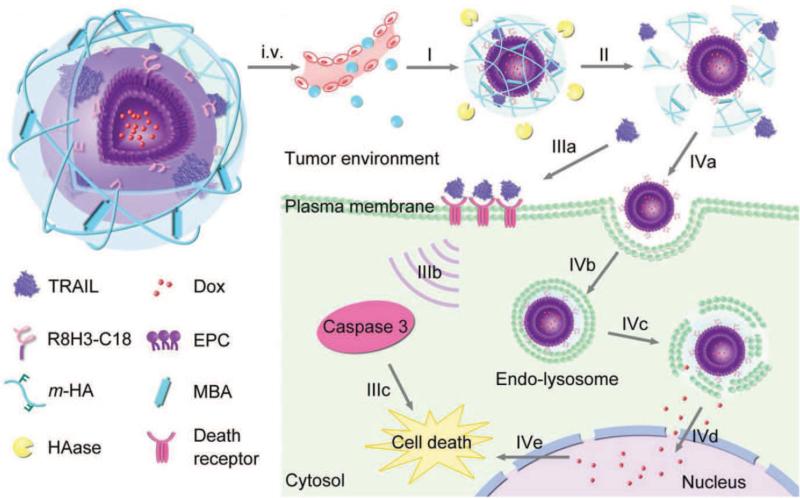
Schematic design of TRAIL/Dox-Gelipo for sequential and site-specific drug delivery. The Gelipo is comprised of Dox-loaded liposome core and HA-based out shell. After intravenous injection, the Gelipo will accumulate at tumor site and the HA shell will be cleaved by overexpressed HAase readily. The exposed TRAIL will bind to the death receptor and trigger downstream apoptosis signal. The encapsulated Dox will be triggered to release by the vacidity of lysosome and accumulate at the nuclei. Reprinted with permission from [189].
Fig. 13
Fig. 13
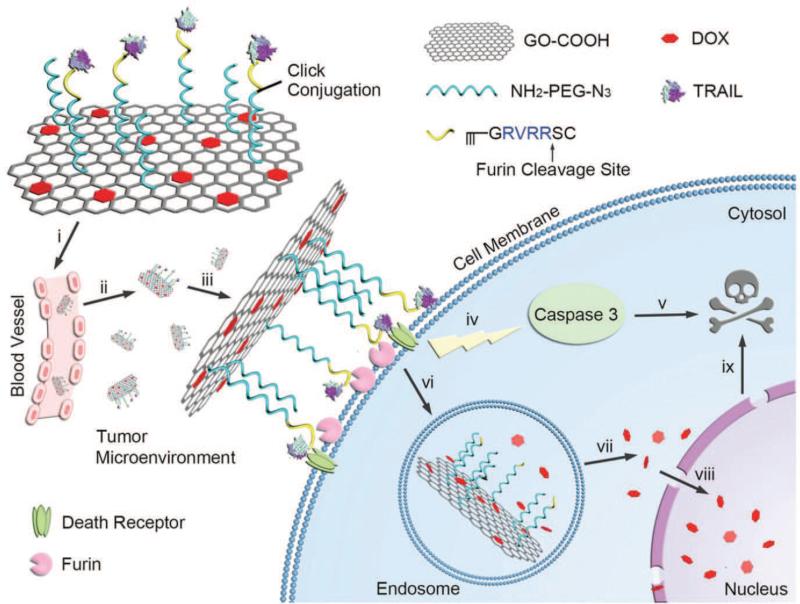
Schematic design of enzyme-responsive graphene oxide-based sequential delivery system. The TRAIL is conjugated on the graphene oxide through a furin-cleavable peptide linker and Dox was loaded on the graphene via π–π stacking interaction. After accumulation at tumor site, the overexpressed furin will cleave the peptide linker and promote the exposition of TRAIL toward death receptors. The Dox-loaded graphene oxide nanosheet will be internalized and Dox will release and accumulate at nuclei with the assistance of acidity of lysosome. Reprinted with permission from [190].

References

    1. Peer D, Karp JM, Hong S, Farokhzad OC, Margalit R, Langer R. Nanocarriers as an emerging platform for cancer therapy. Nat. Nanotechnol. 2007;2:751–760. - PubMed
    1. Stewart BW, Kleihues P. World cancer report. IARC press; Lyon: 2003. I.A.f.R.o. Cancer.
    1. World cancer report 2014. WHO; Geneva: 2014. I.A.f.R.o. Cancer.
    1. Siegel R, Ma J, Zou Z, Jemal A. Cancer statistics, 2014, CA. Cancer J. Clin. 2014;64:9–29. - PubMed
    1. DeSantis CE, Lin CC, Mariotto AB, Siegel RL, Stein KD, Kramer JL, Alteri R, Robbins AS, Jemal A. Cancer treatment and survivorship statistics, 2014, CA. Cancer J. Clin. 2014;64:252–271. - PubMed

Publication types

MeSH terms