


A Systematic Review of Factors Associated with Non-Adherence to Treatment for Immune-Mediated Inflammatory Diseases
- PMID: 26547912
- PMCID: PMC4662720
- DOI: 10.1007/s12325-015-0256-7
A Systematic Review of Factors Associated with Non-Adherence to Treatment for Immune-Mediated Inflammatory Diseases
Abstract
Background: Non-adherence impacts negatively on patient health outcomes and has associated economic costs. Understanding drivers of treatment adherence in immune-mediated inflammatory diseases is key for the development of effective strategies to tackle non-adherence.
Objective: To identify factors associated with treatment non-adherence across diseases in three clinical areas: rheumatology, gastroenterology, and dermatology.
Design: Systematic review.
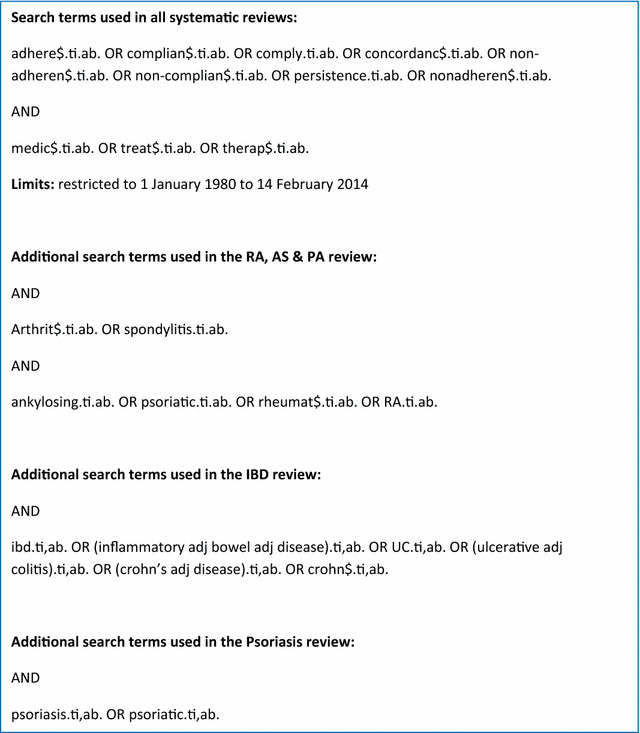
Data sources: Articles published in PubMed, Science Direct, PsychINFO and the Cochrane Library from January 1, 1980 to February 14, 2014.
Study selection: Studies were eligible if they included patients with a diagnosis of rheumatoid arthritis, ankylosing spondylitis, psoriatic arthritis, inflammatory bowel disease, or psoriasis and included statistics to examine associations of factors with non-adherence.
Data extraction: Data were extracted by the first reviewer using a standardized 23-item form and verified by a second/third reviewer. Quality assessment was carried out for each study using a 16-item quality checklist.
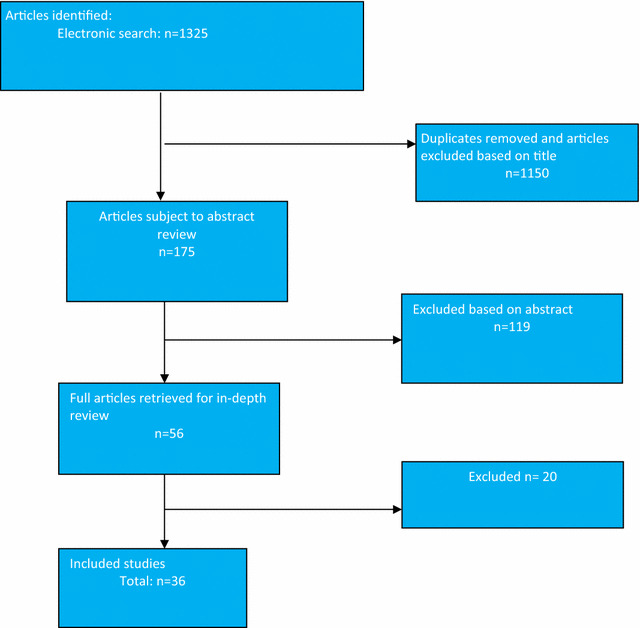
Results: 73 studies were identified for inclusion in the review. Demographic or clinical factors were not consistently associated with non-adherence. Limited evidence was found for an association between non-adherence and treatment factors such as dosing frequency. Consistent associations with adherence were found for psychosocial factors, with the strongest evidence for the impact of the healthcare professional-patient relationship, perceptions of treatment concerns and depression, lower treatment self-efficacy and necessity beliefs, and practical barriers to treatment.
Conclusions: While examined in only a minority of studies, the strongest evidence found for non-adherence were psychosocial factors. Interventions designed to address these factors may be most effective in tackling treatment non-adherence.
Keywords: Inflammatory bowel disease; Patient adherence; Psoriasis; Psoriatic arthritis; Rheumatology.
Conflict of interest statement
Dr Eleni Vangeli received funding from pharmaceutical companies for the research and development of patient support programs as a former employee of Atlantis Healthcare. Dr. Savita Bakhshi is a former employee of Atlantis Healthcare, and received funding from Abbott/AbbVie to conduct the current review, and from other pharmaceutical companies for the research and development of patient adherence and support programs. Dr. Anna Baker as a former employee of Atlantis Healthcare received funding from a number of pharmaceutical companies for the research and development of patient adherence and support programs, including funding from Abbott/AbbVie to conduct the current review. Dr. Abigail Fisher received funding from AbbVie to conduct the systematic review. Delaney Bucknor has received payment from Atlantis Healthcare as a freelance researcher to undertake a component of the systematic review submitted for publication. Dr. Andrew Östör has received support from (including attendance at conferences), undertakes clinical trials and acts as a consultant to Roche, Chugai, MSD, Abbvie, Pfizer, Napp & BMS. Prof. Mrowietz has been an advisor and/or received speakers honoraria and/or received grants and/or participated in clinical trials of the following companies: Abbott/AbbVie, Almirall-Hermal, Amgen, BASF, Biogen Idec, Celgene, Centocor, Eli Lilly, Forward Pharma, Galderma, Janssen, Leo Pharma, Medac, MSD, Miltenyi Biotech, Novartis, Pfizer, Teva, VBL, Xenoport. Prof. Peyrin-Biroulet reports having received consulting and/or lecture fees from AbbVie, Actelion, Bristol-Myers Squibb, Celgène, Ferring Pharmaceuticals, Janssen, Merck, Mitsubishi, Shire Pharmaceuticals, Therakos, Norgine, Pharmacosmos, Pilège, Therakos, Tillotts Pharma AG (acquired by Zeria Pharmaceutical Co., Ltd) and Vifor. Ana P Lacerda Ana Lacerda is an employee of AbbVie Inc, and may hold AbbVie stock or options. Prof. Weinman is also employed by Atlantis Healthcare, which provides patient adherence and support programs, which are funded by a number of pharmaceutical companies.
Figures


References
-
- Haynes RB, et al. Interventions for enhancing medication adherence. Cochrane Database Syst Rev. 2008:(2):CD000011. - PubMed
Publication types
MeSH terms
Grants and funding
LinkOut - more resources
Full Text Sources
Other Literature Sources
Medical
Research Materials
