Review
. 2016 Jan;15(1):62-73.
doi: 10.1111/gbb.12257. Epub 2015 Nov 8.

Development and function of the midbrain dopamine system: what we know and what we need to

Affiliations
Review

Development and function of the midbrain dopamine system: what we know and what we need to

G B Bissonette et al. Genes Brain Behav. 2016 Jan.

Abstract

The past two decades have seen an explosion in our understanding of the origin and development of the midbrain dopamine system. Much of this work has been focused on the aspects of dopamine neuron development related to the onset of movement disorders such as Parkinson's disease, with the intent of hopefully delaying, preventing or fixing symptoms. While midbrain dopamine degeneration is a major focus for treatment and research, many other human disorders are impacted by abnormal dopamine, including drug addiction, autism and schizophrenia. Understanding dopamine neuron ontogeny and how dopamine connections and circuitry develops may provide us with key insights into potentially important avenues of research for other dopamine-related disorders. This review will provide a brief overview of the major molecular and genetic players throughout the development of midbrain dopamine neurons and what we know about the behavioral- and disease-related implications associated with perturbations to midbrain dopamine neuron development. We intend to combine the knowledge of two broad fields of neuroscience, both developmental and behavioral, with the intent on fostering greater discussion between branches of neuroscience in the service of addressing complex cognitive questions from a developmental perspective and identifying important gaps in our knowledge for future study.

Keywords: Development; midbrain dopamine; nurr1; pitx3; substantia nigra pars compacta; ventral tegmental area.


Figures

Figure 1
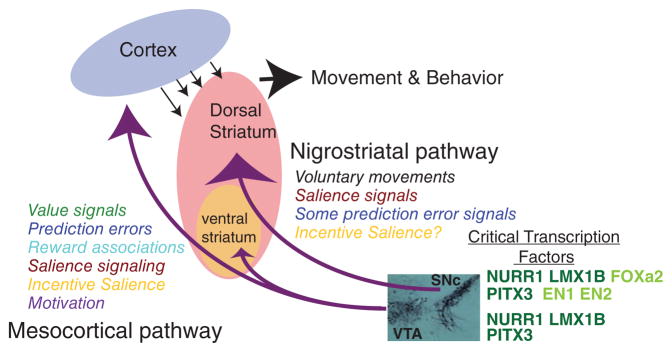
Figure 1. Major projections of mdDA neurons and known functions
In this simplified diagram of the major mdDA projections (shown as purple arrows), mesocortical pathway is shown emanating mainly from the VTA and sending major projections to ventral striatum (nucleus accumbens) and to cortex. This pathway is critical for creating reward associations, for signaling incentive salience and for providing value, PE and salience signals. The nigrostriatal pathway is shown emanating mainly from the SNc, providing the dopaminergic tone necessary for voluntary movements and also carrying salience and PE signals. As mdDA neurons in each of these pathways are not only located in either SNc or VTA, these neural areas are shown to overlap slightly. Corticostriatal input is shown as small black arrows, while the final outcome of this circuit is shown as bodily movement, also known as behavior. Critical transcription factors that determine the expression of the dopamine neuron phenotype and survivability of mdDA neurons in either the SNc or VTA are listed and color coded to illuminate which transcription factors are important for both SNc and VTA, and which are important for SNc development. The mdDA VTA and SNc histology image, taken at × 10, of diaminobenzidine reaction to tyrosine hydroxylase stain (1:2500; Sigma Chemical Co, St. Louis, MO, USA) using a Leica DMRX microscope (Leica Microsystems GmbH, Wetzlar, Germany).
Figure 2
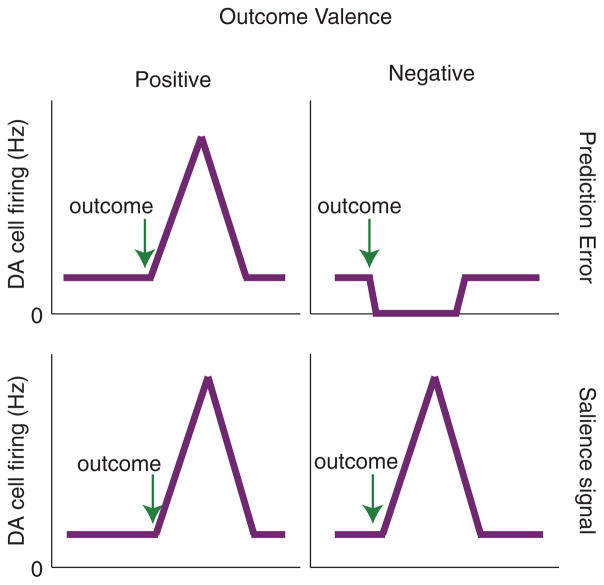
Figure 2. Theoretical dopamine cell firing showing either PE or salience signaling
Purple line represents the firing of a theoretical mdDA neuron while an animal is engaged in some form of activity which permits learning. When the valence (positive or negative) of an outcome is better or worse than expected, an mdDA neuron carrying PE information will either increase or decrease firing, respectively. However, if the mdDA neuron is signaling salience, then it will increase firing for both a better-than-expected and a worse-than-expected outcome. These example neural responses are to unexpected outcomes, but after learning, mdDA neurons that signal PE and salience also respond in a similar fashion to cues that predict negative or positive events.
Figure 3
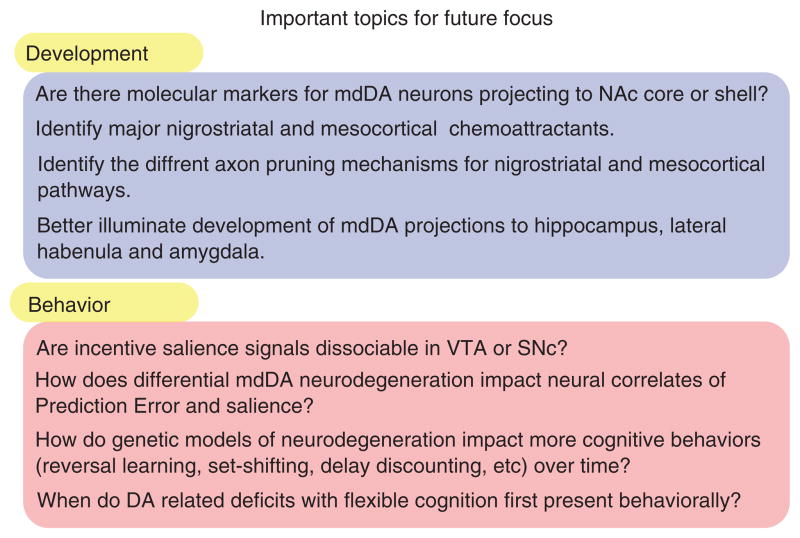
Figure 3. List of major questions remaining for developmental and behavioral neuroscience
Broken down between questions and topics that can be answered by either developmental or behavioral neuroscience, this list identifies major unanswered questions. Developmental questions focus on better understanding how mdDA neurons connect with other brain areas, both in terms of the chemoattractants and regarding pruning of synapses, while expanding the knowledge beyond the nigrostriatal and mesocortical pathways. Behavioral questions focus on using existing and future animal models of altered mdDA development to address questions of flexible cognition, separate from motor and sensorimotor questions currently being addressed. Additionally, the combination of developmental perturbations with in vivo electrophysiological techniques will be a powerful approach for studying the impact of altered mdDA development on PE, salience and incentive salience signals.

References

    1. Abeliovich A, Hammond R. Midbrain dopamine neuron differentiation: factors and fates. Dev Biol. 2007;304:447–454. - PubMed
    1. Alavian KN, Scholz C, Simon HH. Transcriptional regulation of mesencephalic dopaminergic neurons: the full circle of life and death. Mov Disord. 2008;23:319–328. - PubMed
    1. Alberi L, Sgado P, Simon HH. Engrailed genes are cell-autonomously required to prevent apoptosis in mesencephalic dopaminergic neurons. Development. 2004;131:3229–3236. - PubMed
    1. Ardayfio P, Moon J, Leung KK, Youn-Hwang D, Kim KS. Impaired learning and memory in Pitx3 deficient aphakia mice: a genetic model for striatum-dependent cognitive symptoms in Parkinson’s disease. Neurobiol Dis. 2008;31:406–412. - PMC - PubMed
    1. Bagri A, Marin O, Plump AS, Mak J, Pleasure SJ, Rubenstein JL, Tessier-Lavigne M. Slit proteins prevent midline crossing and determine the dorsoventral position of major axonal pathways in the mammalian forebrain. Neuron. 2002;33:233–248. - PubMed

Publication types