. 2015 Nov 9:5:16513.
doi: 10.1038/srep16513.

A novel function of the human oncogene Stil: Regulation of PC12 cell toxic susceptibility through the Shh pathway

Affiliations

A novel function of the human oncogene Stil: Regulation of PC12 cell toxic susceptibility through the Shh pathway

Lei Li et al. Sci Rep. .

Abstract

The human oncogene SCL/TAL1 interrupting locus (Stil) is highly conserved in vertebrate species. Here, we report new findings of Stil in the regulation of toxic susceptibility in mammalian dopaminergic (DA)-like PC12 cells. RNAi-mediated knockdown of Stil expression did not affect the survival of proliferating PC12 cells but caused a significant amount of cell death in differentiated neurons after toxic drug treatment. In contrast, overexpression of Stil increased toxic susceptibility only in proliferating cells but produced no effect in mature neurons. Exogenetic inactivation or activation of the Sonic hedgehog (Shh) signaling transduction mimicked the effect of Stil knockdown or overexpression in regulation of PC12 cell toxic susceptibility, suggesting that Stil exerts its role through the Shh pathway. Together, the data provide evidence for novel functions of the human oncogene Stil in neural toxic susceptibility.


Conflict of interest statement

The authors declare no competing financial interests.

Figures
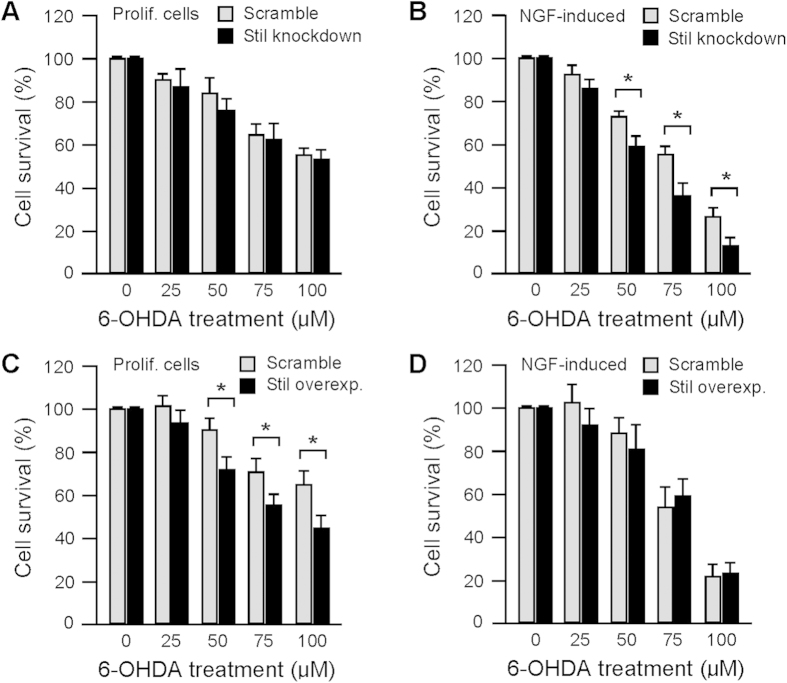
Figure 1
Figure 1. Effects of Stil expression on PC12 cell’s toxic susceptibility.
(A) In proliferating PC12 cells, both the control and Stil-knockdown cells showed dose-dependent decreases in cell survival in response to 6-OHDA treatment. No significant differences in cell survival were detected between the treatment and control cells. (B) In NGF-induced mature cells, knockdown of Stil expression decreased the rate of cell survival after 6-OHDA treatment, especially when treated with high concentrations of 6-OHDA. (C) In proliferating cells, overexpression of Stil decreased the rate of cell survival as compared to control cells, especially when tested with high concentrations of 6-OHDA. (D) In NGF-induced mature cells, overexpression of Stil produced no effect on cell survival as compared to control cells. Data represent the Means ± SE, n = 6; *p < 0.01.
Figure 2
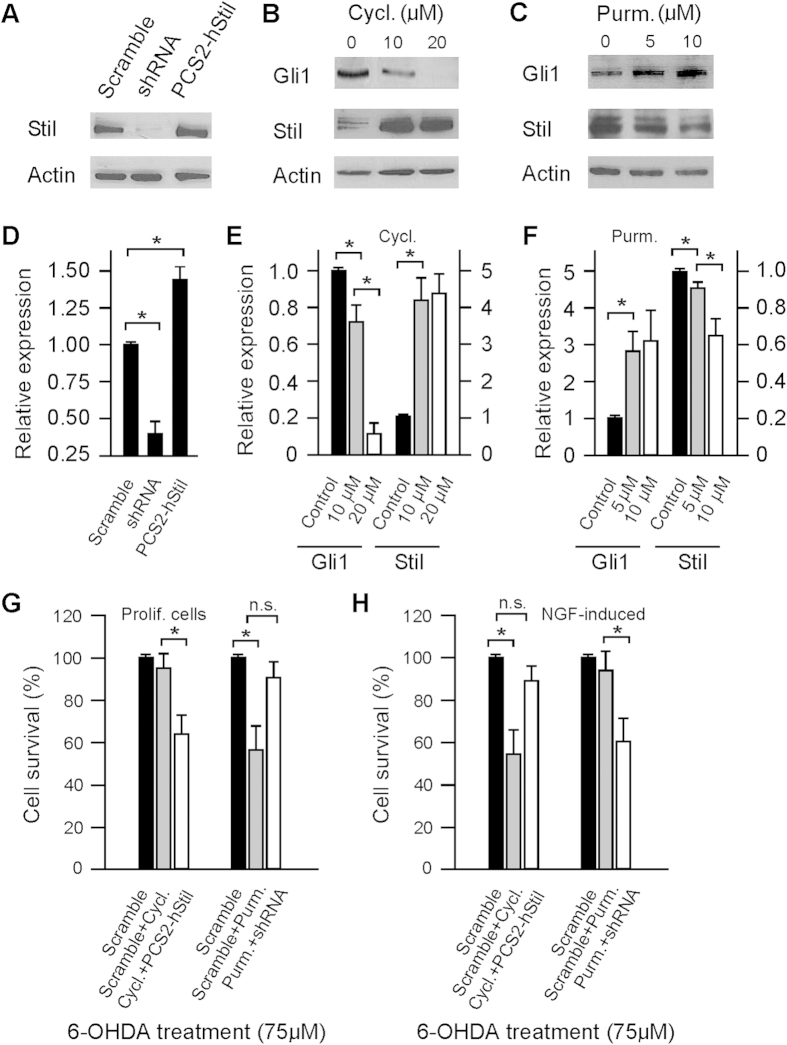
Figure 2. Effects of Shh signaling on Stil expression and PC12 cell survival in response to toxic drug treatment.
(A) Western blot of STIL proteins in PC12 cells after transfection with pSIREN-Stil-shRNA (knockdown) or pCS2+Flh-Stil plasmid (overexpression). The gels have been run under the same experimental conditions. (B,C) Western blot of STIL and GLI1 proteins in PC12 cells after treatment with Smo receptor agonist cyclopamine or Smo receptor antagonist purmorphamine. Treatment with cyclopamine decreased GLI1 expression but resulted in the accumulation of STIL proteins. Treatment with purmorphamine promoted Shh signaling but caused a decrease in STIL protein expression. All the gels have been run under the same experimental conditions. (D) RT-PCR analyses of Stil mRNA expression in PC12 cells transfected with pSIREN-Stil-shRNA or pCS2+Flh-Stil plasmid. Note the alterations in Stil mRNA expression in response to plasmid transfection. (E,F) RT-PCR analyses of Stil and Gli1 expression in response to cyclopamine or purmorphamine treatment in PC12 cells. Treatment with either compound resulted in significant changes in the expression of Stil or Gli1 mRNA. (G,H) Cell survival in response to 6-OHDA treatment (75 μM) in proliferating and NGF-induced mature cells while the Shh signaling transduction was modified by plasmid transfection. Data represent the Means ± SE, n = 4; n.s., not significant, *p < 0.01.
Figure 3
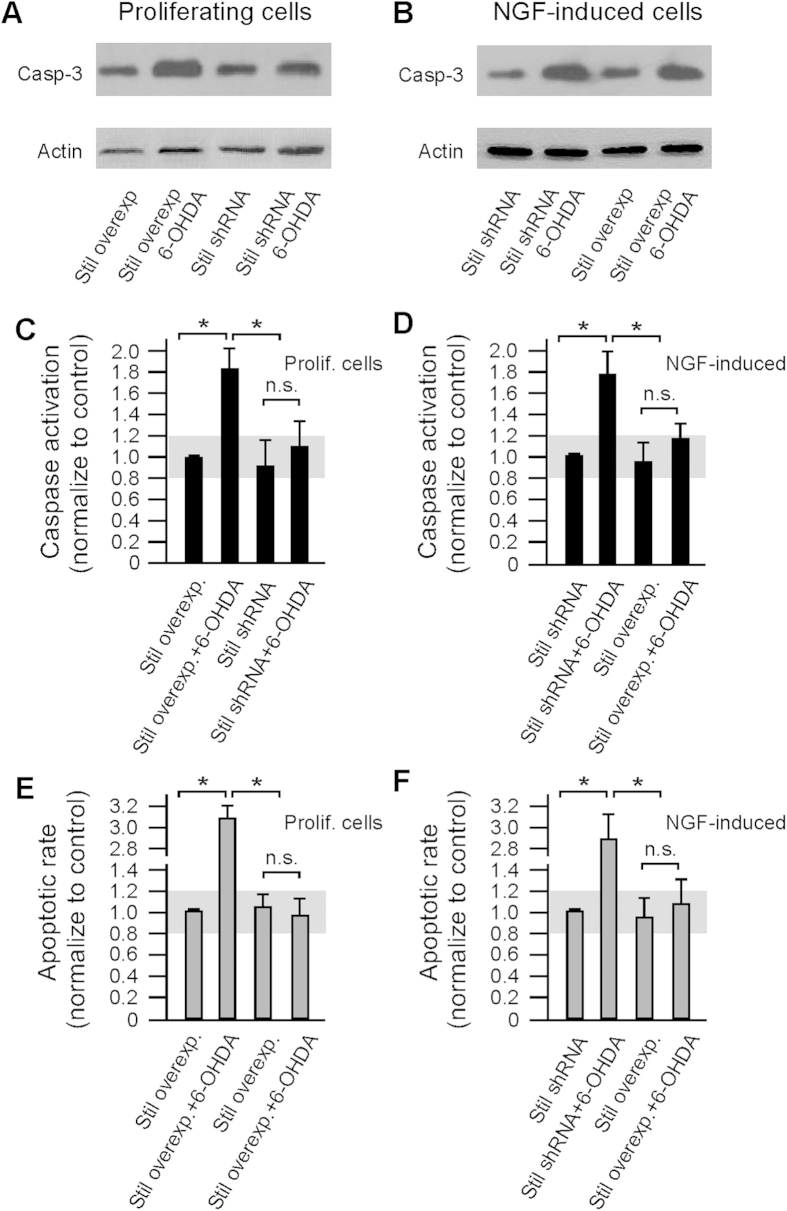
Figure 3. Caspase-3 mediated apoptotic cell death in PC12 cells in response to 6-OHDA treatment (75 μM).
(A,B) Western blot of cleaved Caspase-3 proteins in proliferating and NGF-induced mature cells in response to sham or 6-OHDA treatment. Note the increase in cleaved Caspase-3 expression in proliferating cells after Stil-overexpression and in differentiated cells after Stil-knockdown. The gels have been run under the same experimental conditions. (C,D) Caspase activity in proliferating and NGF-induced PC12 cells in transfected cells before and after 6-OHDA treatment. Gray bars indicate the range of caspase activity in control cells. Note the increase of Caspase activation in proliferating cells in response to Stil overexpression and in mature cells in response to Stil knockdown after 6-OHDA treatment. (E,F) TUNEL analyses of apoptotic cell death in PC12 cells. Gray bars indicate the range of cell death in control cells. Note the increase of cell death in proliferating cells in response to Stil overexpression and in mature cells in response to Stil knockdown after 6-OHDA treatment. Data represent the Means ± SE, n = 4; n.s., not significant, *p < 0.01.
Figure 4
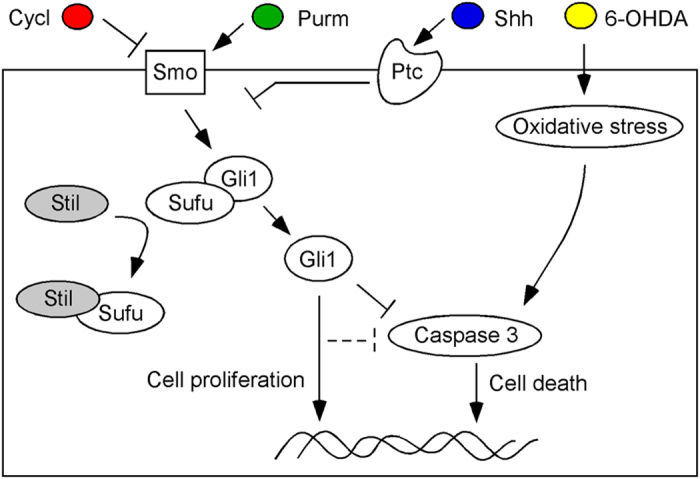
Figure 4. Possible mechanisms of Stil in the Shh pathway in the regulation of PC12 cell toxic susceptibility.
Normally, STIL binds SUFU and free GLI1 for downstream gene transcription. Inactivation of Smo receptors by cyclopamine inhibits the Shh pathway, but the downstream Gli1 signaling can be resumed by overexpression of STIL. Activation of Smo receptors by purmorphamine promotes Shh signaling, but the effect of purmorphamine can be diminished by down-regulation of STIL expression. In mature cells, the increase of Gli1 transcription inhibits the Caspase-3 activity and thereby prevents cell apoptosis. In proliferating cells, the increase of Gli1 signaling promotes cell proliferating but may also lose its inhibition to Caspase-3 or activates other signaling transduction pathways that increase the cell’s drug sensitivity.

References

    1. Aplan P., Lombardi D. & Kirsch I. Structural characterization of sil, a gene frequently disrupted in T-cell acute lymphoblastic-leukemia. Mol. Cell. Biol. 11, 5462–5469 (1991). - PMC - PubMed
    1. Collazo-Garcia N., Scherer P. & Aplan P. Cloning and characterization of a murine SIL gene. Genomics 30, 506–513 (1995). - PubMed
    1. Stevens N. R., Dobbelaere J., Brunk K., Franz A. & Raff J. W. Drosophila Ana2 is a conserved centriole duplication factor. J. Cell. Biol. 188, 313–323 (2010). - PMC - PubMed
    1. Izraeli S., ColaizzoAnas T., Bertness V., Mani K., Aplan P. & Kirsch I. Expression of the SIL gene is correlated with growth induction and cellular proliferation. Cell Growth Differ. 8, 1171–1179 (1997). - PubMed
    1. Castiel A. et al. The stil protein regulates centrosome integrity and mitosis through suppression of chfr. J. Cell Sci. 124, 532–539 (2011). - PMC - PubMed

Publication types