


Interpreting at the End of Life: A Systematic Review of the Impact of Interpreters on the Delivery of Palliative Care Services to Cancer Patients With Limited English Proficiency
- PMID: 26549596
- PMCID: PMC4955824
- DOI: 10.1016/j.jpainsymman.2015.10.011
Interpreting at the End of Life: A Systematic Review of the Impact of Interpreters on the Delivery of Palliative Care Services to Cancer Patients With Limited English Proficiency
Abstract
Context: Language barriers can influence the health quality and outcomes of limited English proficiency (LEP) patients at end of life, including symptom assessment and utilization of hospice services.
Objectives: To determine how professional medical interpreters influence the delivery of palliative care services to LEP patients.
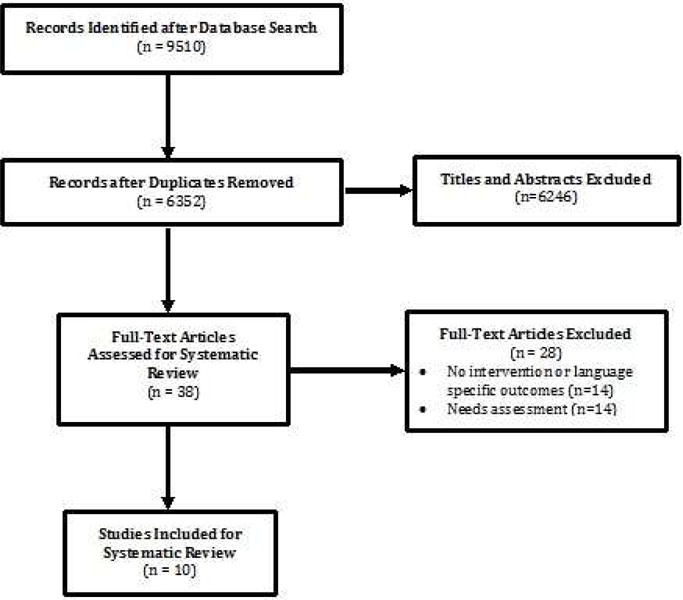
Methods: We conducted a systematic review of the literature in all available languages of six databases from 1960 to 2014. Studies evaluated use of language services for LEP patients who received palliative care services. Data were abstracted from 10 articles and collected on study design, size, comparison groups, outcomes, and interpreter characteristics.
Results: Six qualitative and four quantitative studies assessed the use of interpreters in palliative care. All studies found that the quality of care provided to LEP patients receiving palliative services is influenced by the type of interpreter used. When professional interpreters were not used, LEP patients and families had inadequate understanding about diagnosis and prognosis during goals of care conversations, and patients had worse symptom management at the end of life, including pain and anxiety. Half of the studies concluded that professional interpreters were not used adequately, and several studies suggested that premeetings between clinicians and interpreters were important to discuss topics and terminology to be used during goals of care discussions.
Conclusion: LEP patients had worse quality of end-of-life care and goals of care discussions when professional interpreters were not used. More intervention studies are needed to improve the quality of care provided to LEP patients and families receiving palliative services.
Keywords: Cancer; end of life; hospice; interpreter use; limited English proficiency; non-English-speaking patients; palliative care.
Copyright © 2016 American Academy of Hospice and Palliative Medicine. Published by Elsevier Inc. All rights reserved.
Conflict of interest statement
The authors declare no conflicts of interest.
Figures
References
-
- Ryan C. Language use in the United States: 2011 American Community Survey Reports. Washington, DC: U.S. Census Bureau, U.S. Department of Commerce; 2013. Available at: www.census.gov/prod/2013pubs/acs-22.pdf. Accessed September 9, 2014.
-
- Chalabian J, Dunnington G. Impact of language barrier on quality of patient care, resident stress, and teaching. Teaching & Learning in Medicine. 1997;9:84–90.
-
- Carasquillo O, Orav EJ, Brennan TA, Burstin HR. Impact of language barriers on patient satisfaction in an Emergency Department. J General Intern Med. 1999;14:82–87. - PubMed
Publication types
MeSH terms
Grants and funding
LinkOut - more resources
Full Text Sources
Other Literature Sources
Medical
Miscellaneous
