. 1994;1(2):89-106.

Magnetic Resonance Imaging and Spectroscopy: Application to Experimental Neuro-Oncology

Affiliations

Magnetic Resonance Imaging and Spectroscopy: Application to Experimental Neuro-Oncology

Brian D Ross et al. Q Magn Reson Biol Med. 1994.

Abstract

The development and use of animal brain tumor models over the past 25 years has helped to advance our understanding of both tumor biology and the effectiveness of new therapeutic approaches. The application of MRI and MRS as noninvasive tools for in vivo studies of intracerebral tumor models provides unique possibilities for furthering our knowledge of brain cancer. This article provides a brief background of traditional techniques used to evaluate growth and treatment efficacy in rodent brain tumor models and overviews the use of MR for quantitating intracerebral tumor growth kinetics and therapeutic response of experimental brain tumors from work conducted in this laboratory. The application of MRI and MRS in rodent brain tumor models for evaluation of novel therapeutic approaches, including gene transfer technology, is discussed. Finally, initial results with diffusion MRI for monitoring the treatment of brain tumors is introduced.

Keywords: 9L gliosarcoma; glioma; magnetic resonance imaging (MRI); magnetic resonance spectroscopy (MRS); tumor cell kill; tumor growth kinetics.


Figures
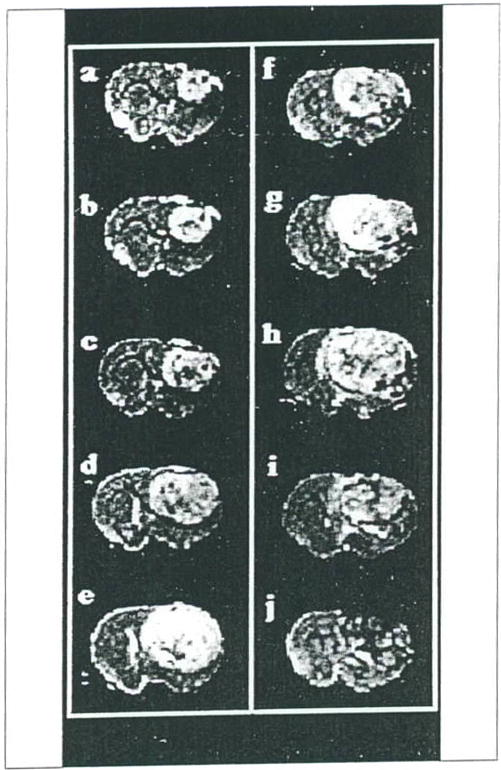
Figure 1
Figure 1
Coronal brain T2-weighted images of two rats at various times post-implantation of 9L tumor cells. Images A–E are from an untreated 9L tumor rat at days 10, 12, 14, 16 and 18 days post-implantation, respectively. Images F–J are from a second rat 9L tumor at days 14, 17, 20, 24 and 28 days post-implantation, respectively. Two hr prior to acquiring the 14 day image (Image F) the rat was treated with a single dose of BCVU (13.3 mg/kg, i.p.). The tumor continued to expand until day 20 post-implantation and a heterogeneous reduction in tumor image intensity was noted at later times following treatment (images I and J).
Figure 2
Figure 2
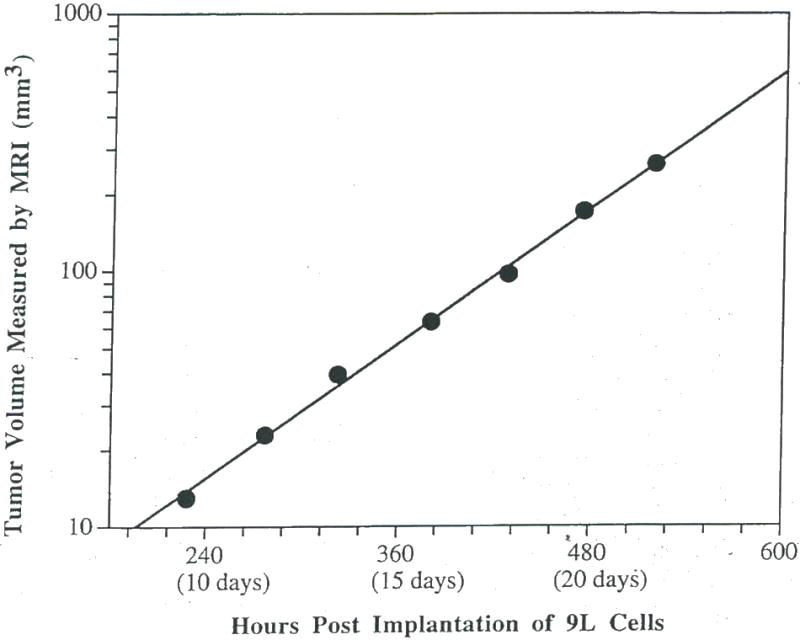
A plot of the MRI-determined untreated intracerebral 9L rumor volume versus time post-implantation. The volume measurements are shown along with a line corresponding to the least squares fit to the experimentais data. This plot reveals the exponential growth of the intracerebral 9L tumor which is characteristic of all 9L rumors examined to date.
Figure 3
Figure 3
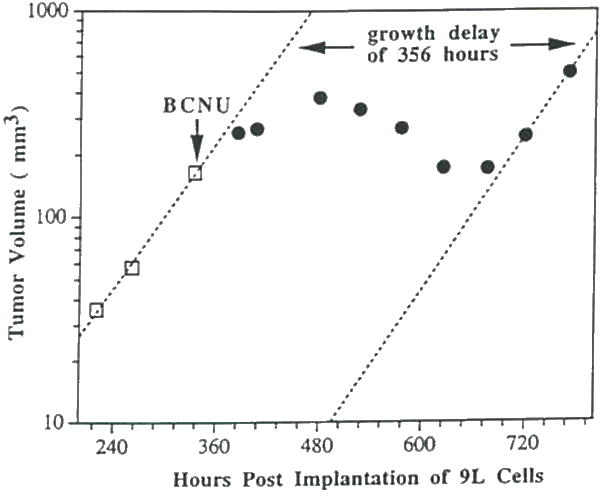
A plot of MRI-determined intracerebral (umor volume versus time post-implantation for an intracranial 9L tumor treated with an LD10 dose (13.3 mg/kg, i.p.) of BCNU at 350 hr. post-implantation. The initial three tumor volume measurements were used to determine the pre-treatment Td which was determined to be 49 hr. Following BCNU adminbtration (denoted by downward pointing arrow), the tumor volume continued to increase but at a greatly reduced rate which was followed by a slight tumor regression. Regrowth of the tumor occurred at approximately 706 hr. post-implantation at a calculated rate of 51 hr. A growth delay of 356 hr. (approx. 15 days) was observed for this tumor.
Figure 4
Figure 4
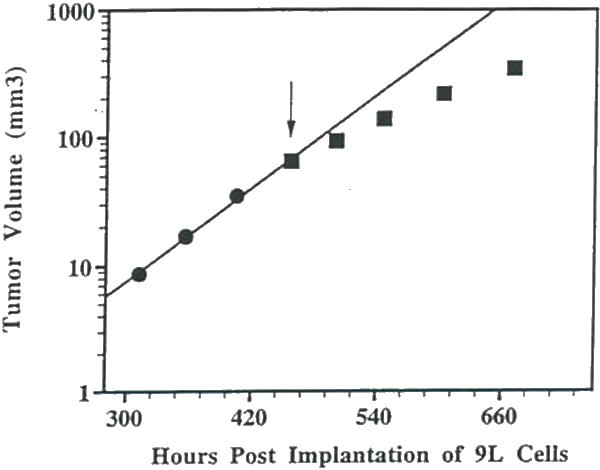
A plot of MRI-determined intracerebral tumor volume versus time post-implantation for an intracranial 9L tumor treated daily with FMdc (15 mg/kg. i.p.) beginning at 460 hr. post-implantation (indicated by the downward pointing arrow). The initial Td was determined to be 50 hr. After 4 and 8 days of treatment with FMdc. the Td decreased to 81 and 95 hr., respectively. This data reveals a significant therapeutic effect of FMdc on intracranial 9L rumor growth.
Figure 5
Figure 5
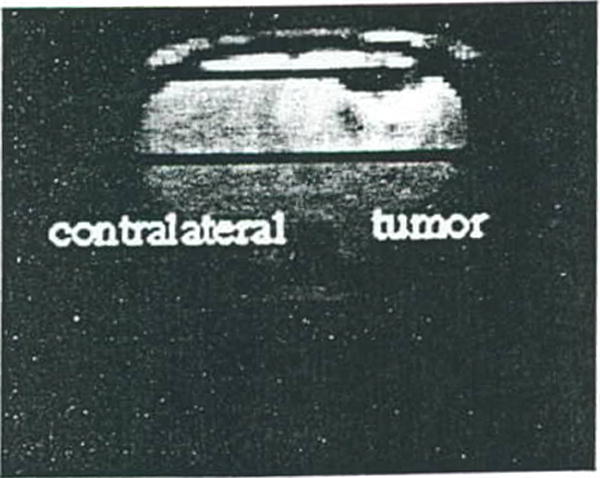
Surface coil coronal T2-weighted MR image of a rat brain with a 9L tumor. Position of the ISIS column used for obtaining the localized 1H spectra is shown by the dark lines.
Figure 6
Figure 6
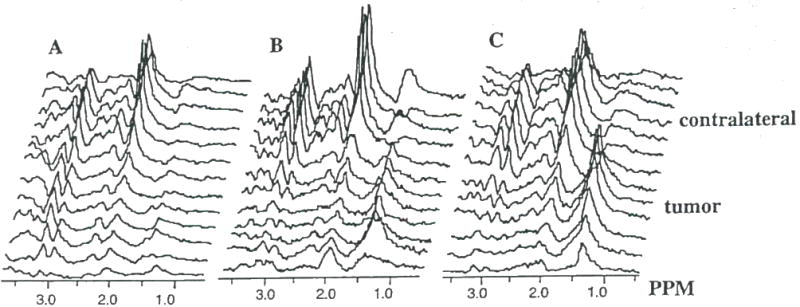
Spatially localized 1H spectra obtained from a rat brain with an (A) untreated 9L tumor and a 9L tumor treated for (II) 6 days and (C) 9 days with FMdc (15 mg/kg. i.p.). Spectra reveal a progressive increase in the lipid/lactate resonance intensity (1.3 ppm) and a decrease in the choline (3.2 ppm) and creatine (3.0 ppm) resonances.
Figure 7
Figure 7
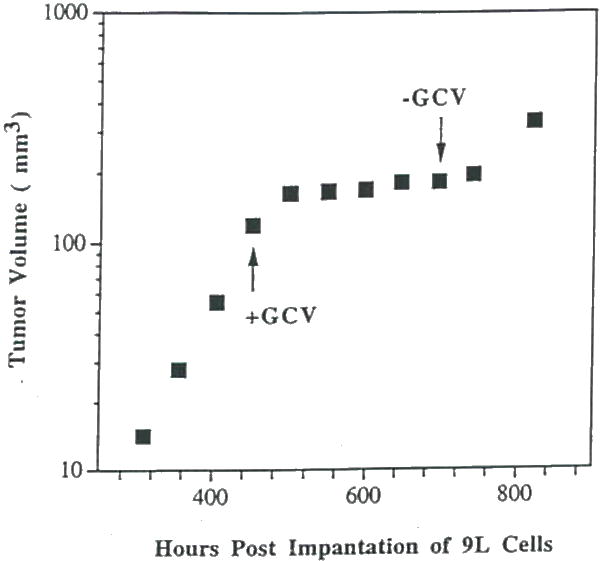
A plot of MRI-determined intracerebral rumor volume versus time post-implantation for an intracranial 9L tumor treated with Ad.RSVtk/GCV beginning at the position of the upward pointing arrow. GCV administration (15 mg/kg, i.p. 2 × daily) was discontinued at the time indicated by the downward pointing arrow. This data reveals Ad.RSVtk/GCV produced a significant therapeutic effect on intracranial 9L tumor growth. Tumor regrowth occurred shortly following termination of GCV administration.
Figure 8
Figure 8
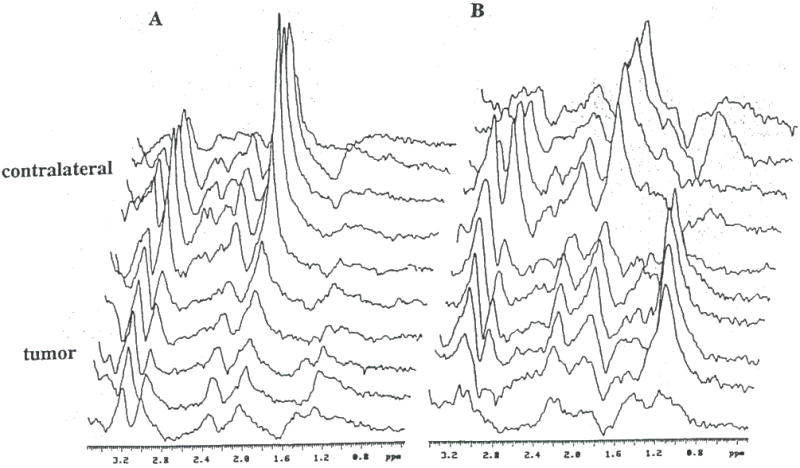
Spatially localized 1H spectra obtained from a rat brain with an (A) untreated 9L tumor and (B) a 9L tumor treated for 7 days with GCV (15 mg/kg. i.p. 2 × daily) following intratumoral injection with Ad.RSVtk. Spectra from treated 9L tumors consistently revealed an increase in the lipid/lactate resonance intensity (1.3 ppm).
Figure 9
Figure 9
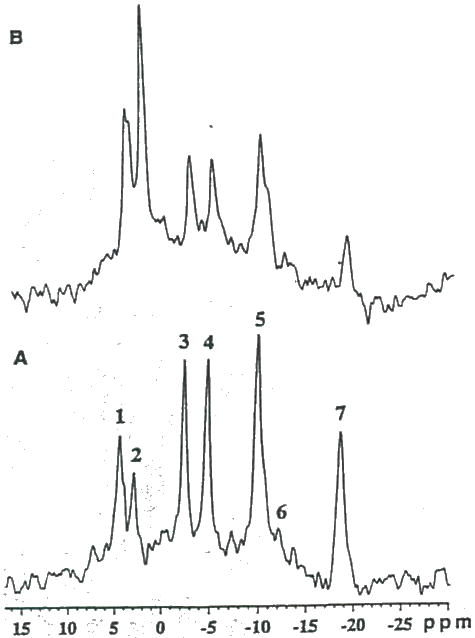
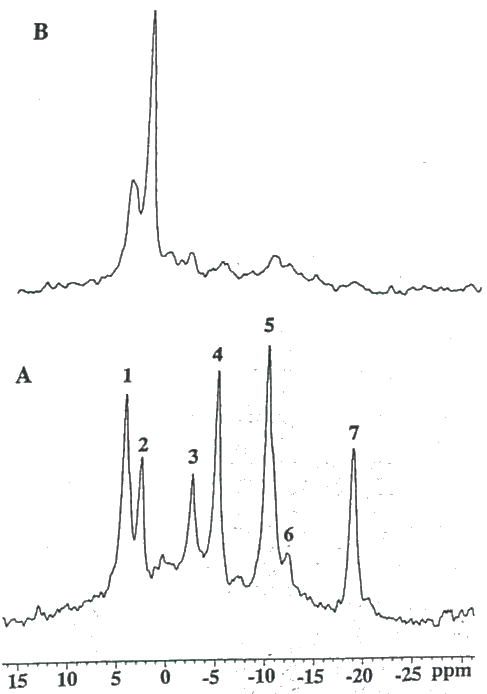
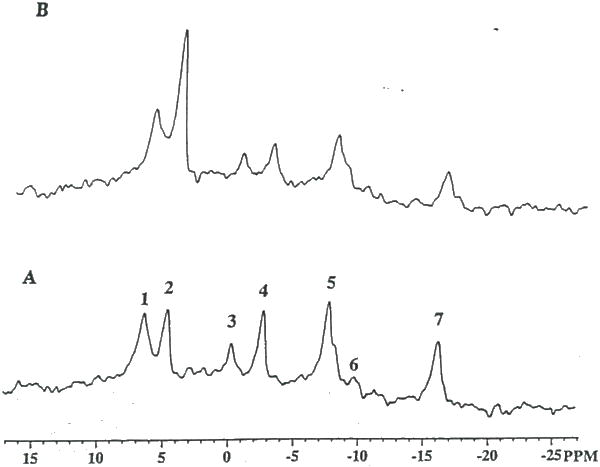
In vivo 31P MR spectra of a subcutaneous 9L tumor obtained (A) before, and 6 hr. following intratumoral administration of (B) 50 units PEG-GO. Resonance assignments are as follows: 1, phosphomo-nocsters (PME); 2, inorganic phosphate (Pi); 3, phosphocreatine (PCr); 4, γ-ATP and β-ADP; 5. α-ATP. α-ADP and NAD+/NADH; 6, diphosphodicster; and 7, β-ATP.
Figure 10
Figure 10
In vivo 31P MR spectra of a subcutaneous 9L tumor obtained (A) before, and 6 hr. following intratumoral administration of (B) 2 × 200 units PEG-GO. Resonance assignments are identical to figure 9.
Figure 11
Figure 11
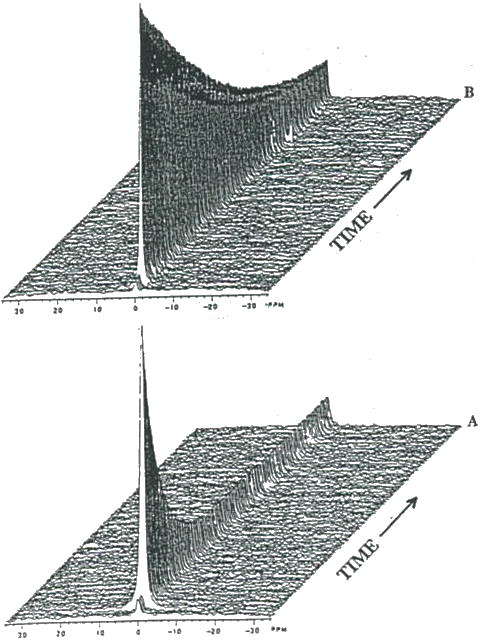
In vivo 31P MR spectra of a subcutaneous 9L tumor (A) pre- and (B) 3 h post-administration of LND (100 mg/kg, i.p.). Phosphorus-containing metabolites are identified as shown in figure 9 Note the dramatic decline in ATP levels and the corresponding increase in the hydrolysis product, Pi indicating impaired energy metabolism.
Figure 12
Figure 12
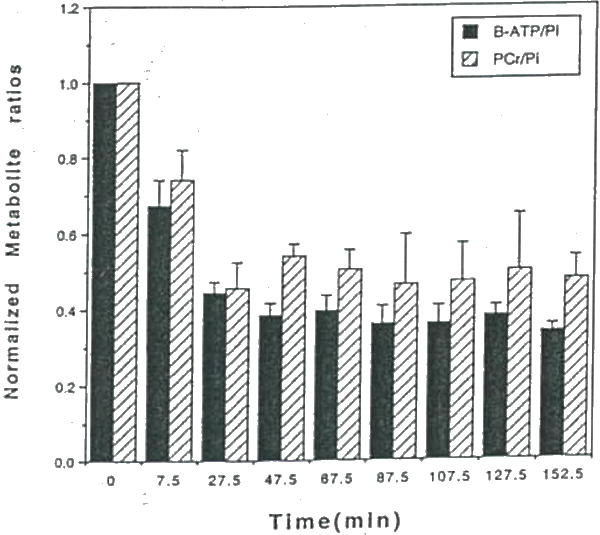
Time course of the average subcutaneous 9L tumor (n=3) b. ATP/Pi and PCr/Pi ratios following administration of LND at time=0. Values are plotted at the average time during which the spectra were accumulated. Error bars represent ±SEM.
Figure 13
Figure 13
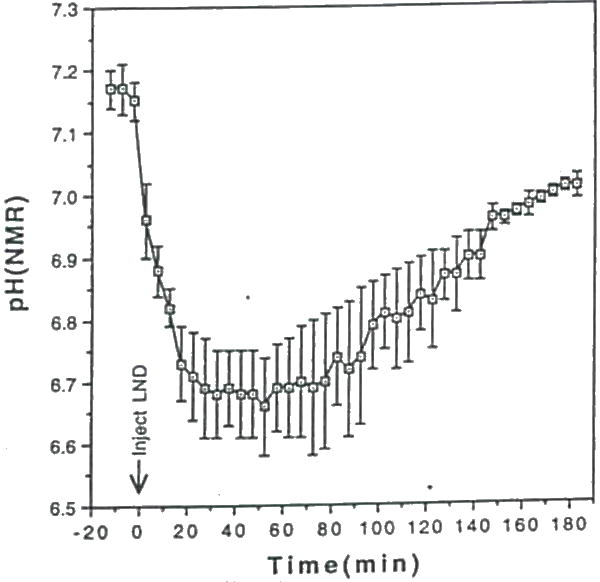
Time course of the average subcutaneous 9L tumor (n=3) pH following injection of LND at time=0. The average pH values are plotted with ±SEM.
Figure 14
Figure 14
In vivo 2H MRS of 2H2O washout of a subcutaneous C6 glioma following a two-site intratumoral injection. Spectra are from the same tumor (A) before and (B) 1 hr following initiation of acute hyperglycemia via administration of a bolus of 6g/kg (i.p.) of a 50% glucose solution. In each case three pre-injection 2H spectra were acquired before injection of 2H2O saline. Each spectrum represents an average of 30 sec. acquisition time. 2H spectra were adapted from reference (38).
Figure 15
Figure 15
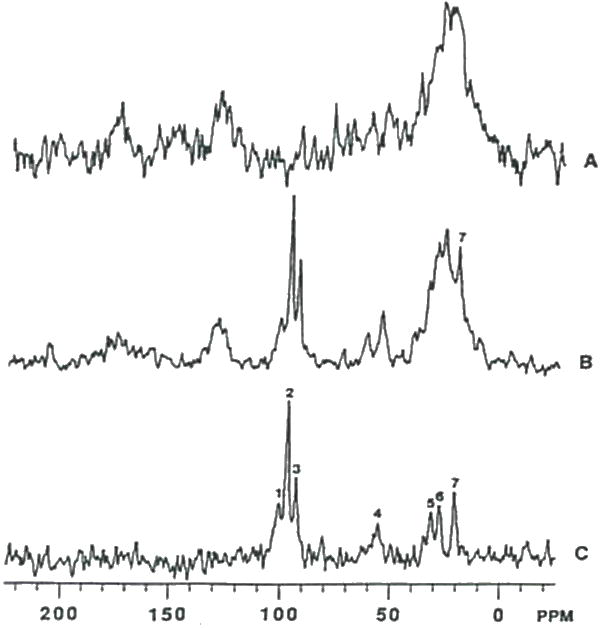
In vivo 13C MR spectra of an intracerebral C6 glioma. (A) Natural abundance spectra from an acquisition time of 46.8 minutes. (B) Spectrum from the same C6 glioma which was acquired over a 93.6 minute time interval during a constant infusion with (1-13C)glucose. (C) Difference spectrum obtained following subtraction 2 times the spectrum (A) from spectrum (B). Resonance assignments are as follows: 1. C-1 carbon of glycogen; 2. β-glucose; 3. α-glucosc; 4. C-2 carbon of Glu/Gln; 5. C-4 carbon of Glu/Gln; 6. C-3 carbon of Glu/Gln; and 7. C-3 carbon of lactate. 13C spectra were adapted from reference (40).
Figure 16
Figure 16
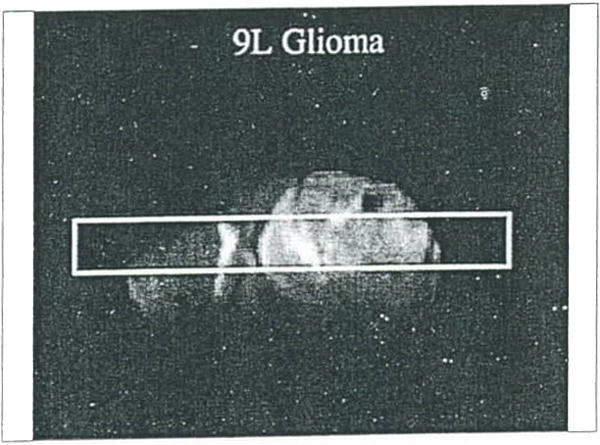
Water diffusion study on rat brain with a 9L tumor. Surface coil coronal T2-weighted MR image of a rat brain with the column used for obtaining the diffusion data scribed on the image.
Figure 17
Figure 17
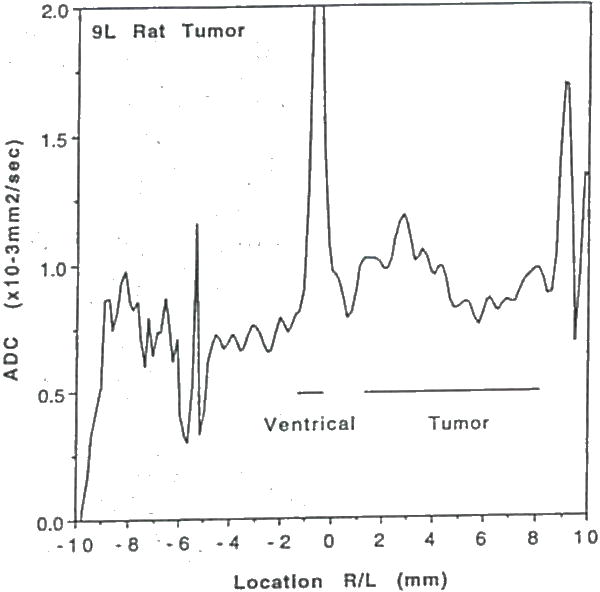
Plot of water ADCmean (mean of ADCx, ADCy, and ADCz) as a function of position along the column shown in Figure 16. Note, the ADCmean in the tumor is only moderately elevated relative to contralateral brain tissue.
Figure 18
Figure 18
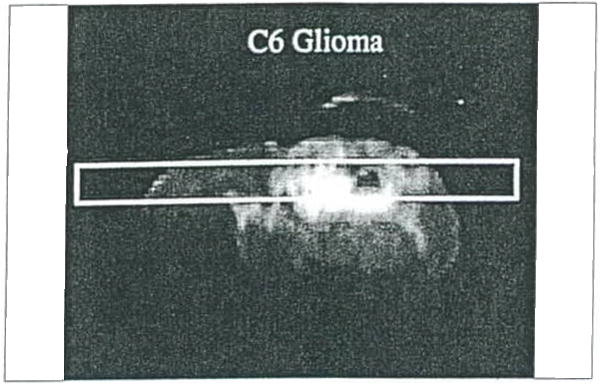
Water diffusion study on rat brain with a C6 tumor. Surface coil coronal T2-weighled MR image of a rat brain with the column used for obtaining the diffusion data scribed on the image.
Figure 19
Figure 19
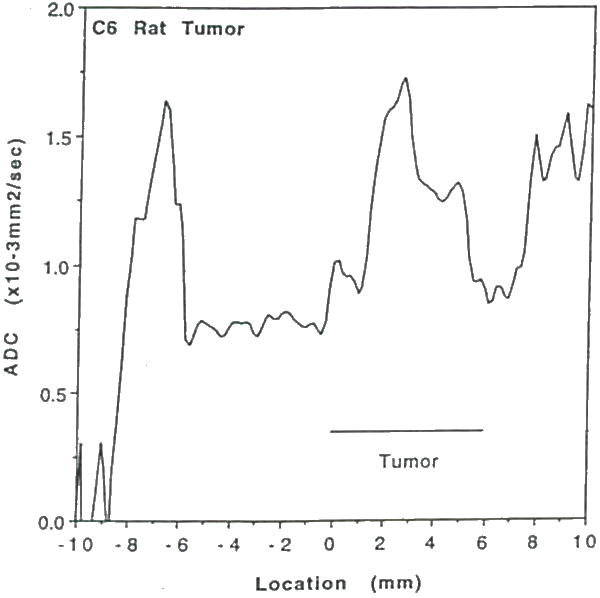
Plot of water ADCmean as a function of position along the column shown in Figure 18. Note, the ADCmean in the tumor is significantly elevated relative to contralateral brain and 9L tumor (cf Figure 17) indicating greater free water space and mobility associated with necrosis.
Figure 20
Figure 20
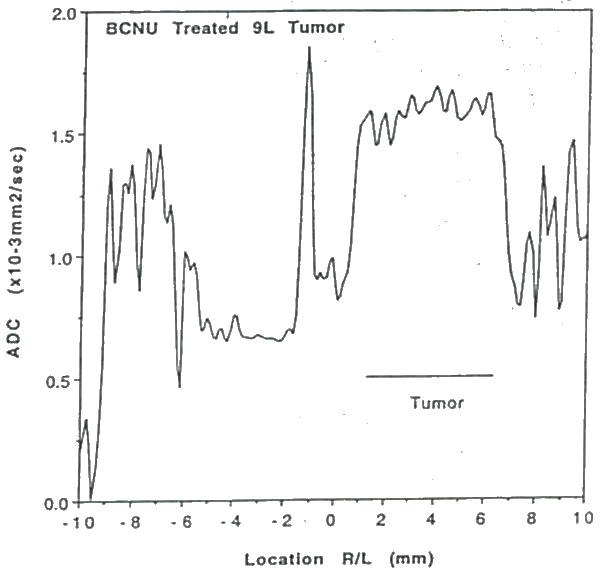
Water diffusion study on a BCNU treated intracerebral 9L tumor at 10 days post BCNU administration and 25 days post tumor implant. Plot of water ADCmean as a function of position through the tumor and contralateral brain. Note, the ADC in the treated tumor is significantly elevated relative to contralateral brain tissue and non-treated 91. tumor values (cf Figure 17).

References

    1. Walker MD, Green SB, Byar DP, Alexander E, Jr, Batzdorf U, Brooks WH, Hunt WE, MacCarty CS, Mahaley MS, Jr, Mealey J, Jr, Owens G, Ransohoff J, Robertson JT, Shapiro WR, Smith KR, Jr, Wilson CB, Strike TA. Randomized comparisons of radiotherapy and nitrosoureas for the treatment of malignant glioma after surgery. N Engl J Med. 1986;303:1323–1329. - PubMed
    1. Grossman SA, Burch PA. Quantitation of tumor response to antineoplastic therapy. Semin Oncol. 1988;15:441–454. - PubMed
    1. Levin VA, Crafts DC, Norman DM, Hoffer PB, Spire JP, Wilson CB. Criteria for evaluating patients undergoing chemotherapy for malignant brain tumors. J Neurosurg. 1977;47:329–335. - PubMed
    1. Wilson CB, Crafts D. Criteria of response and definition of recurrence. Natl Cancer Inst Monogr. 1977;46:197–203. - PubMed
    1. Grossman SA. Chemotherapy of brain tumors. In: Salcman M, editor. Concepts in neurosurgery. Vol. 4. Baltimore: Williams and Wilkins; 1991. pp. 321–340. (Neurobiology of brain tumors).

LinkOut - more resources