Effectiveness of a Multifaceted Intervention for Potentially Inappropriate Prescribing in Older Patients in Primary Care: A Cluster-Randomized Controlled Trial (OPTI-SCRIPT Study)
- PMID: 26553894
- PMCID: PMC4639380
- DOI: 10.1370/afm.1838
Effectiveness of a Multifaceted Intervention for Potentially Inappropriate Prescribing in Older Patients in Primary Care: A Cluster-Randomized Controlled Trial (OPTI-SCRIPT Study)
Abstract
Purpose: Potentially inappropriate prescribing (PIP) is common in older people and can result in increased morbidity, adverse drug events, and hospitalizations. The OPTI-SCRIPT study (Optimizing Prescribing for Older People in Primary Care, a cluster-randomized controlled trial) tested the effectiveness of a multifaceted intervention for reducing PIP in primary care.
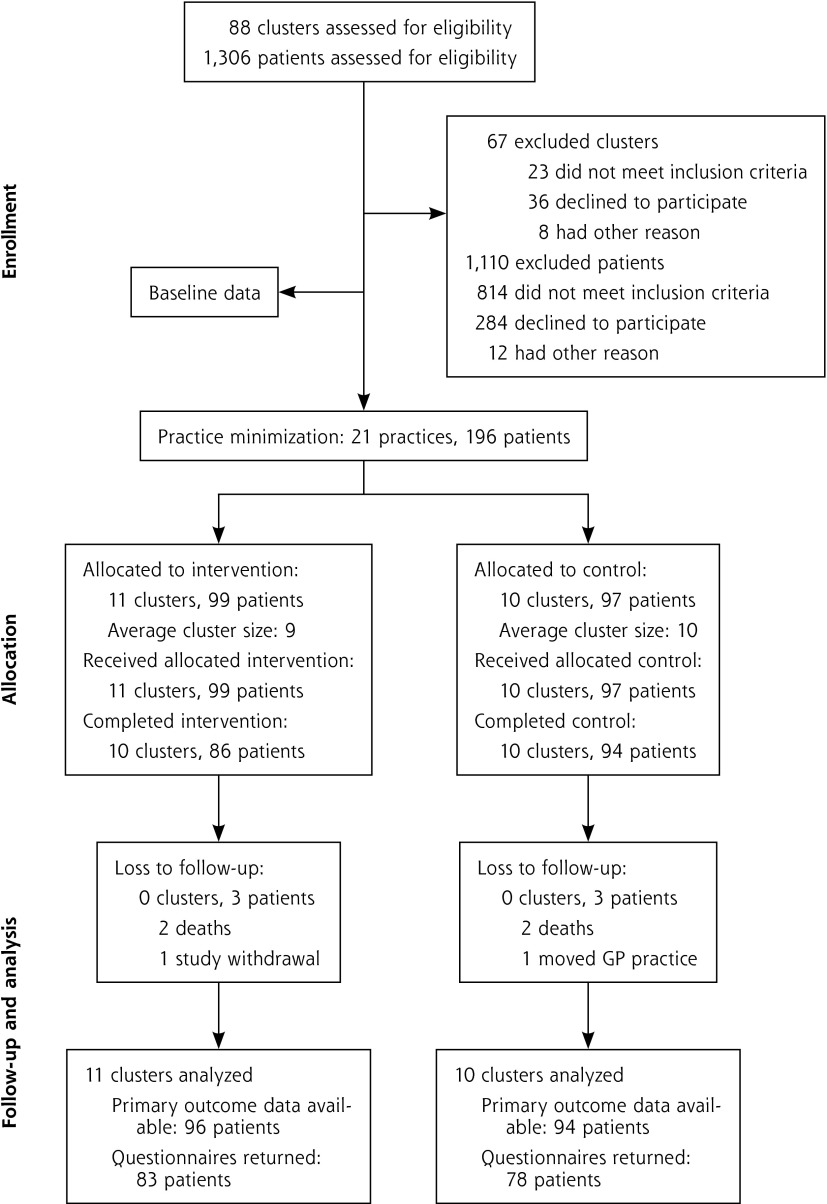
Methods: We conducted a cluster-randomized controlled trial among 21 general practitioner practices and 196 patients with PIP. Intervention participants received a complex, multifaceted intervention incorporating academic detailing; review of medicines with web-based pharmaceutical treatment algorithms that provide recommended alternative-treatment options; and tailored patient information leaflets. Control practices delivered usual care and received simple, patient-level PIP feedback. Primary outcomes were the proportion of patients with PIP and the mean number of potentially inappropriate prescriptions. We performed intention-to-treat analysis using random-effects regression.
Results: All 21 practices and 190 patients were followed. At intervention completion, patients in the intervention group had significantly lower odds of having PIP than patients in the control group (adjusted odds ratio = 0.32; 95% CI, 0.15-0.70; P = .02). The mean number of PIP drugs in the intervention group was 0.70, compared with 1.18 in the control group (P = .02). The intervention group was almost one-third less likely than the control group to have PIP drugs at intervention completion, but this difference was not significant (incidence rate ratio = 0.71; 95% CI, 0.50-1.02; P = .49). The intervention was effective in reducing proton pump inhibitor prescribing (adjusted odds ratio = 0.30; 95% CI, 0.14-0.68; P = .04).
Conclusions: The OPTI-SCRIPT intervention incorporating academic detailing with a pharmacist, and a review of medicines with web-based pharmaceutical treatment algorithms, was effective in reducing PIP, particularly in modifying prescribing of proton pump inhibitors, the most commonly occurring PIP drugs nationally.
Keywords: potentially inappropriate prescribing; practice-based research; prescription drugs; primary health care; randomized controlled trial.
© 2015 Annals of Family Medicine, Inc.
Figures
References
-
- Spinewine A, Schmader KE, Barber N, et al. Appropriate prescribing in elderly people: how well can it be measured and optimised? Lancet. 2007;370(9582):173–184. - PubMed
-
- Kaufmann CP, Tremp R, Hersberger KE, Lampert ML. Inappropriate prescribing: a systematic overview of published assessment tools. Eur J Clin Pharmacol. 2014;70(1):1–11. - PubMed
-
- O’Mahony D, Gallagher PF. Inappropriate prescribing in the older population: need for new criteria. Age Ageing. 2008;37(2):138–141. - PubMed
-
- Jano E, Aparasu RR. Healthcare outcomes associated with Beers’ criteria: a systematic review. Ann Pharmacother. 2007;41(3):438–447. - PubMed
Publication types
MeSH terms
Substances
Associated data
LinkOut - more resources
Full Text Sources
Other Literature Sources
Medical