


Molecular stratification and precision medicine in systemic sclerosis from genomic and proteomic data
- PMID: 26555452
- PMCID: PMC4722537
- DOI: 10.1097/BOR.0000000000000237
Molecular stratification and precision medicine in systemic sclerosis from genomic and proteomic data
Abstract
Purpose of review: The goal of this review is to summarize recent advances into the pathogenesis and treatment of systemic sclerosis (SSc) from genomic and proteomic studies.
Recent findings: Intrinsic gene expression-driven molecular subtypes of SSc are reproducible across three independent datasets. These subsets are a consistent feature of SSc and are found in multiple end-target tissues, such as skin and esophagus. Intrinsic subsets as well as baseline levels of molecular target pathways are potentially predictive of clinical response to specific therapeutics, based on three recent clinical trials. A gene expression-based biomarker of modified Rodnan skin score, a measure of SSc skin severity, can be used as a surrogate outcome metric and has been validated in a recent trial. Proteome analyses have identified novel biomarkers of SSc that correlate with SSc clinical phenotypes.
Summary: Integrating intrinsic gene expression subset data, baseline molecular pathway information, and serum biomarkers along with surrogate measures of modified Rodnan skin score provides molecular context in SSc clinical trials. With validation, these approaches could be used to match patients with the therapies from which they are most likely to benefit and thus increase the likelihood of clinical improvement.
Figures
References
-
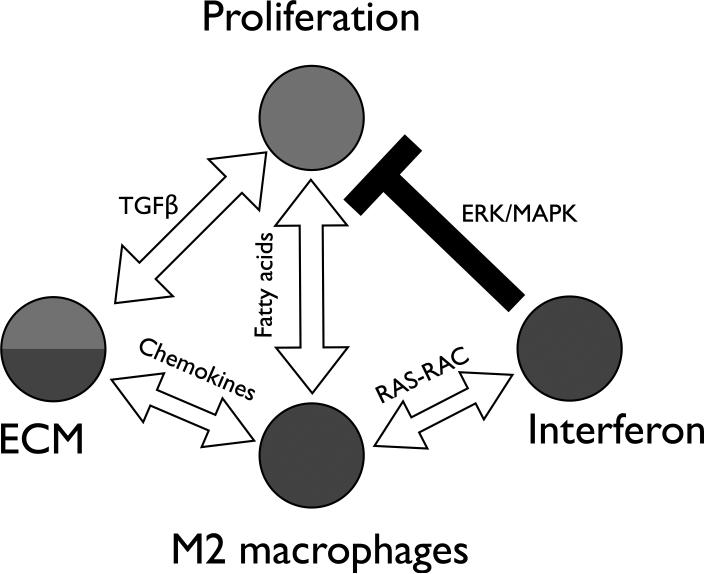
- Mahoney JM, Taroni J, Martyanov V, et al. Systems level analysis of systemic sclerosis shows a network of immune and profibrotic pathways connected with genetic polymorphisms. PLoS Comput Biol. 2015;11:e1004005. [Reports a novel computational approach to identify genes and molecular processes that are conserved across the intrinsic subsets from three independent datasets and patient cohorts. It shows the subsets are likely to be mechanistically connected and the inflammatory modules are enriched for SSc susceptibility genes.] - PMC - PubMed
Publication types
MeSH terms
Grants and funding
LinkOut - more resources
Full Text Sources
Other Literature Sources
Medical
Research Materials
