


Evaluating the Reproducibility of Motion Analysis Scanning of the Spine during Walking
- PMID: 26556423
- PMCID: PMC4590960
- DOI: 10.1155/2014/721829
Evaluating the Reproducibility of Motion Analysis Scanning of the Spine during Walking
Abstract
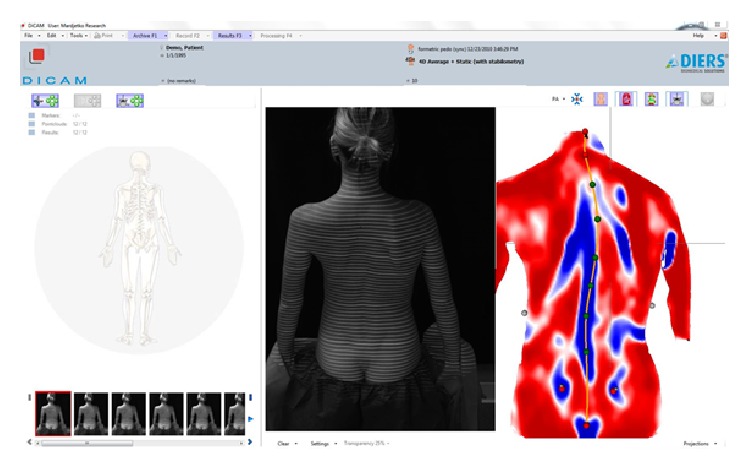
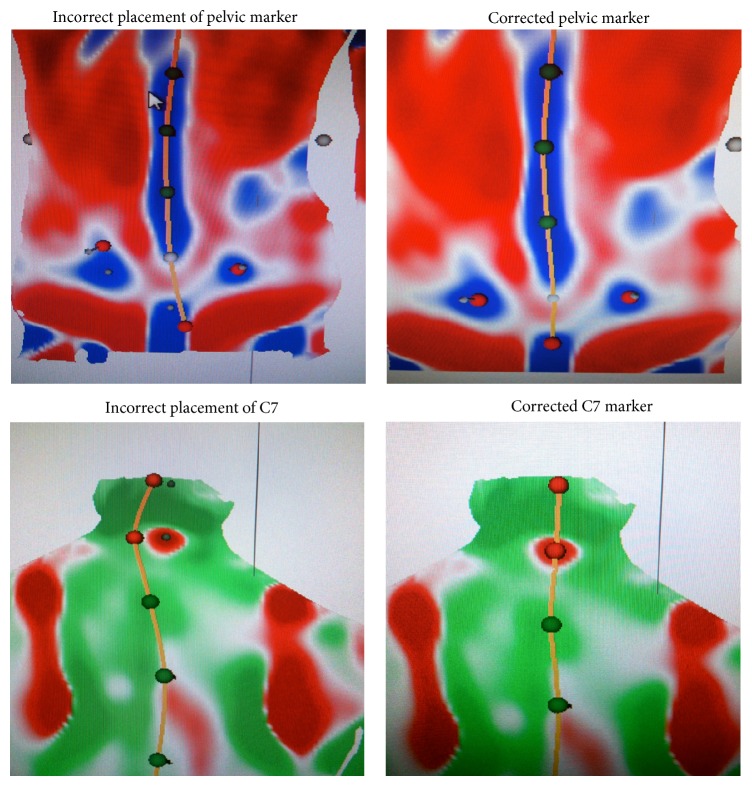
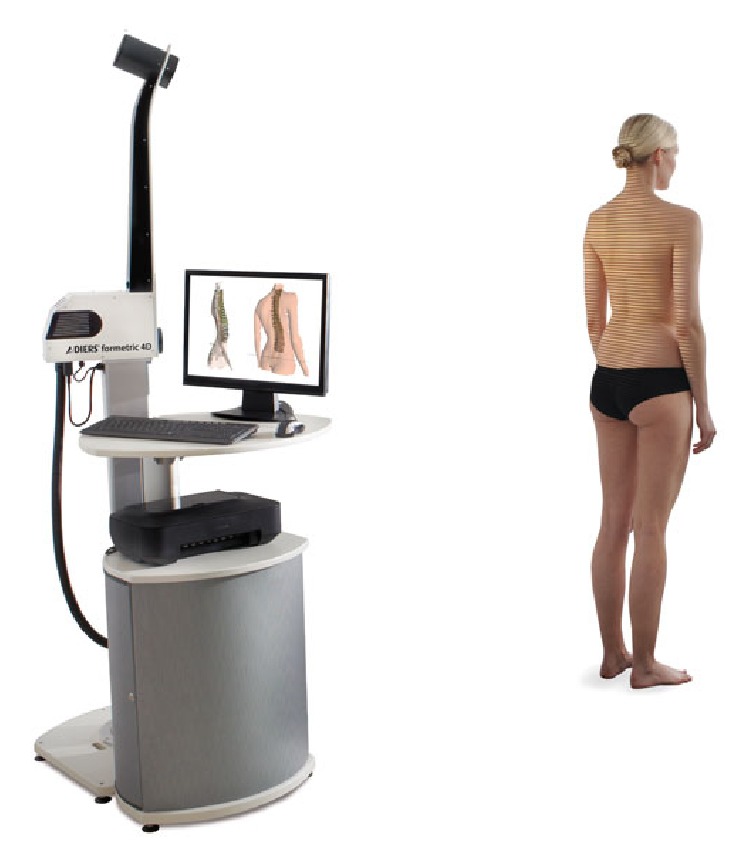
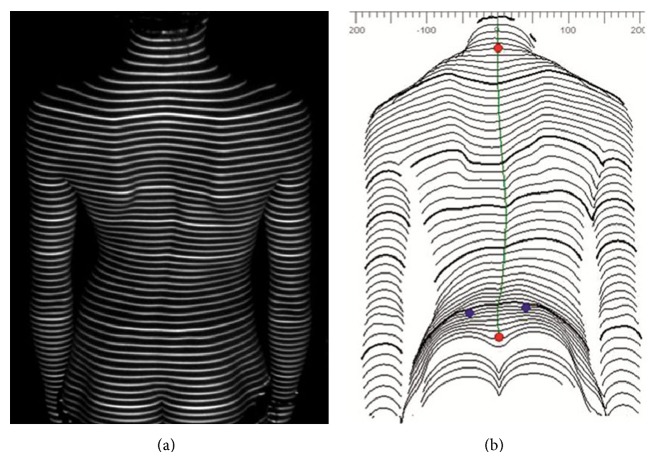
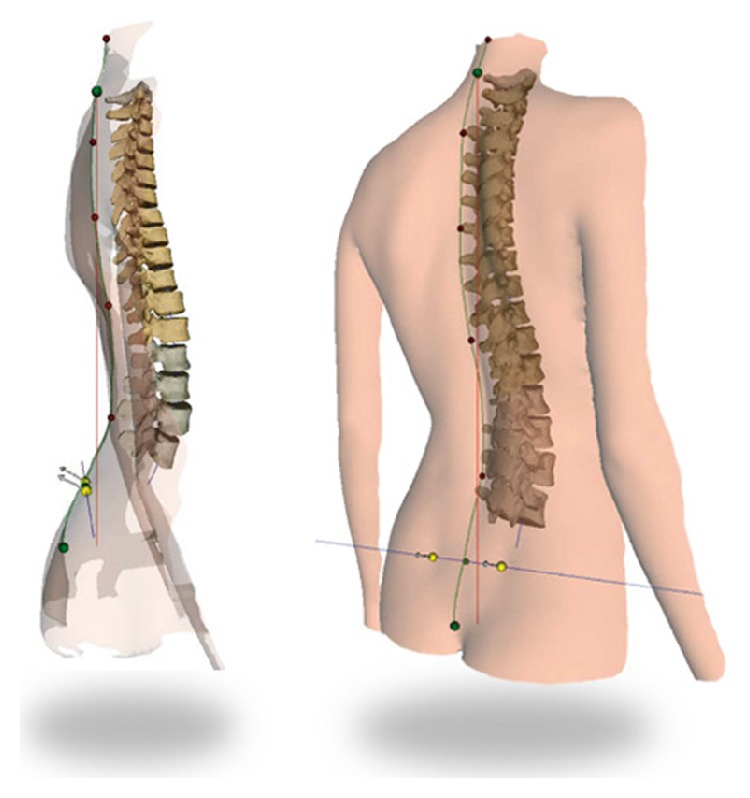
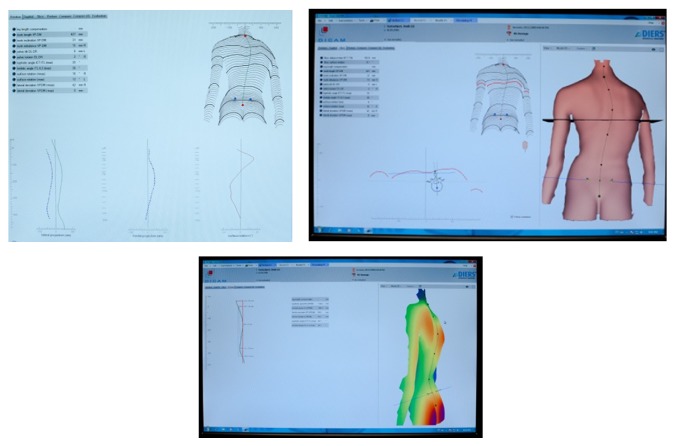
The Formetric 4D dynamic system (Diers International GmbH, Schlangenbad, Germany) is a rasterstereography based imaging system designed to evaluate spinal deformity, providing radiation-free imaging of the position, rotation, and shape of the spine during the gait cycle. Purpose. This study was designed to evaluate whether repeated measurements with the Formetric 4D dynamic system would be reproducible with a standard deviation of less than +/- 3 degrees. This study looked at real-time segmental motion, measuring kyphosis, lordosis, trunk length, pelvic, and T4 and L1 vertebral body rotation. Methods. Twenty healthy volunteers each underwent 3 consecutive scans. Measurements for kyphosis, lordosis, trunk length, and rotations of T4, L1, and the pelvis were recorded for each trial. Results. The average standard deviations of same-day repeat measurements were within +/- 3 degrees with a range of 0.51 degrees to 2.3 degrees. Conclusions. The surface topography system calculated reproducible measurements with error ranges comparable to the current gold standard in dynamic spinal motion analysis. Therefore, this technique should be considered of high clinical value for reliably evaluating segmental motion and spinal curvatures and should further be evaluated in the setting of adolescent idiopathic scoliosis.
Figures
References
-
- Reamy B., Slakey J. B. Adolescent idiopathic scoliosis: review and current concepts. American Family Physician. 2001;64:p. 111. - PubMed
-
- Nash C. L., Jr., Gregg E. C., Brown R. H., Pillai K. Risks of exposure to X-rays in patients undergoing long-term treatment for scoliosis. The Journal of Bone and Joint Surgery. 1979;61(3):371–374. - PubMed
-
- Knott P., Mardjetko S., Rollet M., Baute S., Riemenschneider M., Muncie L. Evaluation of the reproducibility of the formetric 4D measurements for scoliosis. Scoliosis. 2010;5, article O10
LinkOut - more resources
Full Text Sources
Other Literature Sources
