


Antithrombotic Treatment for Recurrent Miscarriage: Bayesian Network Meta-Analysis and Systematic Review
- PMID: 26559249
- PMCID: PMC4912243
- DOI: 10.1097/MD.0000000000001732
Antithrombotic Treatment for Recurrent Miscarriage: Bayesian Network Meta-Analysis and Systematic Review
Abstract
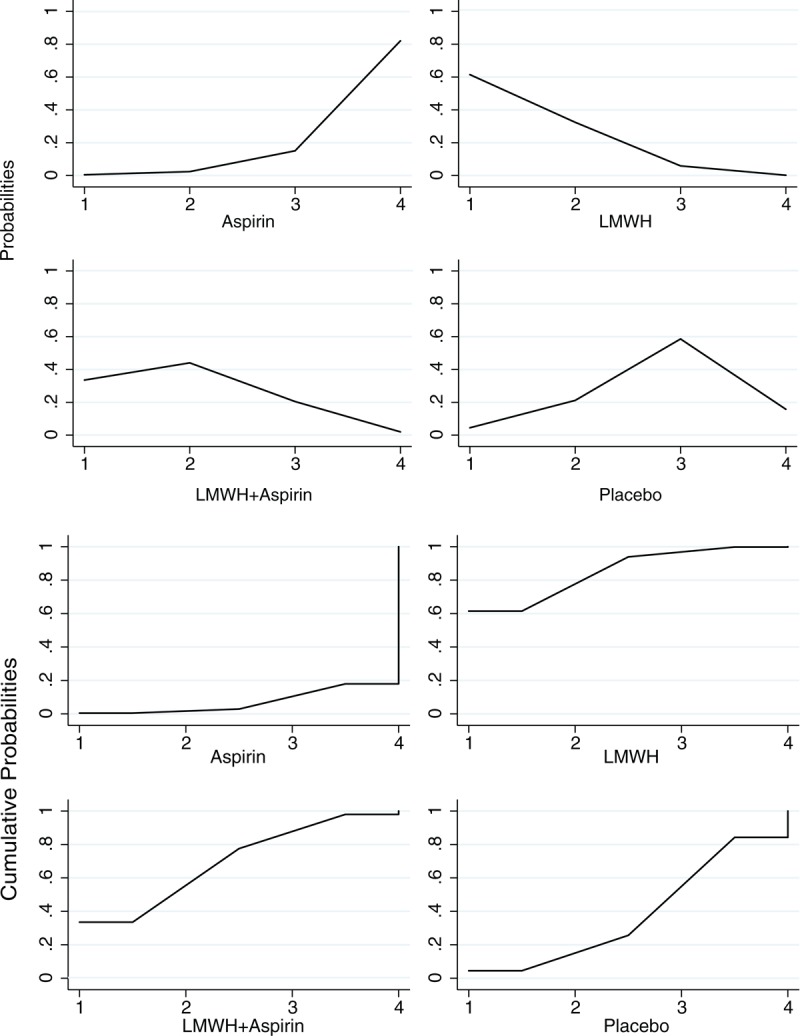
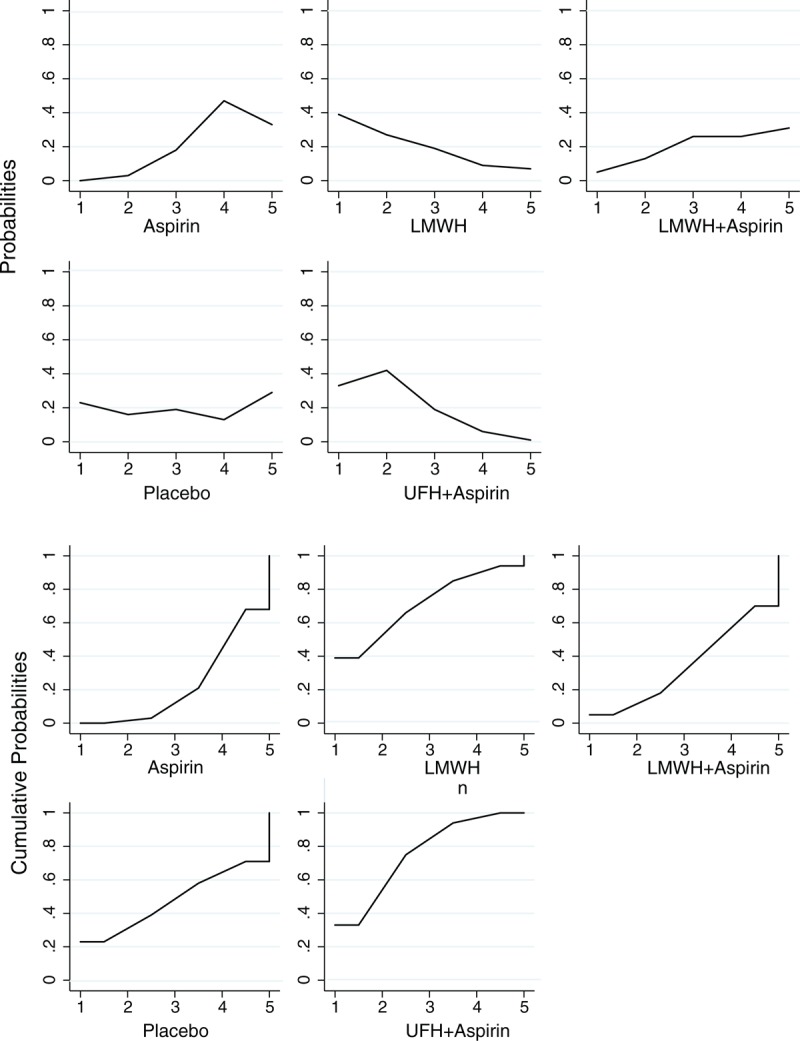
Combined use of heparin and aspirin is frequently prescribed for treatment of recurrent miscarriage (RM) in patients with antiphospholipid syndrome (APS), or in those without apparent cause of RM other than thrombophilia; however, this strategy is largely based on expert opinion and has not been well studied. The option for the use of different antithrombotic therapies to improve live birth remains unclear. In this network meta-analysis, we incorporated direct and indirect evidence to evaluate effects of different antithrombotic treatments on prevention of pregnancy losses.We searched PubMed and Embase for randomized clinical trials comparing effects of at least 2 antithrombotic treatments on live birth in RM patients published from 1965 through the early of May 2015. Potential risk bias of eligible trials was evaluated according to the Cochrane Collaboration guidelines. Bayesian network meta-analysis was used to estimate relative effects on live birth.A total of 19 trials involving 2391 RM patients with or without thrombophilia and 543 with APS were included. No beneficial effect of antithrombotic treatment was observed either in RM patients with or without thrombophilia or in patients with APS; however, for patients with or without thrombophilia, low molecular weight heparin therapy had the greatest probability (61.48%) of being the best option in terms of live birth; for patients with APS, unfractionated heparin plus aspirin was the superior treatment for RM with the highest possibility (75.15%) of being top 2 places for reducing pregnancy losses. Aspirin was inferior in both groups.Our results do not support the use of combined low molecular weight heparin and aspirin for RM treatment, and suggested aspirin may have negative effects for lowering the risk of pregnancy loss.
Conflict of interest statement
The authors have no funding and conflicts interests to disclose.
Figures
References
-
- Rai R, Regan L. Recurrent miscarriage. Lancet 2006; 368:601–611. - PubMed
-
- Rushton DI. Placental pathology in spontaneous miscarriage. Early Pregnancy Loss. 1988; London:Springer, 149–157.
-
- Rai RS, Regan L, Chitolie A, et al. Placental thrombosis and second trimester miscarriage in association with activated protein C resistance. Br J Obstet Gynaecol 1996; 103:842–844. - PubMed
-
- Rai RS, Regan L, Clifford K, et al. Antiphospholipid antibodies and beta 2-glycoprotein-I in 500 women with recurrent miscarriage: results of a comprehensive screening approach. Hum Reprod 1995; 10:2001–2005. - PubMed
-
- Rey E, Kahn SR, David M, et al. Thrombophilic disorders and fetal loss: a meta-analysis. Lancet 2003; 361:901–908. - PubMed
Publication types
MeSH terms
Substances
LinkOut - more resources
Full Text Sources
Miscellaneous
