


Viral Shedding and Antibody Response in 37 Patients With Middle East Respiratory Syndrome Coronavirus Infection
- PMID: 26565003
- PMCID: PMC7108065
- DOI: 10.1093/cid/civ951
Viral Shedding and Antibody Response in 37 Patients With Middle East Respiratory Syndrome Coronavirus Infection
Abstract
Background: The Middle East respiratory syndrome (MERS) coronavirus causes isolated cases and outbreaks of severe respiratory disease. Essential features of the natural history of disease are poorly understood.
Methods: We studied 37 adult patients infected with MERS coronavirus for viral load in the lower and upper respiratory tracts (LRT and URT, respectively), blood, stool, and urine. Antibodies and serum neutralizing activities were determined over the course of disease.
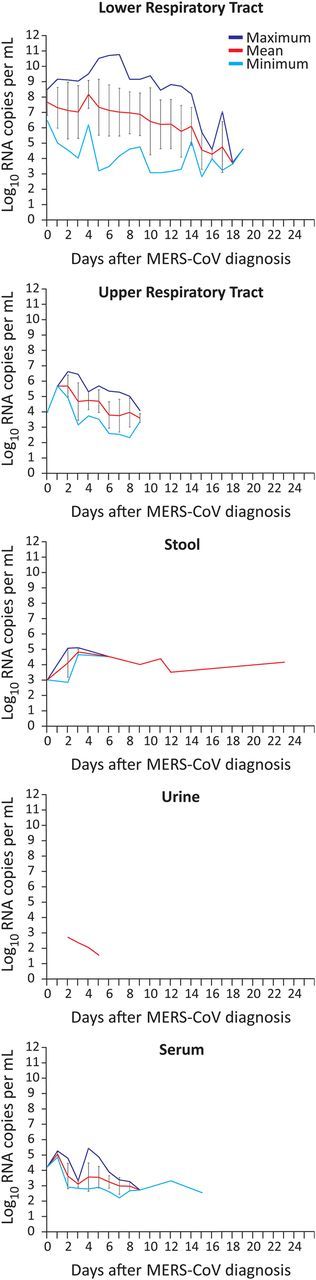
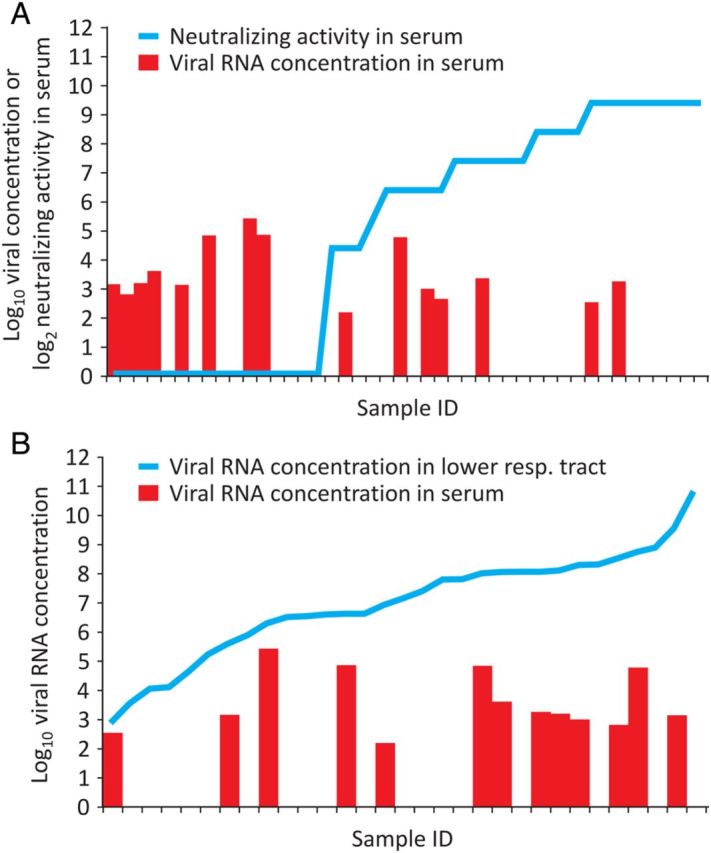
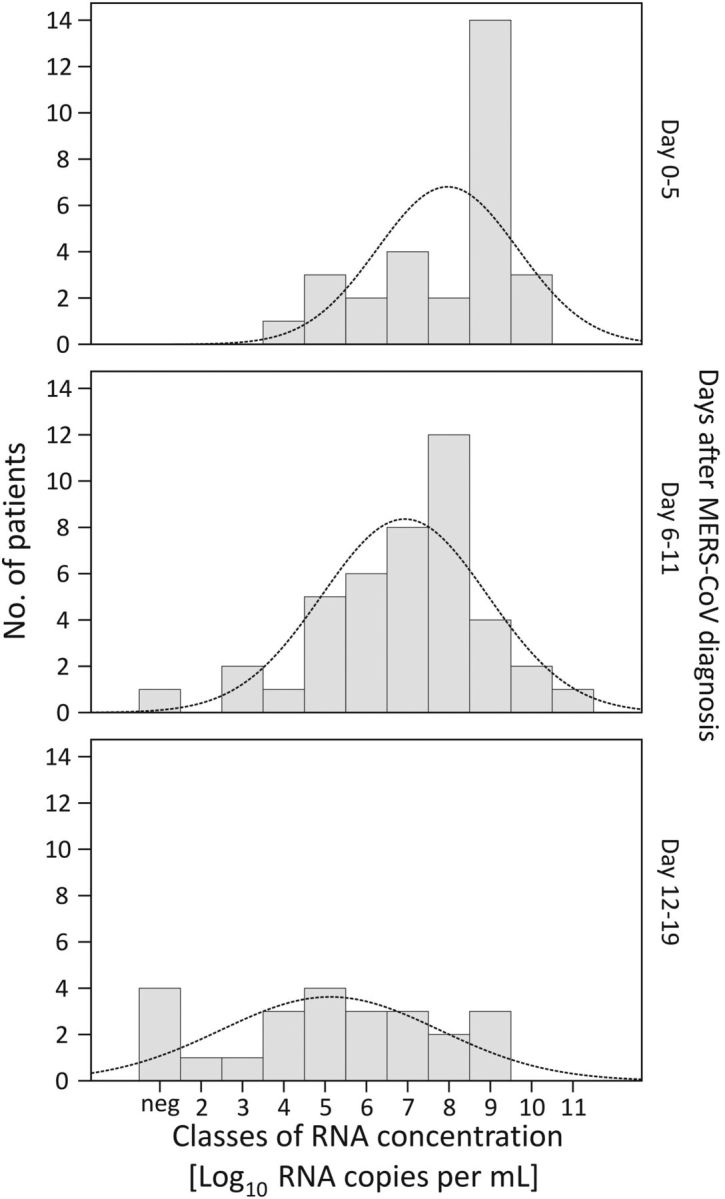
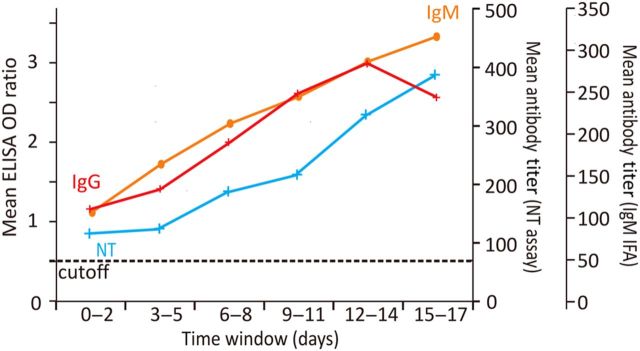
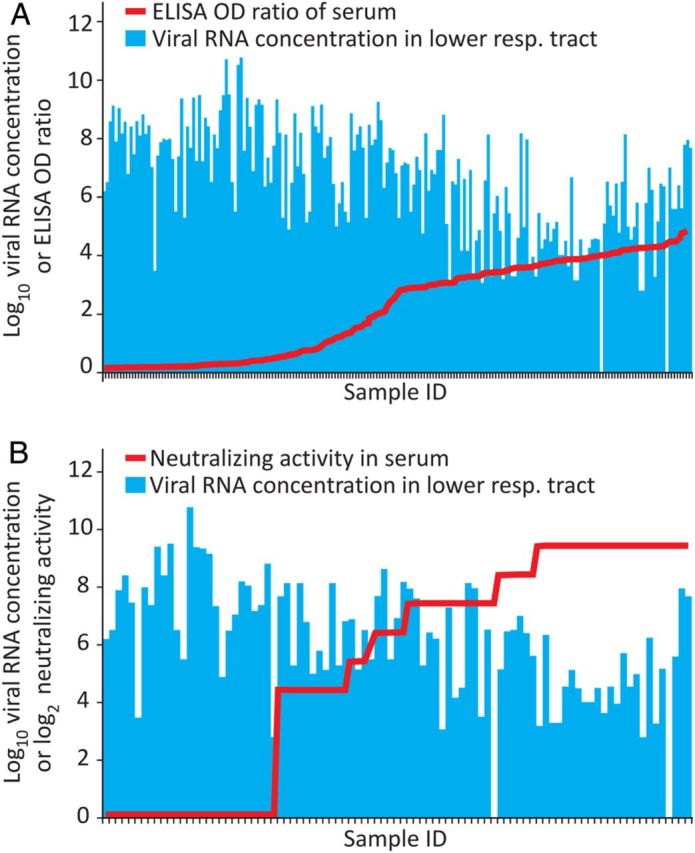
Results: One hundred ninety-nine LRT samples collected during the 3 weeks following diagnosis yielded virus RNA in 93% of tests. Average (maximum) viral loads were 5 × 10(6) (6 × 10(10)) copies/mL. Viral loads (positive detection frequencies) in 84 URT samples were 1.9 × 10(4) copies/mL (47.6%). Thirty-three percent of all 108 serum samples tested yielded viral RNA. Only 14.6% of stool and 2.4% of urine samples yielded viral RNA. All seroconversions occurred during the first 2 weeks after diagnosis, which corresponds to the second and third week after symptom onset. Immunoglobulin M detection provided no advantage in sensitivity over immunoglobulin G (IgG) detection. All surviving patients, but only slightly more than half of all fatal cases, produced IgG and neutralizing antibodies. The levels of IgG and neutralizing antibodies were weakly and inversely correlated with LRT viral loads. Presence of antibodies did not lead to the elimination of virus from LRT.
Conclusions: The timing and intensity of respiratory viral shedding in patients with MERS closely matches that of those with severe acute respiratory syndrome. Blood viral RNA does not seem to be infectious. Extrapulmonary loci of virus replication seem possible. Neutralizing antibodies do not suffice to clear the infection.
Keywords: MERS; antibodies; clearance; shedding; viral load.
© The Author 2015. Published by Oxford University Press for the Infectious Diseases Society of America. All rights reserved. For permissions, e-mail journals.permissions@oup.com.
Figures
References
-
- Zaki AM, van Boheemen S, Bestebroer TM, Osterhaus AD, Fouchier RA. Isolation of a novel coronavirus from a man with pneumonia in Saudi Arabia. N Engl J Med 2012; 367:1814–20. - PubMed
-
- World Health Organization. Disease outbreak news: Middle East respiratory syndrome coronavirus (MERS-CoV). Available at: http://www.who.int/csr/don/12-october-2015-mers-saudi-arabia/en/ Accessed 12 October 2015.
-
- World Health Organization. Middle East respiratory syndrome coronavirus (MERS-CoV): summary of current situation, literature update and risk assessment. WHO/MERS/RA/15.1. Available at: http://www.who.int/iris/bitstream/10665/179184/http://apps.who.int//iris... Accessed 7 July 2015.
Publication types
MeSH terms
Substances
LinkOut - more resources
Full Text Sources
Other Literature Sources
Medical
