


Loss in MCL-1 function sensitizes non-Hodgkin's lymphoma cell lines to the BCL-2-selective inhibitor venetoclax (ABT-199)
- PMID: 26565405
- PMCID: PMC4670945
- DOI: 10.1038/bcj.2015.88
Loss in MCL-1 function sensitizes non-Hodgkin's lymphoma cell lines to the BCL-2-selective inhibitor venetoclax (ABT-199)
Erratum in
-
Loss in MCL-1 function sensitizes non-Hodgkin's lymphoma cell lines to the BCL-2-selective inhibitor venetoclax (ABT-199).Blood Cancer J. 2016 Mar 11;6(3):e403. doi: 10.1038/bcj.2016.12. Blood Cancer J. 2016. PMID: 26967820 Free PMC article. No abstract available.
Abstract
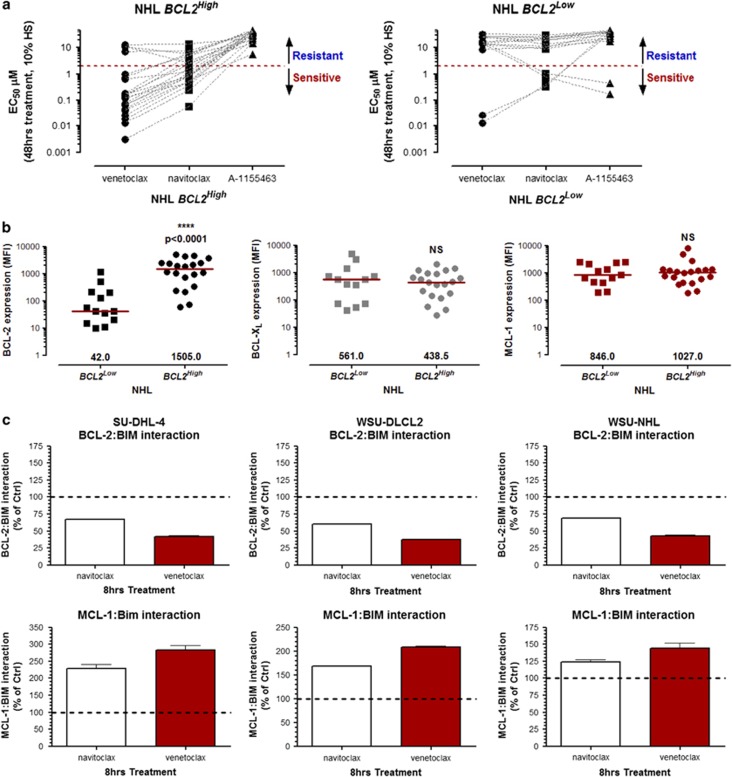
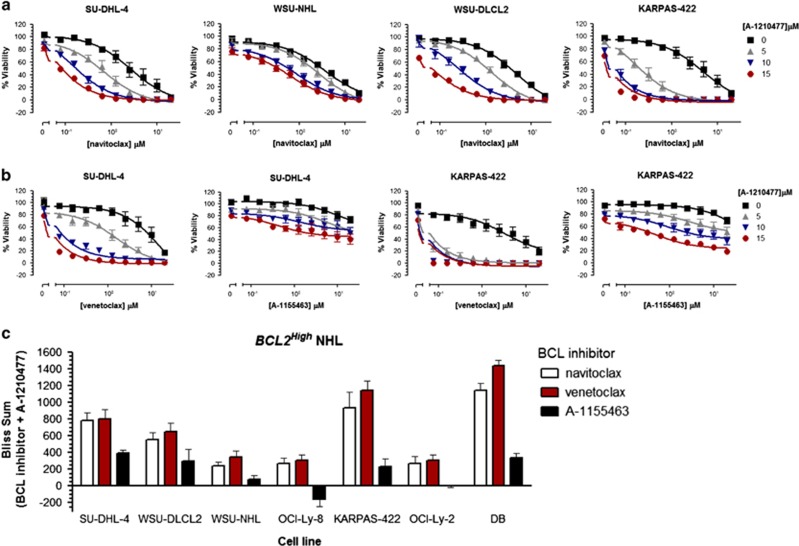
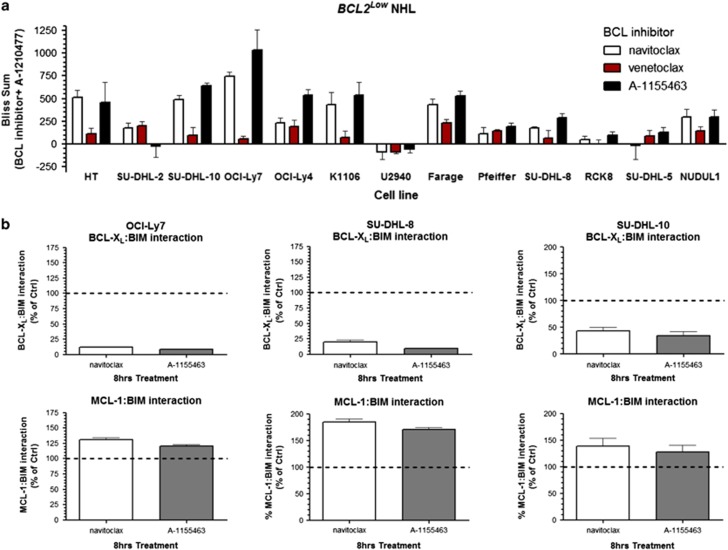
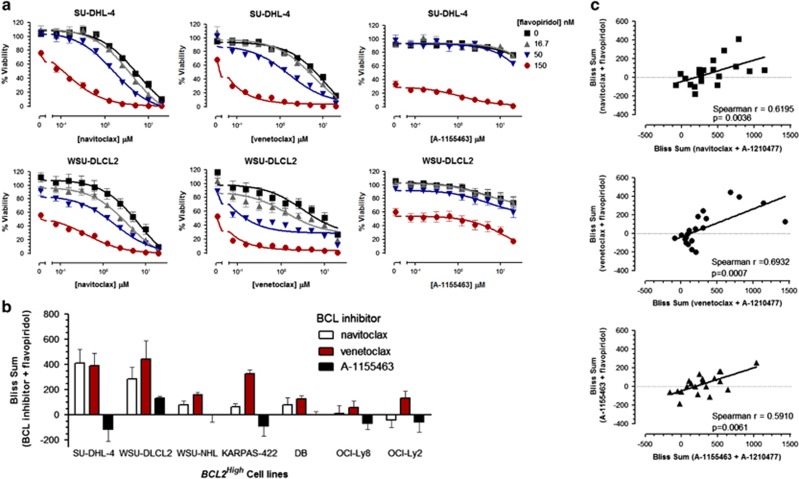
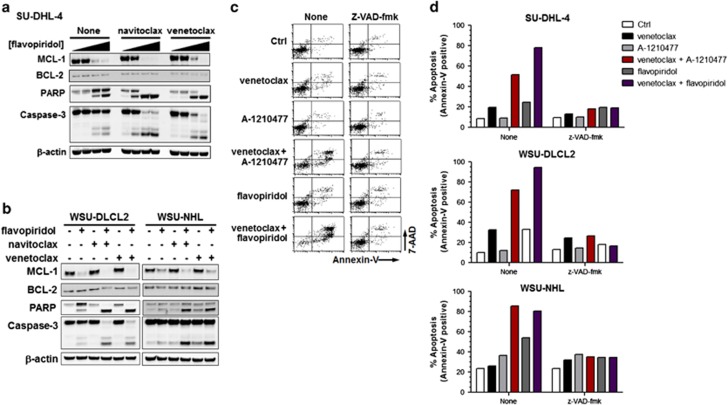
As a population, non-Hodgkin's lymphoma (NHL) cell lines positive for the t(14;18) translocation and/or possessing elevated BCL2 copy number (CN; BCL2(High)) are exquisitely sensitive to navitoclax or the B-cell lymphoma protein-2 (BCL-2)-selective inhibitor venetoclax. Despite this, some BCL2(High) cell lines remain resistant to either agent. Here we show that the MCL-1-specific inhibitor A-1210477 sensitizes these cell lines to navitoclax. Chemical segregation of this synergy with the BCL-2-selective inhibitor venetoclax or BCL-XL-selective inhibitor A-1155463 indicated that MCL-1 and BCL-2 are the two key anti-apoptotic targets for sensitization. Similarly, the CDK inhibitor flavopiridol downregulated MCL-1 expression and synergized with venetoclax in BCL2(High) NHL cell lines to a similar extent as A-1210477. A-1210477 also synergized with navitoclax in the majority of BCL2(Low) NHL cell lines. However, chemical segregation with venetoclax or A-1155463 revealed that synergy was driven by BCL-XL inhibition in this population. Collectively these data emphasize that BCL2 status is predictive of venetoclax potency in NHL not only as a single agent, but also in the adjuvant setting with anti-tumorigenic agents that inhibit MCL-1 function. These studies also potentially identify a patient population (BCL2(Low)) that could benefit from BCL-XL (navitoclax)-driven combination therapy.
Conflict of interest statement
DCP, YX, LTL, LR-R, AJS and JDL are AbbVie employees and are stock holders. The design, study conduct and financial support were provided by AbbVie. AbbVie participated in the data generation, interpretation of data, review and approval of this publication. EL is now an employee of Abbott Molecular Inc.
Figures
References
-
- 1Phillips DC, Dias HK, Kitas GD, Griffiths HR. Aberrant reactive oxygen and nitrogen species generation in rheumatoid arthritis (RA): causes and consequences for immune function, cell survival, and therapeutic intervention. Antioxid Redox Signal 2010; 12: 743–785. - PubMed
-
- 3Nogai H, Dorken B, Lenz G. Pathogenesis of non-Hodgkin's lymphoma. J Clin Oncol 2011; 29: 1803–1811. - PubMed
-
- 4Willis TG, Dyer MJ. The role of immunoglobulin translocations in the pathogenesis of B-cell malignancies. Blood 2000; 96: 808–822. - PubMed
-
- 5Iqbal J, Neppalli VT, Wright G, Dave BJ, Horsman DE, Rosenwald A et al. BCL2 expression is a prognostic marker for the activated B-cell-like type of diffuse large B-cell lymphoma. J Clin Oncol 2006; 24: 961–968. - PubMed
MeSH terms
Substances
LinkOut - more resources
Full Text Sources
Other Literature Sources
Research Materials
