


Epidemiology and Outcome of Trichosporon Fungemia: A Review of 185 Reported Cases From 1975 to 2014
- PMID: 26566536
- PMCID: PMC4630454
- DOI: 10.1093/ofid/ofv141
Epidemiology and Outcome of Trichosporon Fungemia: A Review of 185 Reported Cases From 1975 to 2014
Abstract
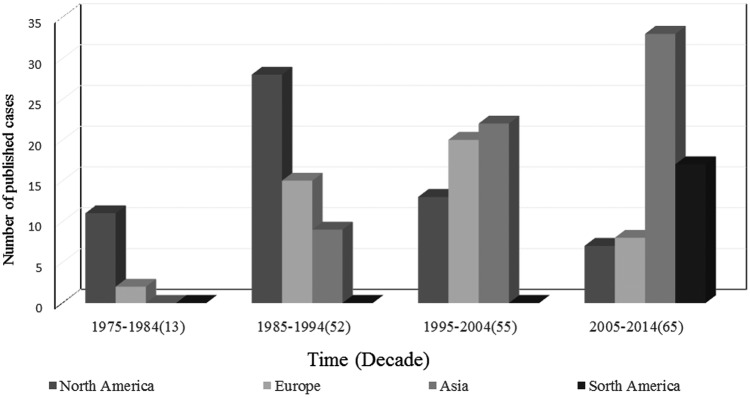
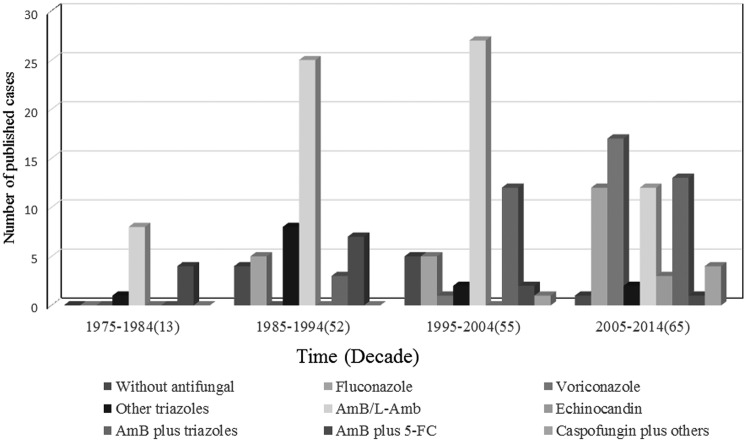
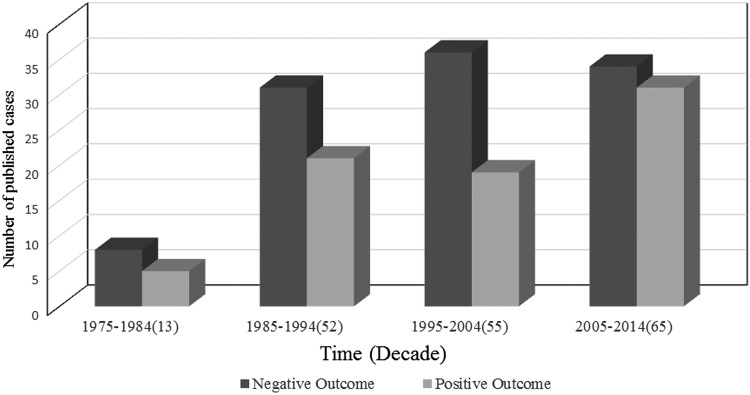
Background. Trichosporon species have emerged as an important non-Candida spp yeast pathogen in immunocompromised patients in recent decades; however, the systemic analysis of Trichosporon epidemiology has seldom been reported. Methods. We reviewed 185 reported cases of Trichosporon fungemia from 1975 to 2014 in the English-language literature, and the epidemiology and prognostic factors of the included cases are described. Results. The number of cases reported has increased with time, especially over the past decade. During the 3 decades from 1975 to 2004, the most commonly used antifungal compounds were amphotericin B/liposomal amphotericin B; however, in recent decades (2005-2014), triazoles (especially voriconazole) have become the most widely used agents, significantly improving outcome in the reported cases. Correlation analysis revealed that negative outcome is associated with several prognostic factors, including a history of antimicrobial use, bacterial bloodstream coinfection, prophylactic/empirical antifungal therapy, Trichosporon beigelii infection, and receiving the antifungal regimen of amphotericin B/liposomal amphotericin B. In addition, a significantly greater proportion of patients with a positive outcome had fungemia without invasive tissue infection and received a voriconazole regimen or an AmB-triazole combined regimen. Significant positive outcome was also associated with patients who had recovered from neutropenia or after central venous catheter removal. Conclusions. Voriconazole can be recommended as a first-line antifungal compound to treat Trichosporon fungemia; the immune status of the host plays a crucial role in the outcome of this infection, and the removal of vascular catheters should be considered if feasible.
Keywords: Trichosporon fungemia; epidemiology; prognostic factor; therapeutic strategy.
Figures
References
-
- Kontoyiannis DP, Torres HA, Chagua M et al. Trichosporonosis in a tertiary care cancer center: risk factors, changing spectrum and determinants of outcome. Scand J Infect Dis 2004; 36:564–9. - PubMed
-
- Ruan SY, Chien JY, Hsueh PR. Invasive trichosporonosis caused by Trichosporon asahii and other unusual Trichosporon species at a medical center in Taiwan. Clin Infect Dis 2009; 49:e11–7. - PubMed
-
- Miceli MH, Diaz JA, Lee SA. Emerging opportunistic yeast infections. Lancet Infect Dis 2011; 11:142–51. - PubMed
LinkOut - more resources
Full Text Sources
Other Literature Sources
Miscellaneous
