


Increase in adipose tissue linoleic acid of US adults in the last half century
- PMID: 26567191
- PMCID: PMC4642429
- DOI: 10.3945/an.115.009944
Increase in adipose tissue linoleic acid of US adults in the last half century
Abstract
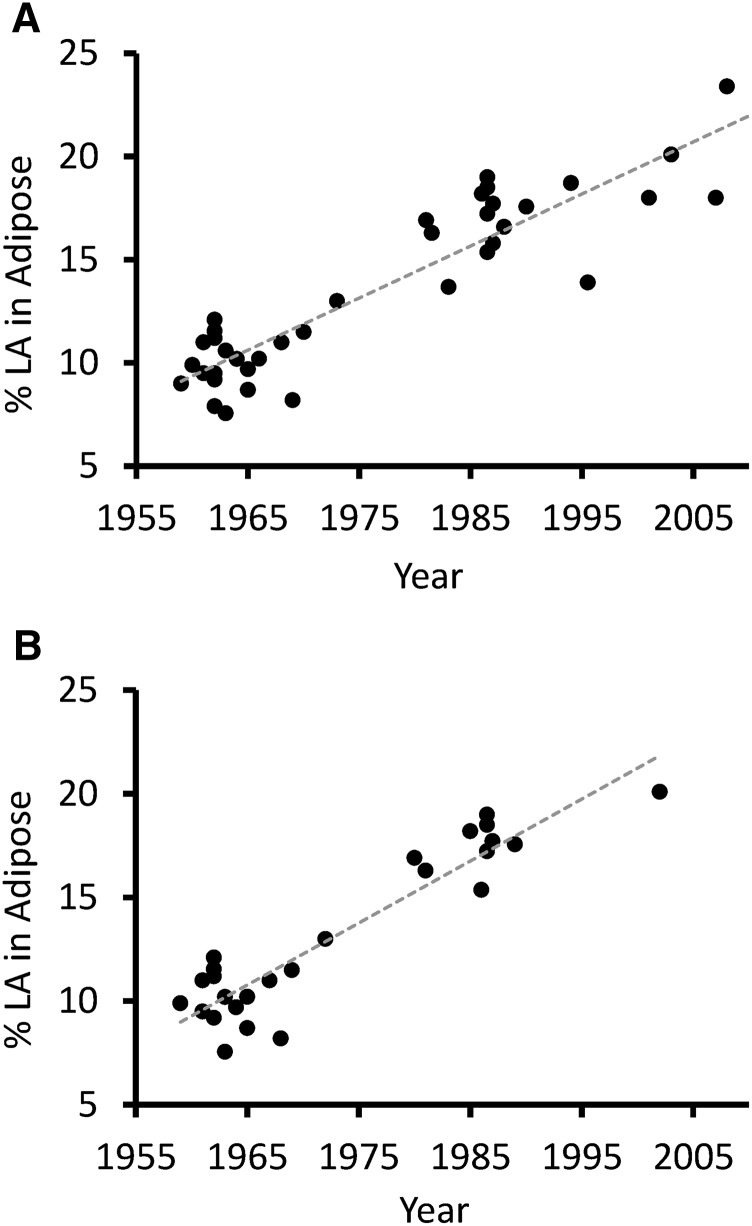
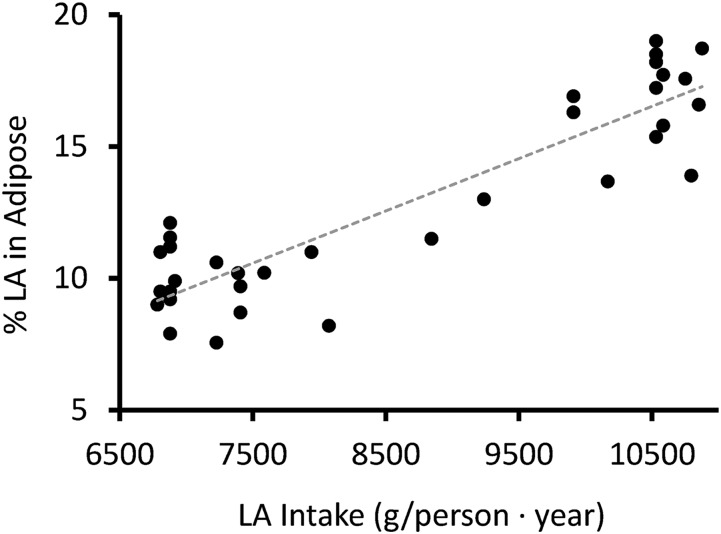
Linoleic acid (LA) is a bioactive fatty acid with diverse effects on human physiology and pathophysiology. LA is a major dietary fatty acid, and also one of the most abundant fatty acids in adipose tissue, where its concentration reflects dietary intake. Over the last half century in the United States, dietary LA intake has greatly increased as dietary fat sources have shifted toward polyunsaturated seed oils such as soybean oil. We have conducted a systematic literature review of studies reporting the concentration of LA in subcutaneous adipose tissue of US cohorts. Our results indicate that adipose tissue LA has increased by 136% over the last half century and that this increase is highly correlated with an increase in dietary LA intake over the same period of time.
Keywords: US; change over time; dietary linoleic acid; linoleic acid; subcutaneous adipose tissue.
© 2015 American Society for Nutrition.
Conflict of interest statement
Author disclosures: SJ Guyenet and SE Carlson, no conflicts of interest.
Figures
References
-
- Ziboh VA. Prostaglandins, leukotrienes, and hydroxy fatty acids in epidermis. Semin Dermatol 1992;11:114–20. - PubMed
-
- Harbige LS. Dietary n-6 and n-3 fatty acids in immunity and autoimmune disease. Proc Nutr Soc 1998;57:555–62. - PubMed
-
- Ramsden CE, Zamora D, Leelarthaepin B, Majchrzak-Hong SF, Faurot KR, Suchindran CM, Ringel A, Davis JM, Hibbeln JR. Use of dietary linoleic acid for secondary prevention of coronary heart disease and death: evaluation of recovered data from the Sydney Diet Heart Study and updated meta-analysis. BMJ 2013;346:e8707. - PMC - PubMed
Publication types
MeSH terms
Substances
Grants and funding
LinkOut - more resources
Full Text Sources
Other Literature Sources
