


An epidemiological review of gastrointestinal outbreaks associated with Clostridium perfringens, North East of England, 2012-2014
- PMID: 26567801
- PMCID: PMC9150519
- DOI: 10.1017/S0950268815002824
An epidemiological review of gastrointestinal outbreaks associated with Clostridium perfringens, North East of England, 2012-2014
Abstract
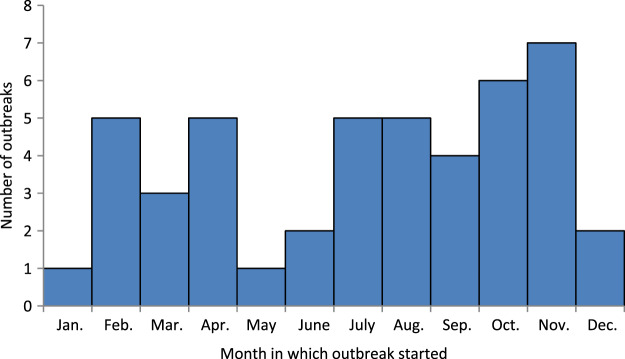
An anecdotal increase in C. perfringens outbreaks was observed in the North East of England during 2012-2014. We describe findings of investigations in order to further understanding of the epidemiology of these outbreaks and inform control measures. All culture-positive (>105 c.f.u./g) outbreaks reported to the North East Health Protection Team from 1 January 2012 to 31 December 2014 were included. Epidemiological (attack rate, symptom profile and positive associations with a suspected vehicle of infection), environmental (deficiencies in food preparation or hygiene practices and suspected vehicle of infection) and microbiological investigations are described. Forty-six outbreaks were included (83% reported from care homes). Enterotoxin (cpe) gene-bearer C. perfringens were detected by PCR in 20/46 (43%) and enterotoxin (by ELISA) and/or enterotoxigenic faecal/food isolates with indistinguishable molecular profiles in 12/46 (26%) outbreaks. Concerns about temperature control of foods were documented in 20/46 (43%) outbreaks. A suspected vehicle of infection was documented in 21/46 (46%) of outbreaks (meat-containing vehicle in 20/21). In 15/21 (71%) identification of the suspected vehicle was based on descriptive evidence alone, in 5/21 (24%) with supporting evidence from an epidemiological study and in 2/21 (10%) with supporting microbiological evidence. C. perfringens-associated illness is preventable and although identification of foodborne outbreaks is challenging, a risk mitigation approach should be taken, particularly in vulnerable populations such as care homes for the elderly.
Keywords: Clostridium perfringens; epidemiology; food poisoning; outbreaks.
Figures
References
-
- Rhodehamel EJ, Harmon SM. Bacteriological Analytical Manual. Chapter 16. Clostridium perfringens (http://www.fda.gov/Food/FoodScienceResearch/LaboratoryMethods/ucm070878.htm).
-
- Bos J, et al. Fatal necrotizing colitis following a foodborne outbreak of enterotoxigenic Clostridium perfringens type A infection. Clinical Infectious Diseases 2005; 40: e78–e83. - PubMed
MeSH terms
LinkOut - more resources
Full Text Sources
Medical
Research Materials
Miscellaneous
