Review
. 2015 Dec;29(6):971-92.
doi: 10.1016/j.hoc.2015.07.003. Epub 2015 Oct 17.

Molecular Aspects of Head and Neck Cancer Therapy

Affiliations
Review

Molecular Aspects of Head and Neck Cancer Therapy

Sidharth V Puram et al. Hematol Oncol Clin North Am. 2015 Dec.

Abstract

In spite of a rapidly expanding understanding of head and neck tumor biology and optimization of radiation, chemotherapy, and surgical treatment modalities, head and neck squamous cell carcinoma (HNSCC) remains a major cause of cancer-related morbidity and mortality. Although our biologic understanding of these tumors had largely been limited to pathways driving proliferation, survival, and differentiation, the identification of HPV as a major driver of HNSCC and genomic sequencing analyses has dramatically influenced our understanding of tumor biology and approach to therapy. Here, we summarize molecular aspects of HNSCC biology and identify promising areas for potential diagnostic and therapeutic agents.

Keywords: Genomic sequencing; Head and neck cancer; Intratumor heterogeneity; Molecular biology; Squamous cell carcinoma; Synthetic lethality; Targeted therapy.


Figures

Figure 1
Figure 1
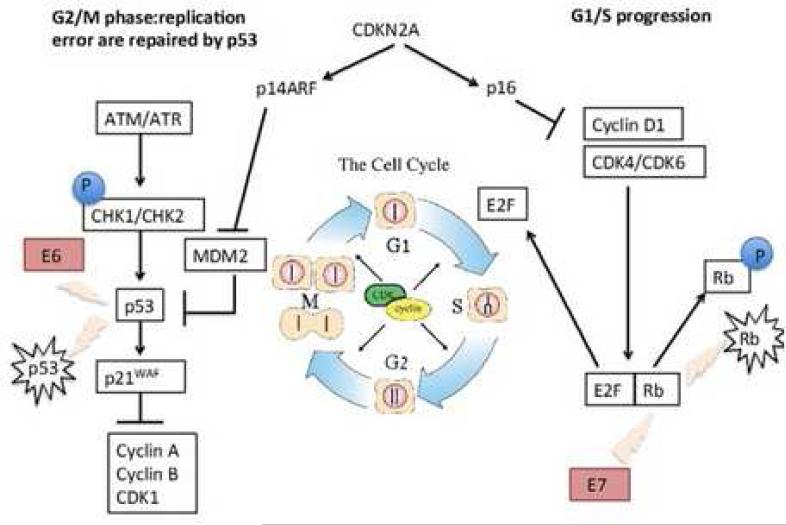
Cell cycle signaling is interrupted in HPV+ HNSCC through disruption of multiple cell cycle checkpoints. From Machiels JP, Lambrecht M, Hanin FX et al. Advances in the management of squamous cell carcinoma of the head and neck. F1000 Prime Rep. 2014; 6(44): eCollection; with permission.
Figure 2
Figure 2
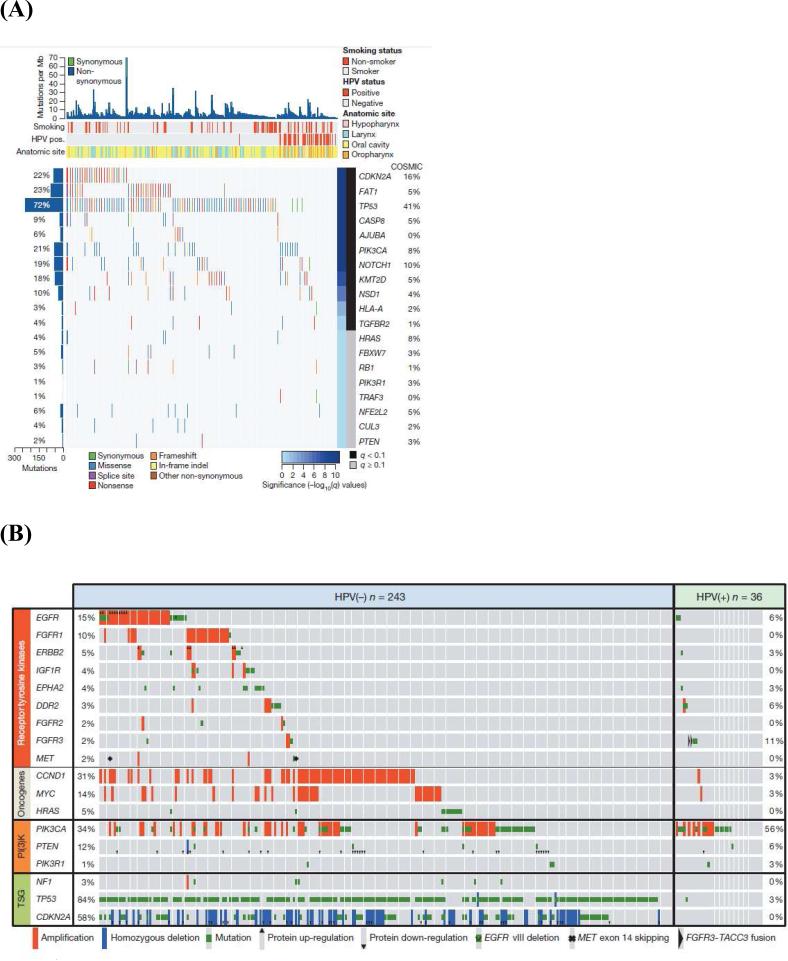
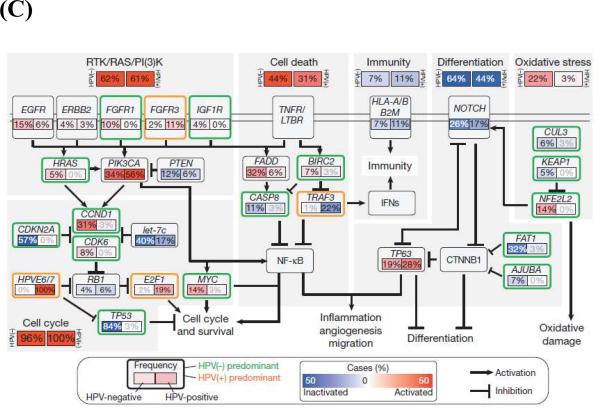
Whole exome sequencing of HNSCC reveals novel insights into tumor pathogenesis and mutational profile. (A) Significantly mutated genes in HNSCC. (B) Candidate therapeutic targets and driver oncogenic events. (C) Deregulation of signaling pathways and transcription factors. From Cancer Genome Atlas. Comprehensive genomic characterization of head and neck squamous cell carcinomas. Nature 2015; 517: 576-582; with permission.
Figure 2
Figure 2
Whole exome sequencing of HNSCC reveals novel insights into tumor pathogenesis and mutational profile. (A) Significantly mutated genes in HNSCC. (B) Candidate therapeutic targets and driver oncogenic events. (C) Deregulation of signaling pathways and transcription factors. From Cancer Genome Atlas. Comprehensive genomic characterization of head and neck squamous cell carcinomas. Nature 2015; 517: 576-582; with permission.
Figure 3
Figure 3
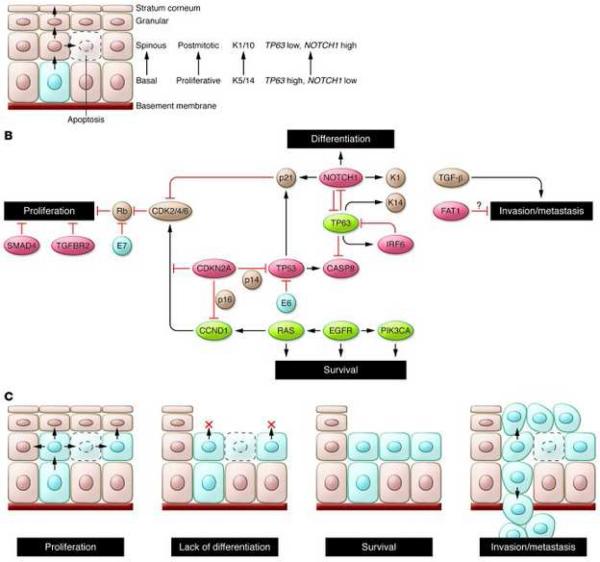
Key cellular and molecular pathways implicated in HNSCC tumorigenesis. From Rothenberg SM and Ellisen LW. The molecular pathogenesis of head and neck squamous cell carcinoma. Jnl of Clin Invest 2012; 122(6): 1951-1957; with permission.
Figure 4
Figure 4
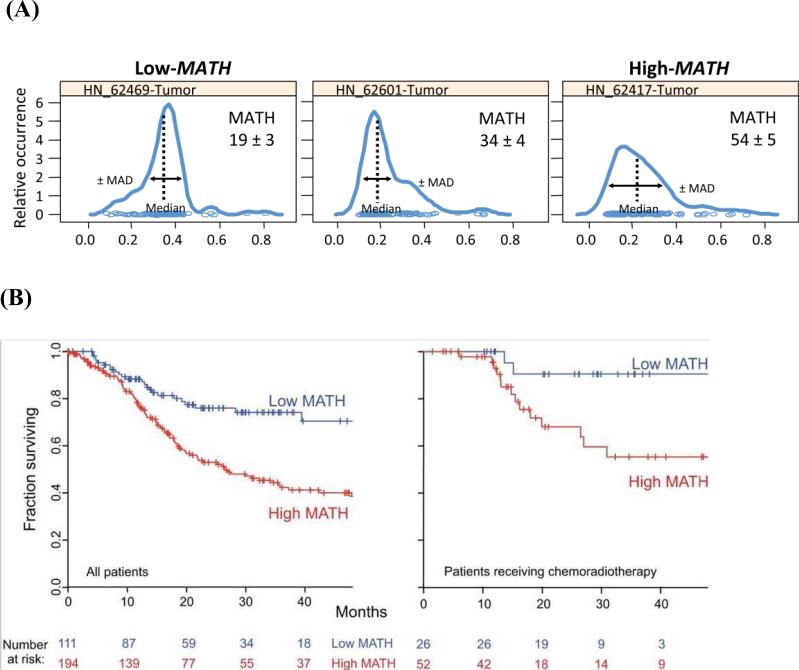
(A) Representative mutant allele distributions from three HNSCC. A heterogenous tumor with a high MATH score will have a broader distribution, shorter peak, and lower median mutant allele fraction compared to a more homogeneous, low MATH score tumor. From Rocco JW. Mutant Allele Tumor Heterogeneity (MATH) and Head and Neck Squamous Cell Carcinoma. Head Neck Pathol. 2015; 9(1): 1-5; with permission. (B) Relationship of intra-tumor heterogeneity as captured by MATH score with overall survival in HNSCC. From Mroz EA, Tward AM, Hammon RJ et al. Intra-tumor genetic heterogeneity and mortality in head and neck cancer: analysis of data from the Cancer Genome Atlas. PLoS Med. 2015; 12(2): eCollection; with permission.
Figure 5
Figure 5
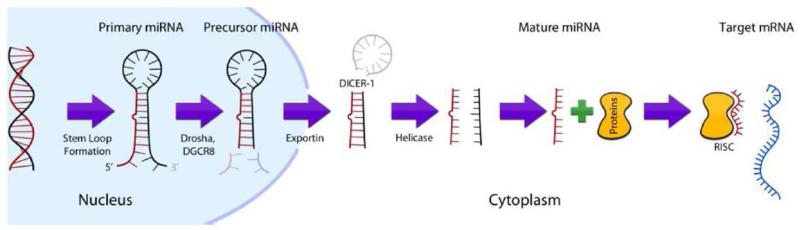
Schematic demonstrating the mechanism for miRNA based mRNA silencing. From Mroz EA, Tward AM, Hammon RJ et al. Intra-tumor genetic heterogeneity and mortality in head and neck cancer: analysis of data from the Cancer Genome Atlas. PLoS Med. 2015; 12(2): e10001786; with permission.

References

    1. International Agency for Research on Cancer . World Health Organisation. Estimated cancer incidence, mortality and prevalence worldwide in 2012. Globocan; 2014. http://globoscan.iarc.fr.
    1. Rothenberg SM, Ellisen LW. The molecular pathogenesis of head and neck squamous cell carcinoma. Jnl of Clin Invest. 2012;122(6):1951–1957. - PMC - PubMed
    1. Machiels JP, Lambrecht M, Hanin FX, et al. Advances in the management of squamous cell carcinoma of the head and neck. F1000 Prime Rep. 2014;6(44) eCollection. - PMC - PubMed
    1. Curado MP, Hashibe M. Recent changes in the epidemiology of head and neck cancer. Current Opinion in Oncology. 2009;21(3):194–200. - PubMed
    1. Gillison ML. Human papillomavirus-associated head and neck cancer is a distinct epidemiologic, clinical, and molecular entity. Semin Oncol. 2004;31:744–754. - PubMed

MeSH terms