


The Health Impact of Symptomatic Adult Spinal Deformity: Comparison of Deformity Types to United States Population Norms and Chronic Diseases
- PMID: 26571174
- PMCID: PMC4718181
- DOI: 10.1097/BRS.0000000000001202
The Health Impact of Symptomatic Adult Spinal Deformity: Comparison of Deformity Types to United States Population Norms and Chronic Diseases
Abstract
Study design: A retrospective analysis of a prospective, multicenter database.
Objective: The aim of this study was to evaluate the health impact of symptomatic adult spinal deformity (SASD) by comparing Standard Form Version 2 (SF-36) scores for SASD with United States normative and chronic disease values.
Summary of background data: Recent data have identified radiographic parameters correlating with poor health-related quality of life for SASD. Disability comparisons between SASD patients and patients with chronic diseases may provide further insight to the disease burden caused by SASD.
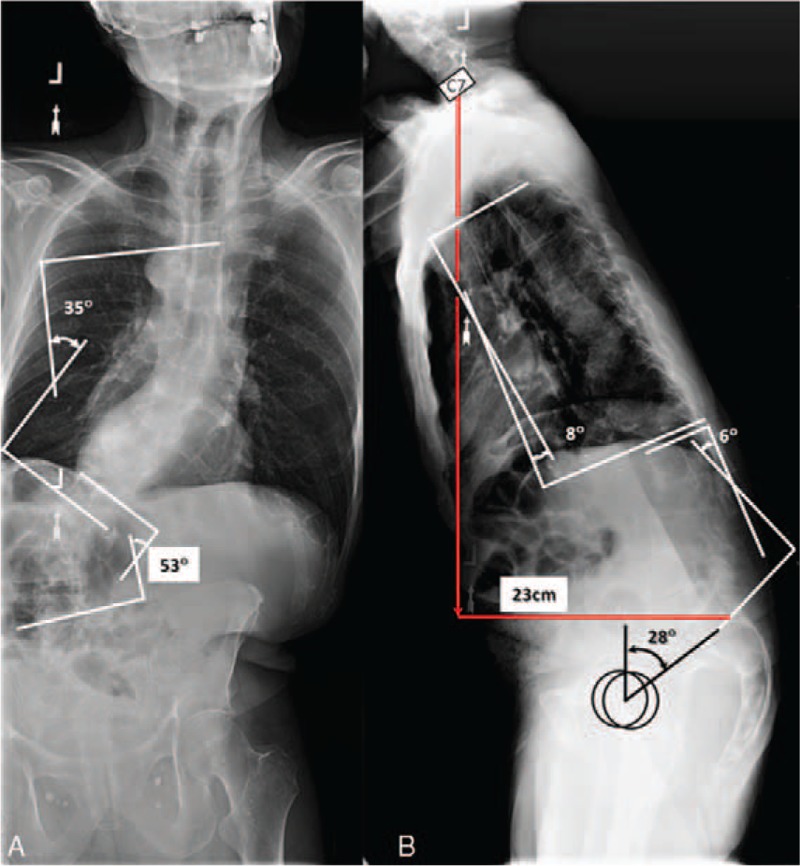
Methods: Consecutive SASD patients, with no history of spine surgery, were enrolled into a multicenter database and evaluated for type and severity of spinal deformity. Baseline SF-36 physical component summary (PCS) and mental component summary (MCS) values for SASD patients were compared with reported U.S. normative and chronic disease SF-36 scores. SF-36 scores were reported as normative-based scores (NBS) and evaluated for minimally clinical important difference (MCID).
Results: Between 2008 and 2011, 497 SASD patients were prospectively enrolled and evaluated. Mean PCS for all SASD was lower than U.S. total population (ASD = 40.9; US = 50; P < 0.05). Generational decline in PCS for SASD patients with no other reported comorbidities was more rapid than U.S. norms (P < 0.05). PCS worsened with lumbar scoliosis and increasing sagittal vertical axis (SVA). PCS scores for patients with isolated thoracic scoliosis were similar to values reported by individuals with chronic back pain (45.5 vs 45.7, respectively; P > 0.05), whereas patients with lumbar scoliosis combined with severe sagittal malalignment (SVA >10 cm) demonstrated worse PCS scores than values reported by patients with limited use of arms and legs (24.7 vs 29.1, respectively; P < 0.05).
Conclusions: SASD is a heterogeneous condition that, depending upon the type and severity of the deformity, can have a debilitating impact on health often exceeding the disability of more recognized chronic diseases. Health care providers must be aware of the types of SASD that correlate with disability to facilitate appropriate diagnosis, treatment, and research efforts.
Level of evidence: 3.
Figures


References
-
- Baldus C, Bridwell KH, Harrast J, et al. Age-gender matched comparison of SRS instrument scores between adult deformity and normal adults: are all SRS domains disease specific? Spine (Phila Pa 1976) 2008; 33:2214–2218. - PubMed
-
- Berven S, Deviren V, Demir-Deviren S, et al. Studies in the modified Scoliosis Research Society Outcomes Instrument in adults: validation, reliability, and discriminatory capacity. Spine 2003; 28:2164–2169.discussion 9. - PubMed
-
- Baldus C, Bridwell K, Harrast J, et al. The Scoliosis Research Society Health-Related Quality of Life (SRS-30) age-gender normative data: an analysis of 1346 adult subjects unaffected by scoliosis. Spine 2011; 36:1154–1162. - PubMed
-
- Weinstein SL, Dolan LA, Spratt KF, et al. Health and function of patients with untreated idiopathic scoliosis: a 50-year natural history study. JAMA 2003; 289:559–567. - PubMed
-
- Weinstein SL, Zavala DC, Ponseti IV. Idiopathic scoliosis: long-term follow-up and prognosis in untreated patients. J Bone Joint Surg Am 1981; 63:702–712. - PubMed
Publication types
MeSH terms
LinkOut - more resources
Full Text Sources
Other Literature Sources
Medical
Research Materials
Miscellaneous
