


First-In-Class Small Molecule ONC201 Induces DR5 and Cell Death in Tumor but Not Normal Cells to Provide a Wide Therapeutic Index as an Anti-Cancer Agent
- PMID: 26580220
- PMCID: PMC4651306
- DOI: 10.1371/journal.pone.0143082
First-In-Class Small Molecule ONC201 Induces DR5 and Cell Death in Tumor but Not Normal Cells to Provide a Wide Therapeutic Index as an Anti-Cancer Agent
Erratum in
-
Correction: First-In-Class Small Molecule ONC201 Induces DR5 and Cell Death in Tumor but Not Normal Cells to Provide a Wide Therapeutic Index as an Anti-Cancer Agent.PLoS One. 2016 Feb 10;11(2):e0149365. doi: 10.1371/journal.pone.0149365. eCollection 2016. PLoS One. 2016. PMID: 26863230 Free PMC article. No abstract available.
Abstract
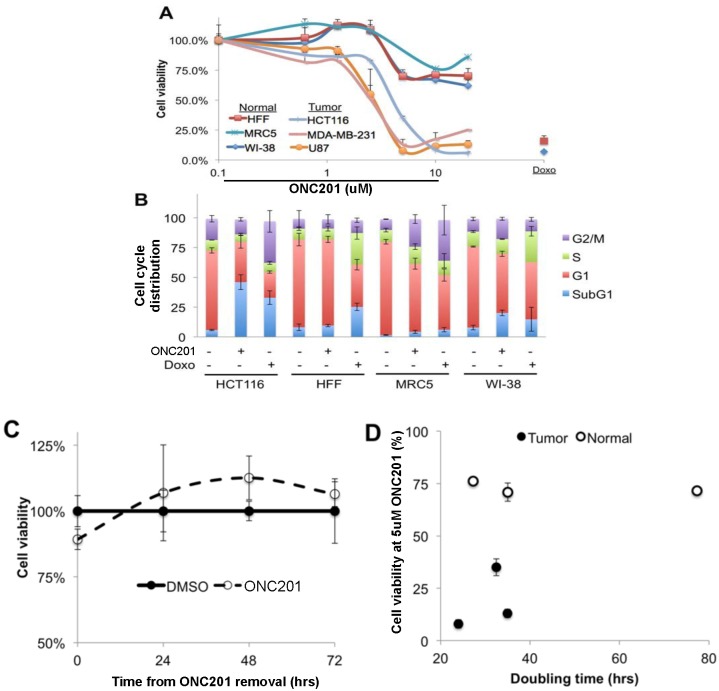
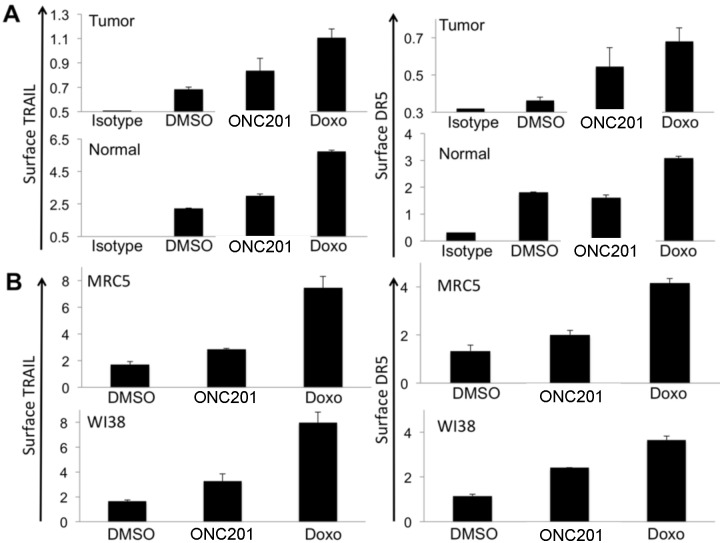
We previously identified ONC201 (TIC10) as a first-in-class orally active small molecule with robust antitumor activity that is currently in clinical trials in advanced cancers. Here, we further investigate the safety characteristics of ONC201 in preclinical models that reveal an excellent safety profile at doses that exceed efficacious doses by 10-fold. In vitro studies indicated a strikingly different dose-response relationship when comparing tumor and normal cells where maximal effects are much stronger in tumor cells than in normal cells. In further support of a wide therapeutic index, investigation of tumor and normal cell responses under identical conditions demonstrated large apoptotic effects in tumor cells and modest anti-proliferative effects in normal cells that were non-apoptotic and reversible. Probing the underlying mechanism of apoptosis indicated that ONC201 does not induce DR5 in normal cells under conditions that induce DR5 in tumor cells; DR5 is a pro-apoptotic TRAIL receptor previously linked to the anti-tumor mechanism of ONC201. GLP toxicology studies in Sprague-Dawley rats and beagle dogs at therapeutic and exaggerated doses revealed no dose-limiting toxicities. Observations in both species at the highest doses were mild and reversible at doses above 10-fold the expected therapeutic dose. The no observed adverse event level (NOAEL) was ≥42 mg/kg in dogs and ≥125 mg/kg in rats, which both correspond to a human dose of approximately 1.25 g assuming standard allometric scaling. These results provided the rationale for the 125 mg starting dose in dose escalation clinical trials that began in 2015 in patients with advanced cancer.
Conflict of interest statement
Figures
References
-
- Allen JE, Krigsfeld G, Mayes PA, Patel L, Dicker DT, Patel AS, et al. Dual inactivation of Akt and ERK by TIC10 signals Foxo3a nuclear translocation, TRAIL gene induction, and potent antitumor effects. Science translational medicine. 2013;5(171):171ra17 10.1126/scitranslmed.3004828 . - DOI - PMC - PubMed
Publication types
MeSH terms
Substances
Grants and funding
LinkOut - more resources
Full Text Sources
Other Literature Sources
