Review
. 2015 Dec;16(12):705-18.
doi: 10.1038/nrn4036.

The endocannabinoid system in guarding against fear, anxiety and stress

Affiliations
Review

The endocannabinoid system in guarding against fear, anxiety and stress

Beat Lutz et al. Nat Rev Neurosci. 2015 Dec.

Abstract

The endocannabinoid (eCB) system has emerged as a central integrator linking the perception of external and internal stimuli to distinct neurophysiological and behavioural outcomes (such as fear reaction, anxiety and stress-coping), thus allowing an organism to adapt to its changing environment. eCB signalling seems to determine the value of fear-evoking stimuli and to tune appropriate behavioural responses, which are essential for the organism's long-term viability, homeostasis and stress resilience; and dysregulation of eCB signalling can lead to psychiatric disorders. An understanding of the underlying neural cell populations and cellular processes enables the development of therapeutic strategies to mitigate behavioural maladaptation.


Conflict of interest statement

Competing interests statement

The authors declare no competing interests.

Figures

Figure 1
Figure 1. Architecture of eCB system components in neurons and glia
In the CNS, endocannabinoid (eCB) system components show a distinct anatomical distribution. The Gi/o-coupled protein cannabinoid receptor type 1 (CB1R) is typically present at the presynaptic terminal. Its stimulation by 2-arachidonoyl glycerol (2-AG) or N-arachidonoylethanolamine (AEA) leads to the suppression of neurotransmitter release from the presynaptic terminal,. CB1R is also present in the outer mitochondrial membrane at both pre-and postsynaptic sites (mitochondrial CB1R (mtCB1R)). Stimulation of the mtCB1R leads to inhibition of mitochondrial oxidative phosphorylation and ATP production in the mitochondria and can modulate neurotransmitter release through mechanisms that are still unknown (indicated by the question mark). AEA can also activate the postsynaptic non-selective cation channel transient receptor potential cation channel subfamily V member 1 (TRPV1),,,, leading to an increase in postsynaptic current, whereas 2-AG can also stimulate postsynaptic GABAA receptors. On depolarization of the postsynaptic terminal, for example, by activation of metabotropic receptors (metabotropic glutamate receptor 1 (mGluR1; also known as GRM1), mGluR5, muscarinic receptor type 1 (M1) or M2),, 2-AG is postsynaptically synthesized ‘on-demand’ by diacylglycerol lipase-α (DAGLα) in dendritic spines of excitatory synapses. 2-AG then travels to the presynaptic CB1R in a retrograde manner to inhibit neurotransmitter release,, thus acting as a negative-feedback mechanism to tune-down synaptic transmission, especially when the postsynaptic terminal is strongly activated. The major 2-AG degrading enzyme monoacylglycerol lipase (MAGL) is located at the presynaptic terminal or in astrocytes, whereas α-β-hydrolase domain 6 (ABHD6), another 2-AG degrading enzyme, can limit 2-AG availability at the site of production,. Astrocytic MAGL seems to enable astrocyte–neuron transcellular shuttling and metabolism of 2-AG and arachidonic acid. Several pathways are involved in AEA synthesis. One of the enzymes involved in AEA synthesis, N-acyl phosphatidyl ethanolamine-phospholipase D (NAPE-PLD), is predominantly expressed in the presynaptic terminal,, although it might also be synthesized postsynaptically. Other AEA-synthesizing enzymes have been described but are not fully characterized,. The AEA-degrading enzyme fatty acid amide hydrolase (FAAH) is present at the postsynaptic terminal. Thus, AEA can act in both an autocrine and a retrograde manner (an anterograde AEA-signalling mechanism awaits description). CB2R and possibly CB1R (indicated by a question mark) are also present on microglial cells and are involved in immune reactions. Furthermore, whereas presynaptic CB1R is coupled to Go, CB1R on astrocytes is Gq-coupled,. Thus, agonist stimulation of the receptor leads to an increase in intracellular Ca2+ concentration, possibly with a concomitant release stimulation of ‘gliotransmitters’ (whose exact nature is not yet known, indicated by the question mark), finally modulating synaptic transmission,. eCB synthesis in microglia and astrocytes can be stimulated by the activation of P2X purinoreceptor 7 (P2X7) by ATP,.
Figure 2
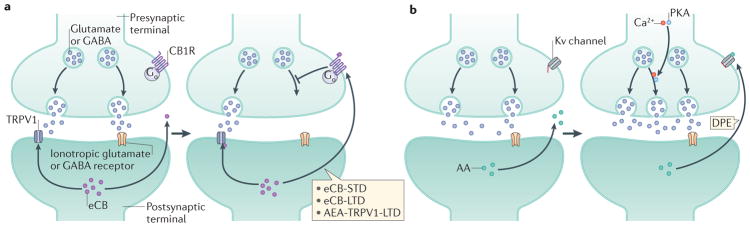
Figure 2. Regulation of synaptic excitatory and inhibitory transmission
a | Schematic representation of endocannabinoid (eCB)-mediated suppression of synaptic transmission,; the mechanisms shown apply to both excitatory and inhibitory synapses. At excitatory synapses, afferent stimulation evokes increased glutamate release and subsequent activation of the postsynaptic terminal. This stimulates the synthesis of eCBs (such as N-arachidonoylethanolamine (AEA) and 2-arachidonoyl glycerol (2-AG)), which travel through the synaptic cleft to activate presynaptic cannabinoid receptor type 1 (CB1R), leading to the suppression of glutamate release. eCB-mediated short-term depression (eCB-STD, also termed depolarization-induced suppression of excitation (DSE)) or eCB-mediated long-term depression (eCB-LTD) can occur. A similar mechanism occurs at GABAergic synapses, in which postsynaptic activation by excitatory inputs can stimulate the production of eCBs, the inhibition of presynaptic CB1R and the retrograde suppression of GABA release. This form of eCB-STD is termed depolarization-induced suppression of inhibition (DSI). Both DSE and DSI require the synthesis of 2-AG by diacylglycerol lipase-α (DAGLα),. AEA can also mediate LTD, although at a slower rate than 2-AG. AEA can act both through CB1R, to produce eCB-LTD, and through transient receptor potential cation channel subfamily V member 1 (TRPV1), to generate AEA-TRPV1-LTD (in an autocrine manner in which AEA activates postsynaptic TRPV1). AEA-TRPV1-LTD can occur at both glutamatergic and GABAergic synapses,,–,,. b | Schematic presentation of the modulation of excitatory transmission by the eCB precursor and degradation product arachidonic acid (AA). Postsynaptic AA acts in a retrograde manner via inhibition of presynaptic voltage-gated potassium (Kv) channels and potentiation of excitatory neurotransmission, a process called depolarization-induced potentiation of excitation (DPE). PKA, protein kinase A.
Figure 3
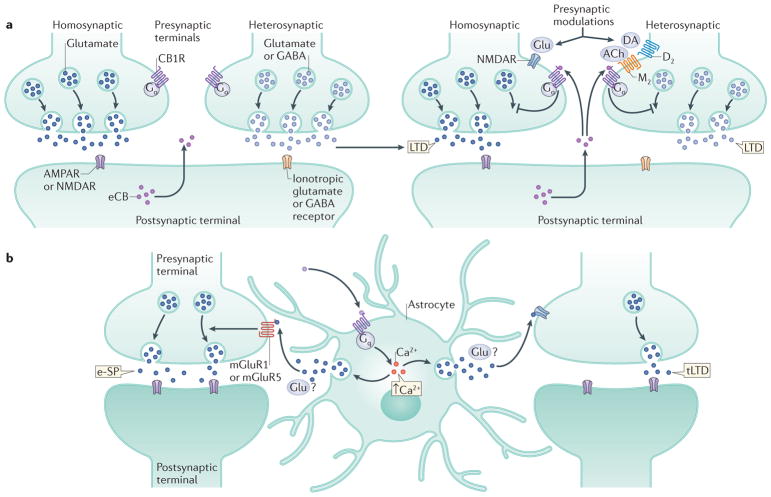
Figure 3. Heterosynaptic effects and eCB function in the tripartite synapse
a | Schematic representation of homosynaptic and heterosynaptic effects of eCB signalling on neurotransmitter release. Typically, repetitive afferent stimulation causes glutamate (Glu) release from excitatory presynaptic sites, activating the postsynaptic terminal and inducing the generation and release of 2-arachidonoyl glycerol (2-AG), which then activates cannabinoid receptor type 1 (CB1R) on the same presynaptic terminal (a homosynaptic effect) and on the nearby synaptic terminal (a heterosynaptic effect). For long-term depression (LTD) to be produced, concomitant activation of other presynaptic receptors is required. For example, activation of NMDA receptor (NMDAR), dopamine (DA) receptor type 2 (D2) or muscarinic receptor type 2 (M2) by Glu, DA or acetycholine (ACh), respectively, is required. These associative mechanisms may ensure the selectivity of the synapses to be regulated by endocannabinoids (eCBs). b | Integration of the eCB system into the ‘tripartite synapse’ concept and modulation of synaptic transmission. Activation of CB1R on astrocytes leads to increased intracellular levels of Ca2+, promoting the release of ‘gliotransmitters’ (although this remains subject to debate, as indicated by the question mark), possibly including Glu. These gliotransmitters could then promote heterosynaptic excitatory potentiation (e-SP) or time-spiking-dependent LTD (tLTD) of glutamatergic transmission via presynaptic NMDAR. AMPAR, AMPA receptor; mGluR, metabotropic glutamate receptor.
Figure 4
Figure 4. Dichotomic CB1R function in glutamatergic and GABAergic neurons
a | A prominent feature of the endocannabinoid (eCB) system in the forebrain is its distinct distribution in glutamatergic and GABAergic neurons, with low cannabinoid receptor type 1 (CB1R) expression in glutamatergic neurons and high CB1R expression in GABAergic neurons,. This is evident when immunostaining for CB1R of hippocampi in mice with CB1R deficiency in glutamatergic (Glu-CB1R-KO; left panel) and GABAergic (GABA-CB1R-KO; right panel) neurons; in comparison with wild-type controls (WT; middle panel). b | In principal neurons of the hippocampal CA1 formation, spine density and dendritic branching are increased in Glu-CB1R-KO mice (left panel) and decreased in GABA-CB1R-KO mice (right panel), as compared with these neurons in wild-type mice (middle panel). This coincides with increased and decreased hippocampal CA1 long-term potentiation (LTP) formation, respectively. Moreover, the two mutant-mouse lines display opposing phenotypes in behaviours such as neophobia, exploration, fear relief and habituation. Thus, CB1R in cortical glutamatergic and forebrain GABAergic neurons calibrates excitatory synaptic balance and consequently regulates fear and anxiety-like behaviours. DSE, depolarization-induced suppression of excitation; DSI, depolarization-induced suppression of inhibition. Part a adapted with permission from REF. , Copyright ©1999–2015 John Wiley & Sons, Inc. All Rights Reserved. Part b adapted with permission from REF. , the Society for Neuroscience.

References

    1. Tart CT. Marijuana intoxication common experiences. Nature. 1970;226:701–704. - PubMed
    1. Lafenetre P, Chaouloff F, Marsicano G. The endocannabinoid system in the processing of anxiety and fear and how CB1 receptors may modulate fear extinction. Pharmacol Res. 2007;56:367–381. - PubMed
    1. Riebe CJ, Pamplona FA, Kamprath K, Wotjak CT. Fear relief—toward a new conceptual frame work and what endocannabinoids gotta do with it. Neuroscience. 2012;204:159–185. - PubMed
    1. Ruehle S, Rey AA, Remmers F, Lutz B. The endocannabinoid system in anxiety, fear memory and habituation. J Psychopharmacol. 2012;26:23–39. - PMC - PubMed
    1. Akirav I. The role of cannabinoids in modulating emotional and non-emotional memory processes in the hippocampus. Front Behav Neurosci. 2011;5:34. - PMC - PubMed

Publication types

Substances