


Challenges in the harmonization of immune monitoring studies and trial design for cell-based therapies in the context of hematopoietic cell transplantation for pediatric cancer patients
- PMID: 26589751
- PMCID: PMC7472929
- DOI: 10.1016/j.jcyt.2015.09.008
Challenges in the harmonization of immune monitoring studies and trial design for cell-based therapies in the context of hematopoietic cell transplantation for pediatric cancer patients
Abstract
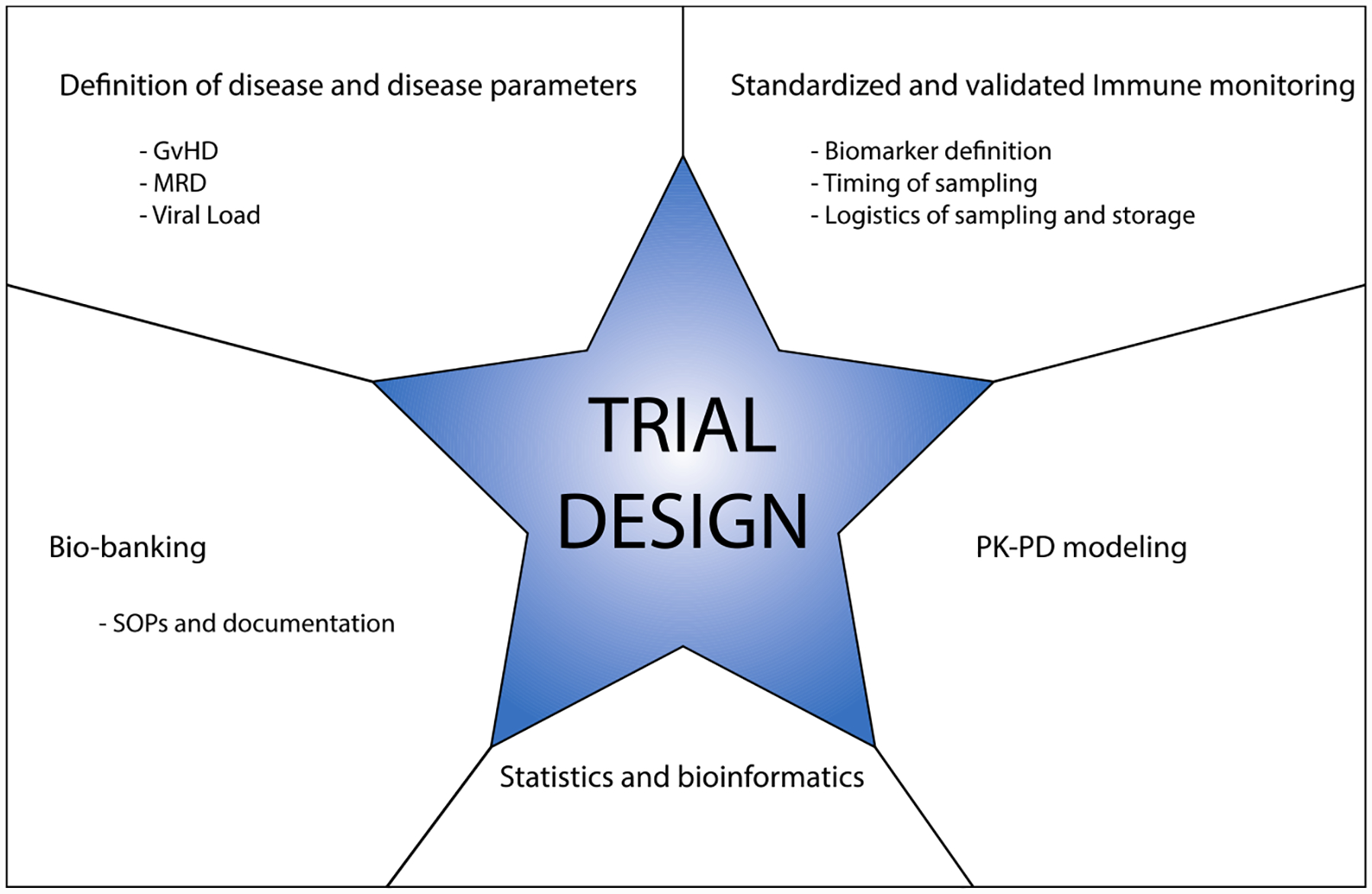
Clinical trials aimed at improving results of hematopoietic cell transplantation (HCT) by adjuvant cell-based interventions in children have been limited by small numbers and pediatric-specific features. The need for a larger number of pediatric HCT centers to participate in trials has resulted in a demand for harmonization of disease-specific clinical trials and immune-monitoring. Thus far, most phase I/II trials select different end points evaluated at disparate time points, making inter-study comparisons difficult and, sometimes, impossible. In this review, we discuss the various aspects that are important to consider for harmonizing clinical trial design as well as the critical elements for standardized (immune)-monitoring protocols in cell-based intervention trials in the context of HCT. Comparison data from trials applying harmonized trial design will lead to optimized immunotherapeutic treatment protocols to maximize clinical efficacy while minimizing toxicity.
Keywords: cell based therapy; clinical trial design; hematopoietic cell transplantation, immune monitoring; pediatric cancer.
Copyright © 2015 International Society for Cellular Therapy. Published by Elsevier Inc. All rights reserved.
Conflict of interest statement
Figures
References
-
- Butterfield LH, Vujanovic L, Pardee AD. Approaches to immunologic monitoring of clinical trials In: The tumor immunoenvironment. Dordrecht: Springer Netherlands; 2013. p. 663–94. doi: 10.1007/978-94-007-6217-6_29. - DOI
-
- Admiraal R, van Kesteren C, Jol-van der Zijde CM, Lankester AC, Bierings MB, Egberts TCG, et al. Association between anti-thymocyte globulin exposure and CD4+ immune reconstitution in paediatric haemopoietic cell transplantation: a multicentre, retrospective pharmacodynamic cohort analysis. Lancet Haematol 2015;2:e194–203. doi: 10.1016/S2352-3026(15)00045-9. - DOI - PubMed
Publication types
MeSH terms
Grants and funding
LinkOut - more resources
Full Text Sources
Other Literature Sources
Medical
