


A Potent, Selective, and Cell-Active Inhibitor of Human Type I Protein Arginine Methyltransferases
- PMID: 26598975
- PMCID: PMC4798913
- DOI: 10.1021/acschembio.5b00839
A Potent, Selective, and Cell-Active Inhibitor of Human Type I Protein Arginine Methyltransferases
Abstract
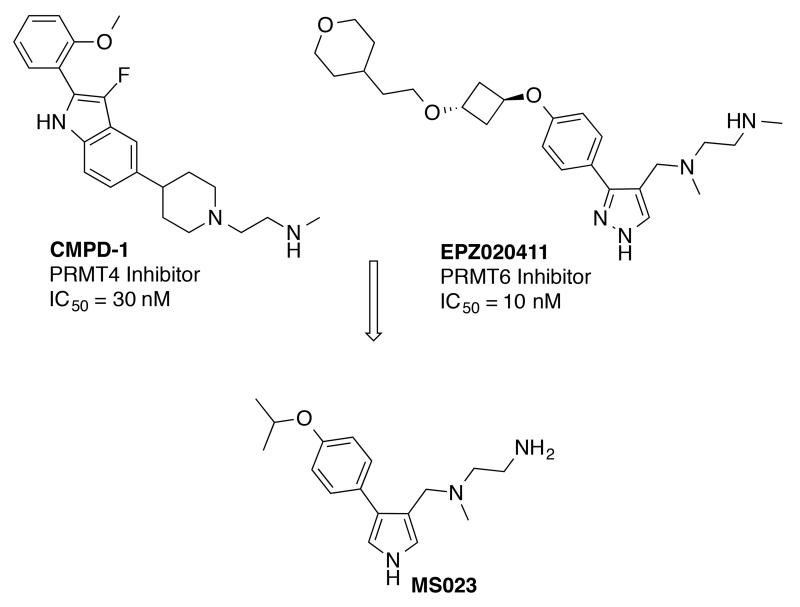
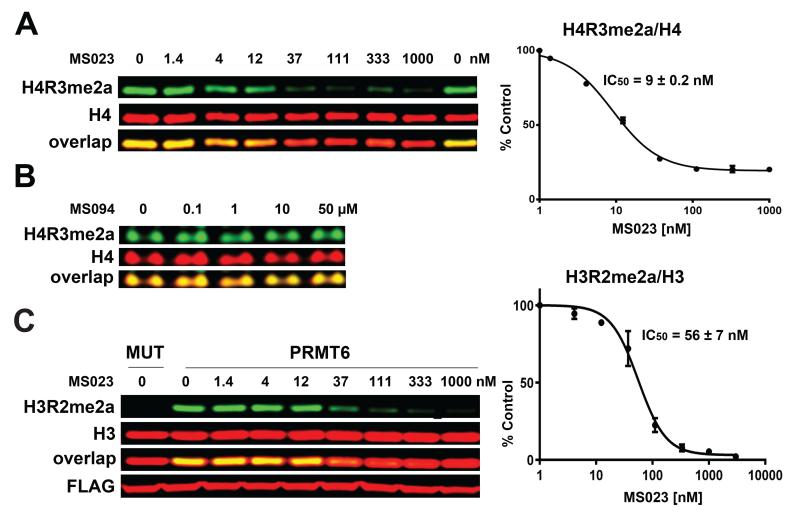
Protein arginine methyltransferases (PRMTs) play a crucial role in a variety of biological processes. Overexpression of PRMTs has been implicated in various human diseases including cancer. Consequently, selective small-molecule inhibitors of PRMTs have been pursued by both academia and the pharmaceutical industry as chemical tools for testing biological and therapeutic hypotheses. PRMTs are divided into three categories: type I PRMTs which catalyze mono- and asymmetric dimethylation of arginine residues, type II PRMTs which catalyze mono- and symmetric dimethylation of arginine residues, and type III PRMT which catalyzes only monomethylation of arginine residues. Here, we report the discovery of a potent, selective, and cell-active inhibitor of human type I PRMTs, MS023, and characterization of this inhibitor in a battery of biochemical, biophysical, and cellular assays. MS023 displayed high potency for type I PRMTs including PRMT1, -3, -4, -6, and -8 but was completely inactive against type II and type III PRMTs, protein lysine methyltransferases and DNA methyltransferases. A crystal structure of PRMT6 in complex with MS023 revealed that MS023 binds the substrate binding site. MS023 potently decreased cellular levels of histone arginine asymmetric dimethylation. It also reduced global levels of arginine asymmetric dimethylation and concurrently increased levels of arginine monomethylation and symmetric dimethylation in cells. We also developed MS094, a close analog of MS023, which was inactive in biochemical and cellular assays, as a negative control for chemical biology studies. MS023 and MS094 are useful chemical tools for investigating the role of type I PRMTs in health and disease.
Figures
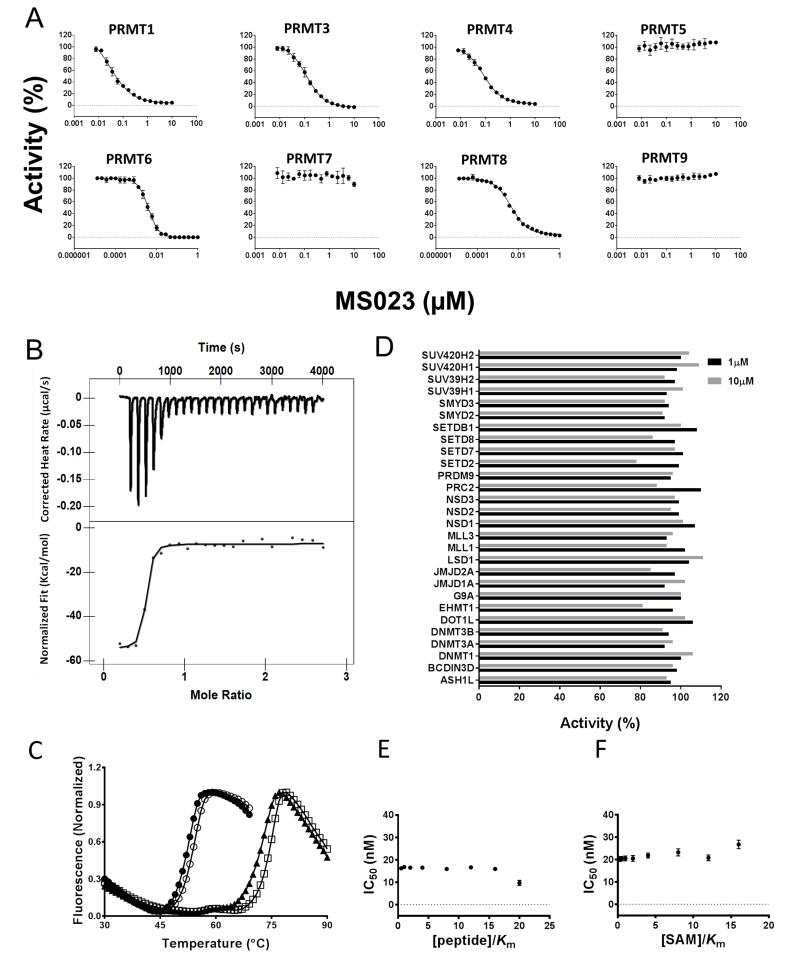
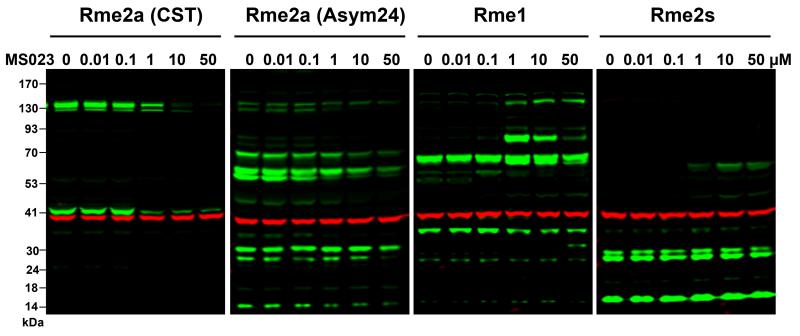
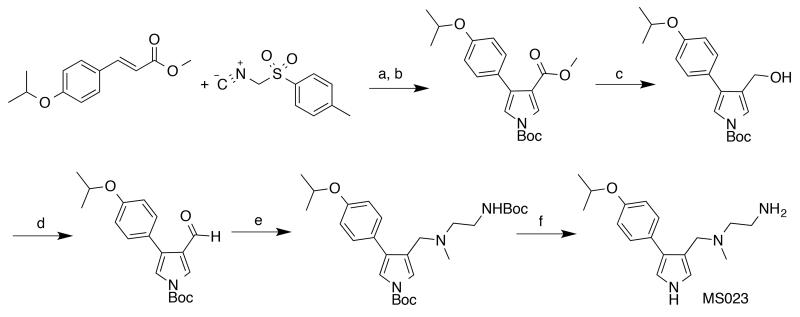
 ) 200 μM MS023 (ΔTm = 20 °C) and (□) 100 μM SAM plus 200 μM MS023 (ΔTm = 22 °C). The inflection point of each transition curve is considered melting temperature (Tm) and the increase in Tm is an indication of binding. (D) The selectivity of MS023 was determined against a panel of 25 PKMTs and DNMTs and 3 histone lysine demethylases at two compound concentrations of 1 μM and 10 μM. No change was observed in the IC50 values when determined under different peptide (E) and SAM (F) concentrations for PRMT6 indicating a noncompetitive pattern of inhibition.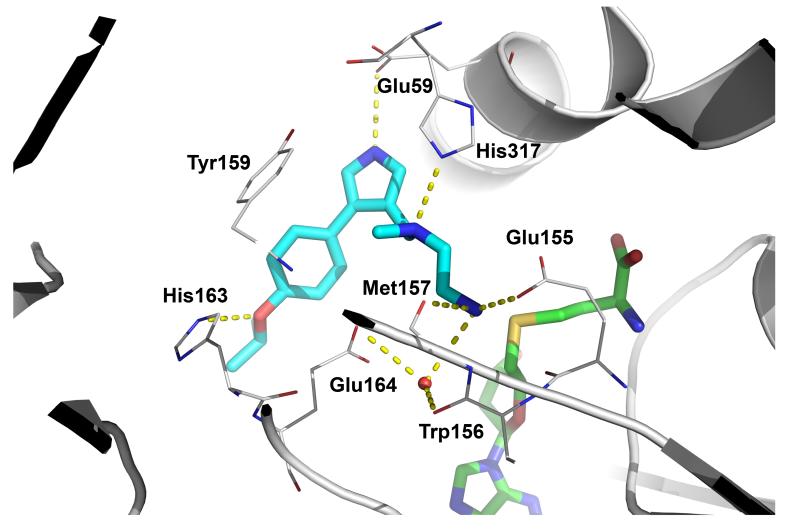
References
-
- Chen C, Nott TJ, Jin J, Pawson T. Deciphering arginine methylation: Tudor tells the tale. Nat. Rev. Mol. Cell Biol. 2011;12:629–642. - PubMed
-
- Boffa LC, Karn J, Vidali G, Allfrey VG. Distribution of Ng,Ng-Dimethylarginine in Nuclear Protein-Fractions. Biochem. Biophys. Res. Commun. 1977;74:969–976. - PubMed
Publication types
MeSH terms
Substances
Grants and funding
LinkOut - more resources
Full Text Sources
Other Literature Sources
Chemical Information
Molecular Biology Databases
Research Materials
