Descending Necrotizing Mediastinitis Treated with Tooth Extractions following Mediastinal and Cervical Drainage
- PMID: 26600767
- PMCID: PMC4649729
- DOI: 10.1159/000441386
Descending Necrotizing Mediastinitis Treated with Tooth Extractions following Mediastinal and Cervical Drainage
Abstract
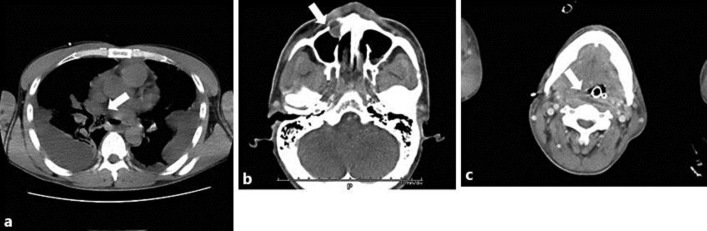
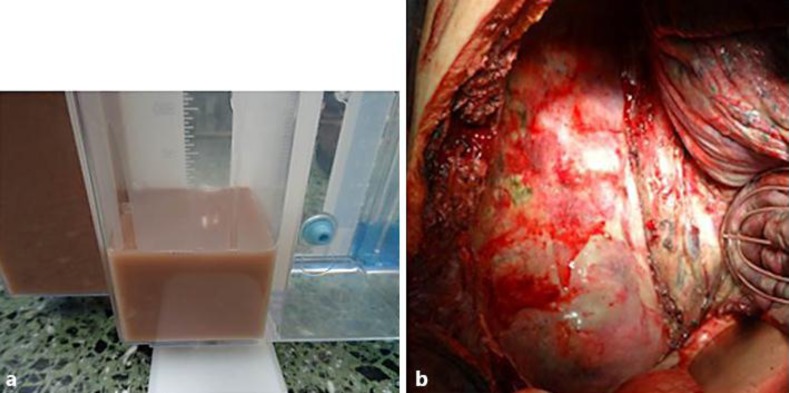
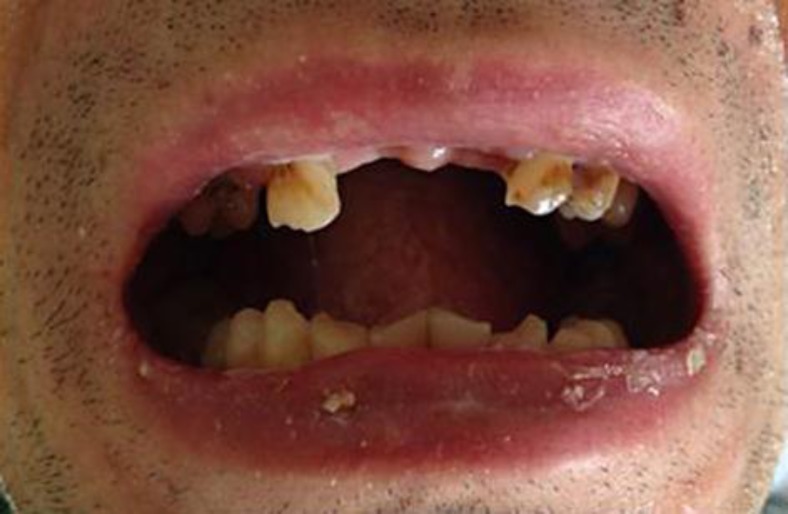
Descending necrotizing mediastinitis (DNM) is a rare condition in which oropharyngeal infection spreads to the mediastinum via the cervical fascia. Delayed diagnosis and surgery result in a high mortality rate among patients with DNM. We present a case of DNM resulting from odontogenic infection treated successfully with tooth extraction following mediastinal and cervical drainage. A 43-year-old, previously healthy Japanese man was admitted to our hospital for treatment of acute mediastinitis. Computed tomography revealed gas collection around the mid-thoracic esophagus and bilateral pleural effusion. We performed mediastinal drainage via right thoracotomy. Cervicotomy was performed on postoperative day 14 to drain a residual cervical abscess. The patient required the extraction of ten teeth over three procedures to address primary odontogenic infection before his fever resolved on postoperative day 40. Prompt diagnosis, aggressive drainage and removal of the source of infection can improve survival among patients with this life-threatening disease.
Keywords: Descending necrotizing mediastinitis; Drainage; Tooth extraction.
Figures
References
-
- Makeieff M, Gresillon N, Berthet JP, Garrel R, Crampette L, Marty-Ane C, Guerrier B. Management of descending necrotizing mediastinitis. Laryngoscope. 2004;114:772–775. - PubMed
-
- Tsunoda R, Suda S, Fukaya T, Saito K. Descending necrotizing mediastinitis caused by an odontogenic infection: a case report. J Oral Maxillofac Surg. 2000;58:240–242. - PubMed
-
- Durnovo EA, Furman IV, Pushkin SY, Maslennikov IA, Bondar OG, Ivanitsky GR. Clinical results of the application of perftoran for the treatment of odontogenous abscesses and phlegmons in the maxillofacial region. J Craniomaxillofac Surg. 2008;36:161–172. - PubMed
-
- Warnke PH, Becker ST, Springer IN, Haerle F, Ullmann U, Russo PA, Wiltfang J, Fickenscher H, Schubert S. Penicillin compared with other advanced broad spectrum antibiotics regarding antibacterial activity against oral pathogens isolated from odontogenic abscesses. J Craniomaxillofac Surg. 2008;36:462–467. - PubMed
-
- González-García R, Risco-Rojas R, Román-Romero L, Moreno-García C, López García C. Descending necrotizing mediastinitis following dental extraction. Radiological features and surgical treatment considerations. J Craniomaxillofac Surg. 2011;39:335–339. - PubMed
Publication types
LinkOut - more resources
Full Text Sources
Other Literature Sources