Pathologically confirmed autoimmune encephalitis in suspected Creutzfeldt-Jakob disease
- PMID: 26601117
- PMCID: PMC4645173
- DOI: 10.1212/NXI.0000000000000178
Pathologically confirmed autoimmune encephalitis in suspected Creutzfeldt-Jakob disease
Abstract
Objective: To determine the clinical features and presence in CSF of antineuronal antibodies in patients with pathologically proven autoimmune encephalitis derived from a cohort of patients with suspected Creutzfeldt-Jakob disease (CJD).
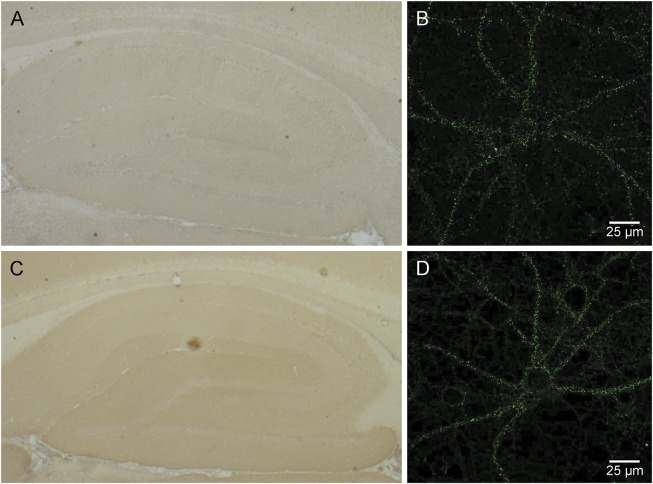
Methods: The Dutch Surveillance Centre for Prion Diseases performed 384 autopsies on patients with suspected CJD over a 14-year period (1998-2011). Clinical information was collected from treating physicians. Antineuronal antibodies were tested in CSF obtained postmortem by immunohistochemistry on fresh frozen rat brain sections, by Luminex assay for the presence of well-characterized onconeural antibodies, and by cell-based assays for antibodies against NMDAR, GABABR1/2, GABAAR GLUR1/2, LGI1, Caspr2, and DPPX.
Results: In 203 patients, a diagnosis of definite CJD was made, while in 181 a variety of other conditions were diagnosed, mainly neurodegenerative. In 22 of these 181, the neuropathologist diagnosed autoimmune encephalitis. One patient was excluded because of lack of clinical information. Inflammatory infiltrates were predominantly perivascular and consisted mainly of T cells. The predominant locations were basal ganglia and thalamus (90%) and temporal lobes and hippocampus (81%). In 6 patients (29%), antineuronal antibodies were detected in postmortem CSF, directed against Hu, NMDAR, GABABR1/2, Caspr2, and an unidentified synaptic antigen in 2. The most frequent symptoms were dementia (90%), gait disturbance (86%), cerebellar signs (67%), and neuropsychiatric symptoms (67%). Immunopathologic and clinical findings did not differ between autoantibody-negative patients and patients with antineuronal antibodies.
Conclusions: It is important to consider immune-mediated disorders in the differential diagnosis of rapidly progressive neurologic deficits.
Figures
References
LinkOut - more resources
Full Text Sources