


Comparing Supervised Exercise Therapy to Invasive Measures in the Management of Symptomatic Peripheral Arterial Disease
- PMID: 26601122
- PMCID: PMC4639651
- DOI: 10.1155/2015/960402
Comparing Supervised Exercise Therapy to Invasive Measures in the Management of Symptomatic Peripheral Arterial Disease
Abstract
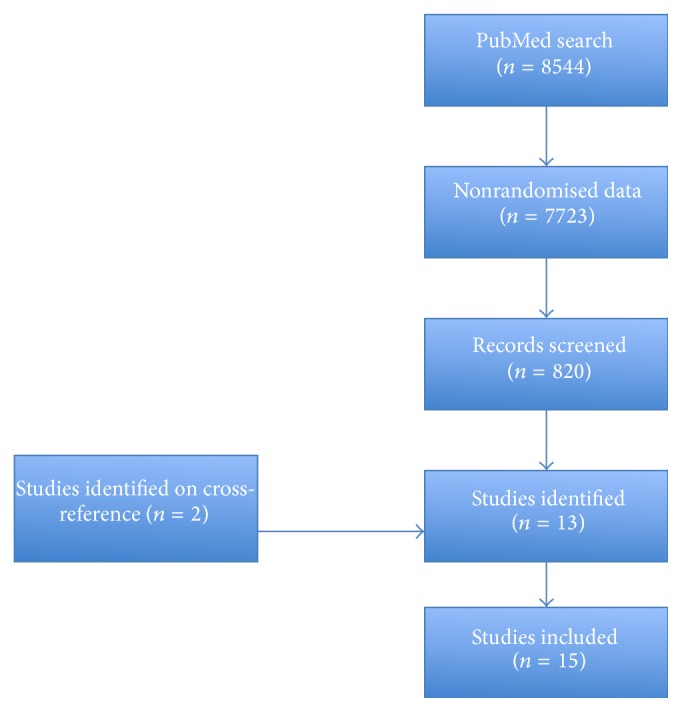
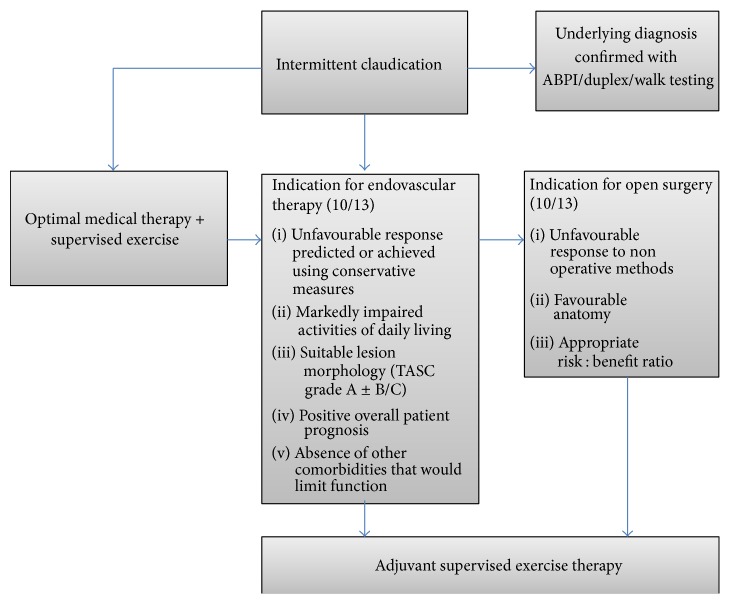
Peripheral arterial disease (PAD) is associated with considerable morbidity and mortality. Consensus rightly demands the incorporation of supervised exercise training (SET) into PAD treatment protocols. However, the exact role of SET particularly its relationship with intervention requires further clarification. While supervised exercise is undoubtedly an excellent tool in the conservative management of mild PAD its use in more advanced disease as an adjunct to open or endovascular intervention is not clearly defined. Indeed its use in isolation in this cohort is incompletely reported. The aim of this review is to clarify the exact role of SET in the management of symptomatic PAD and in particular to assess its role in comparison with or as an adjunct to invasive intervention. A systematic literature search revealed a total 11 randomised studies inclusive of 969 patients. All studies compared SET and intervention with monotherapy. Study results suggest that exercise is a complication-free treatment. Furthermore, it appears to offer significant improvements in patients walk distances with a combination of both SET and intervention offering a superior walking outcome to monotherapy in those requiring invasive measures.
Figures
References
Publication types
LinkOut - more resources
Full Text Sources
Other Literature Sources
