The energetic cost of vision and the evolution of eyeless Mexican cavefish
- PMID: 26601263
- PMCID: PMC4643782
- DOI: 10.1126/sciadv.1500363
The energetic cost of vision and the evolution of eyeless Mexican cavefish
Abstract
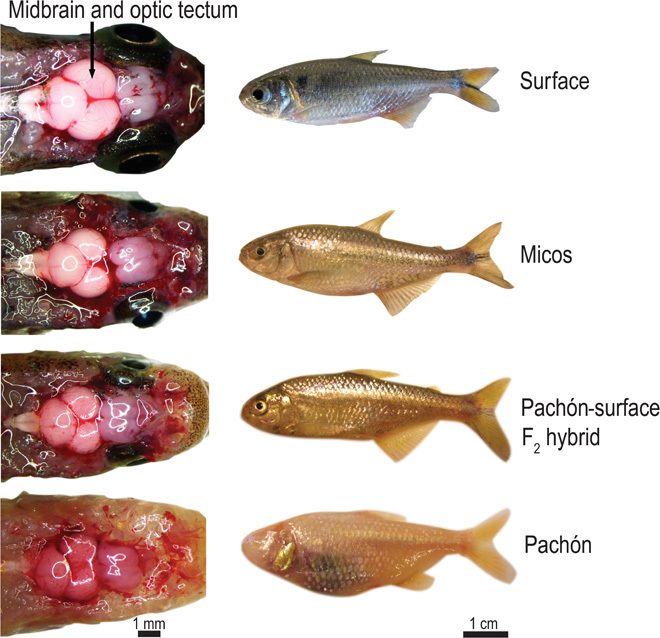
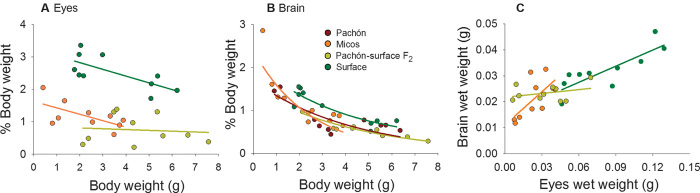
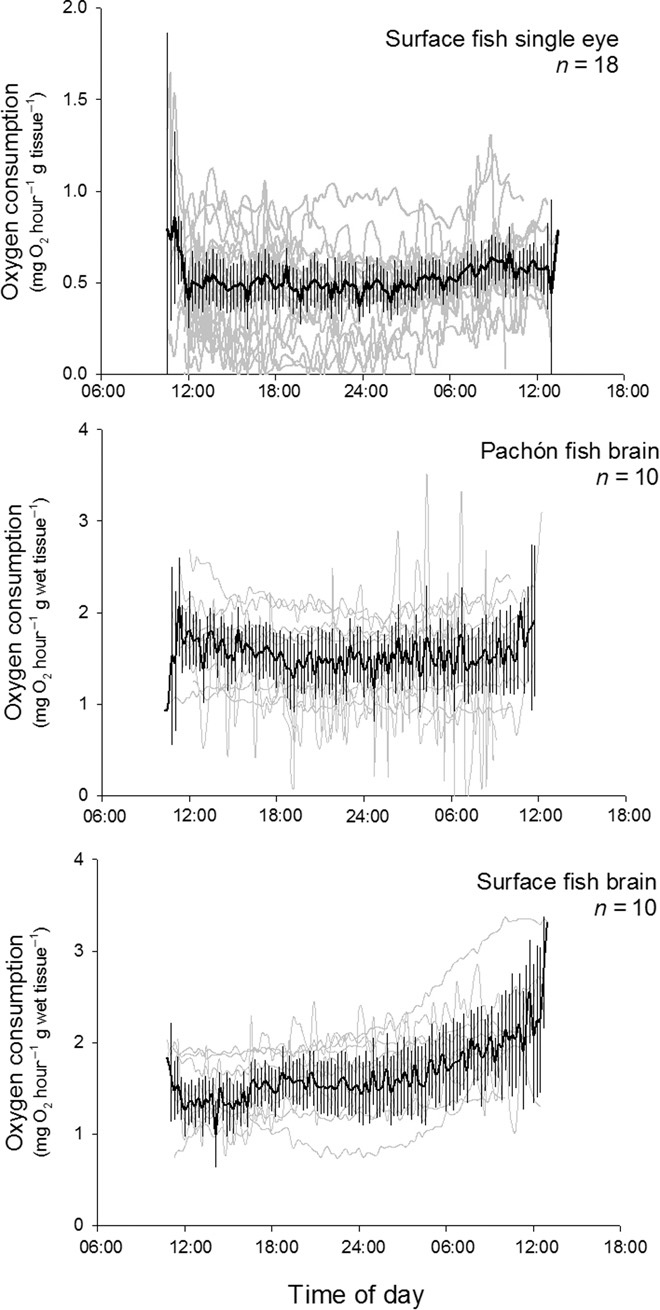
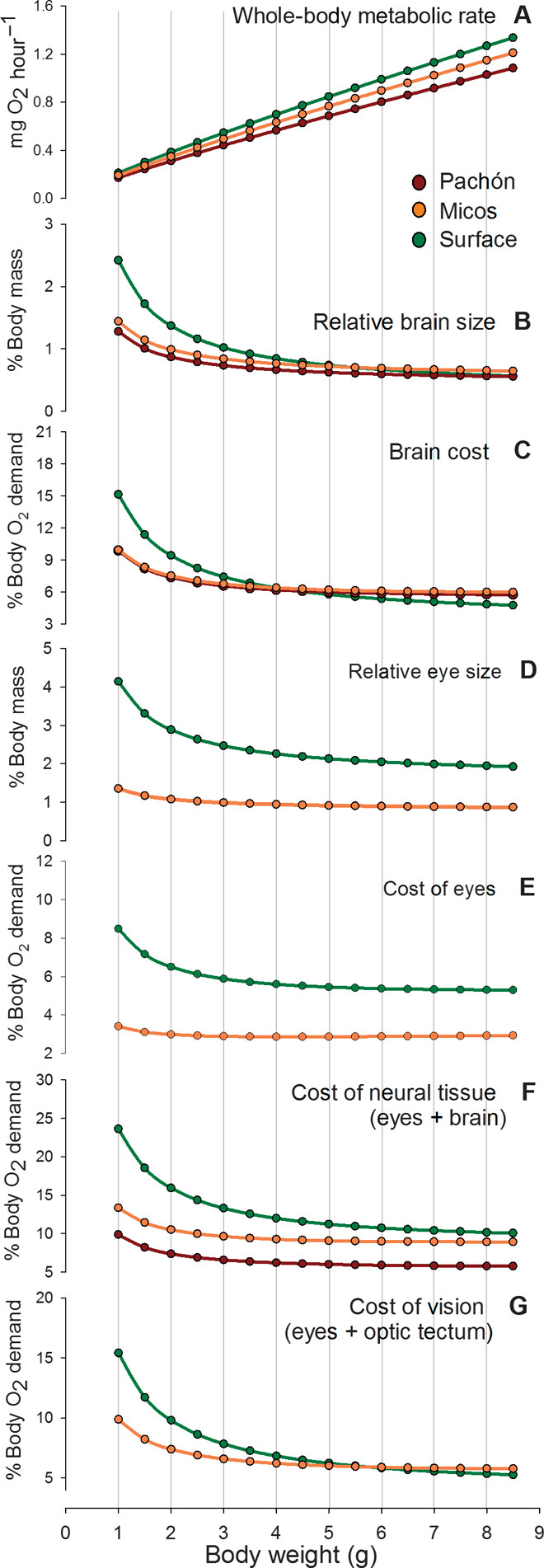
One hypothesis for the reduction of vision in cave animals, such as the eyeless Mexican cavefish, is the high energetic cost of neural tissue and low food availability in subterranean habitats. However, data on relative brain and eye mass in this species or on any measure of the energetic cost of neural tissue are not available, making it difficult to evaluate the "expensive tissue hypothesis." We show that the eyes and optic tectum represent significant metabolic costs in the eyed phenotype. The cost of vision was calculated to be 15% of resting metabolism for a 1-g fish, decreasing to 5% in an 8.5-g fish as relative eye and brain size declined during growth. Our results demonstrate that the loss of the visual system in the cave phenotype substantially lowered the amount of energy expended on expensive neural tissue during diversification into subterranean rivers, in particular for juvenile fish.
Keywords: Biology; Brain Evolution; Cave; Eye Evolution; Physiological Energetics; Subterranean.
Figures
Comment in
-
Neural Evolution: Costing the Benefits of Eye Loss.Curr Biol. 2015 Oct 5;25(19):R840-1. doi: 10.1016/j.cub.2015.08.050. Curr Biol. 2015. PMID: 26439341
References
-
- Leonard W. R., Snodgrass J. J., Robertson M. L., Effects of brain evolution on human nutrition and metabolism. Annu. Rev. Nutr. 27, 311–327 (2007). - PubMed
-
- Köhler M., Moyà-Solà S., Reduction of brain and sense organs in the fossil insular bovid Myotragus. Brain Behav. Evol. 63, 125–140 (2004). - PubMed
-
- Niven J. E., Laughlin S. B., Energy limitation as a selective pressure on the evolution of sensory systems. J. Exp. Biol. 211, 1792–1804 (2008). - PubMed
-
- Peters N., Schacht V., Schmidt W., Wilkens H., Gehirnproportionen und Ausprägungsgrad der Sinnesorgane von Astyanax mexicanus (Pisces, Characinidae): Ein Vergleich zwischen dem Flussfisch und seinen Höhlenderivaten «Anoptichthys». Z. Zool. Syst. Evol. 31, 144–159 (1993).
-
- Jeffery W. R., Adaptive evolution of eye degeneration in the Mexican blind cavefish. J. Hered. 96, 185–196 (2005). - PubMed
LinkOut - more resources
Full Text Sources
Other Literature Sources