Review
. 2015 Dec;40(12):779-793.
doi: 10.1016/j.tibs.2015.09.006. Epub 2015 Oct 22.

SUMOylation-Mediated Regulation of Cell Cycle Progression and Cancer

Affiliations
Review

SUMOylation-Mediated Regulation of Cell Cycle Progression and Cancer

Karolin Eifler et al. Trends Biochem Sci. 2015 Dec.

Abstract

Protein conjugation with Small ubiquitin-like modifier (SUMOylation) has critical roles during cell cycle progression. Many important cell cycle regulators, including many oncogenes and tumor suppressors, are functionally regulated via SUMOylation. The dynamic SUMOylation pattern observed throughout the cell cycle is ensured via distinct spatial and temporal regulation of the SUMO machinery. Additionally, SUMOylation cooperates with other post-translational modifications to mediate cell cycle progression. Deregulation of these SUMOylation and deSUMOylation enzymes causes severe defects in cell proliferation and genome stability. Different types of cancer were recently shown to be dependent on a functioning SUMOylation system, a finding that could be exploited in anticancer therapies.

Keywords: SUMO; SUMOylation; cancer; cell cycle; mitosis.


Figures

Figure 1
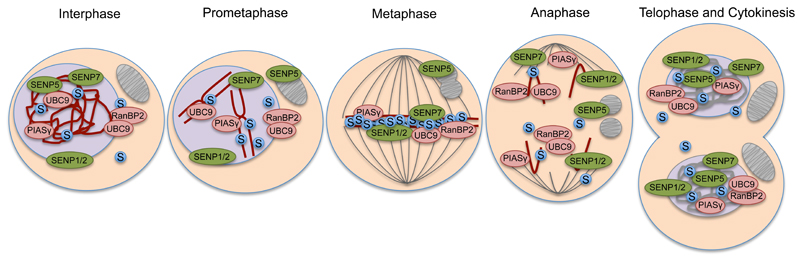
Figure 1. Redistribution of the Small Ubiquitin-like Modifier (SUMO) machinery during mitosis
During interphase, SUMO2/3 (S in blue circles) and UBC9 are mostly present inside the nucleus (purple) and also exhibit specific functions in the cytoplasm. During early mitosis, the chromosomes (dark red) condense and align at the equator of the cell. Similarly, SUMO2/3 accumulates at the metaphase plate and disappears again during anaphase after the sister chromatids have separated. The RanGap-SUMO1/UBC9/RanBP2 complex and the SUMO proteases SENP1 and SENP2 are mostly located at the nuclear envelope and the nuclear pores during interphase and redistribute to the centromeres and kinetochores during early mitosis. SUMO1 remains associated with the SUMO E3 ligase RanBP2 during mitosis and is therefore also present at mitotic chromosomes. Similarly, the SUMO ligase PIASγ and the SUMO protease SENP7 are known to accumulate at centromeric and pericentric regions during metaphase. The SUMO protease SENP5, by contrast, translocates from the nucleoli to the mitochondria (grey) at the early onset of mitosis prior to nuclear breakdown. The SUMO E2 UBC9 and SUMO E3 ligases are shown in pink and SUMO proteases (SENPs) are shown in green.
Figure 2
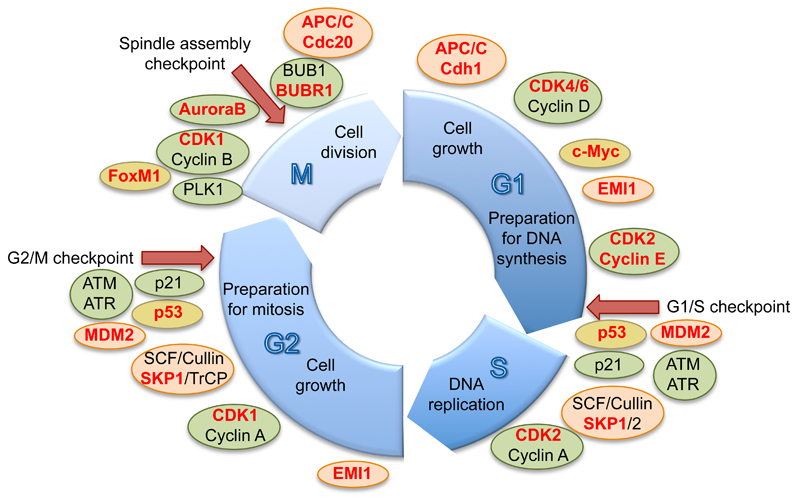
Figure 2. SUMOylation of important cell cycle regulators
The cell cycle exhibits four different cell cycle phases. In G1 phase, the cell prepares for DNA replication, which takes place during S phase. In the subsequent G2 phase, the cell undergoes further preparations to finally be able to enter mitosis, in which the chromosomes segregate and the cell divides. Several checkpoints throughout the cell cycle ensure the integrity of the genome and the proper division of the cell. A multitude of transcription factors (yellow) and enzymes regulating phosphorylation (green) and ubiquitylation (red) events are important guards of these checkpoints or influence other essential steps for cell cycle progression at specific time points. This figure summarizes some of the most important cell cycle regulators, many of which have been described to be SUMOylated and are highlighted in red font.
Figure 3
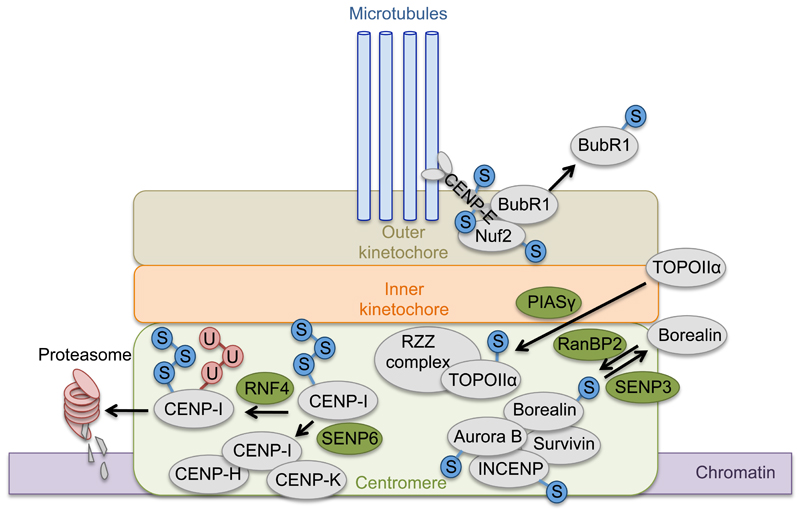
Figure 3. SUMO target proteins at centromeres and kinetochores
Several SUMOylation events have been identified to be essential for accurate chromosomal alignment and segregation. This figure depicts the localization of important SUMO targets and several interaction partners (light grey circles) at the centromeric region and the kinetochores during mitosis, and highlights several enzymes responsible for these modification events (green circles). SUMO (S) is shown in blue circles, ubiquitin (U) is depicted in red circles. Abbreviations used: Budding Uninhibited by Benzimidazoles-Related (BUBR1), Centromere Protein (CENP), Inner Centromere Protein (INCENP), Kinetochore protein (Nuf2), Protein Inhibitor of Activated STATs (PIAS), Ran Binding Protein 2 (RanBP2), Ring Finger Protein 4 (RNF4), Rod-Zwilch-Zw10 complex (RZZ complex), Sentrin-specific Protease (SENP), Topoisomerase II α (TOPOIIα).
Figure 4
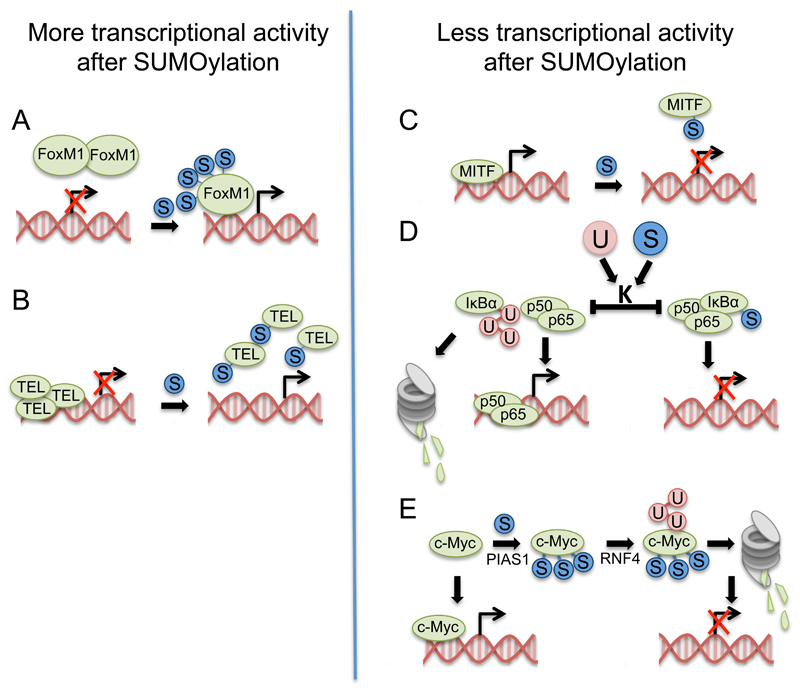
Figure 4. SUMOylation modulates the activity of transcription factors
The majority of SUMO targets identified so far are involved in transcriptional regulation and chromatin remodelling. The effect of SUMOylation on the target protein can differ greatly and therefore has to be examined for each SUMO target and each SUMO site individually. This figure shows some of the mechanisms identified for transcription factors involved in cancer development. A) SUMO (S in blue circles) is known to affect protein-protein interactions and can therefore either obstruct binding to transcriptional inhibitors or promote the formation of inhibitory protein complexes. SUMOylation of FoxM1, for example, has been described to inhibit the formation of protein dimers and thereby induce transcriptional activity [23]. B) Similar to FoxM1, SUMOylation of the transcriptional repressor TEL/ETV6 blocks the formation of the multimer, which is needed to repress transcriptional activity at promoter regions. Therefore SUMOylation of TEL also promotes gene expression [85]. C) A SUMO-deficient mutant of MITF shows enhanced binding to DNA and increased expression of the target gene HIF1α. Therefore it has been suggested that SUMOylation of MITF blocks DNA binding and leads to decreased transcriptional activity [79] D) SUMOylation can also influence the stability of a target protein. SUMO and ubiquitin (U in red circles) can compete for the same lysine (K) residues as described for IκBα, a repressor of the multimeric transcription factor NFκB. While ubiquitylation of IκBα leads to proteasomal degradation and the release of the two subunits p65 and p50 and therefore enhances transcriptional activity, SUMOylation of IκBα stabilizes the protein and blocks gene expression [105]. E) However, the presence of multiple SUMO moieties can promote ubiquitylation via SUMO targeted ubiquitin ligases (Stubl) as described as a potential mechanism for c-Myc. SUMOylation via PIAS1 promotes ubiquitylation via the Stubl RNF4 and subsequent proteasomal degradation, thereby reducing transcriptional activity [73].

References

    1. Johnson LN. The regulation of protein phosphorylation. Biochem Soc Trans. 2009;37:627–641. - PubMed
    1. Moremen KW, et al. Vertebrate protein glycosylation: diversity, synthesis and function. Nat Rev Mol Cell Biol. 2012;13:448–462. - PMC - PubMed
    1. Choudhary C, et al. The growing landscape of lysine acetylation links metabolism and cell signalling. Nat Rev Mol Cell Biol. 2014;15:536–550. - PubMed
    1. Goldstein G, et al. Isolation of a polypeptide that has lymphocyte-differentiating properties and is probably represented universally in living cells. Proc Natl Acad Sci U S A. 1975;72:11–15. - PMC - PubMed
    1. Soucy TA, et al. The NEDD8 Conjugation Pathway and Its Relevance in Cancer Biology and Therapy. Genes Cancer. 2010;1:708–716. - PMC - PubMed

Publication types

LinkOut - more resources