


Evidence for a heritable contribution to neuroendocrine tumors of the small intestine
- PMID: 26604321
- PMCID: PMC4684974
- DOI: 10.1530/ERC-15-0442
Evidence for a heritable contribution to neuroendocrine tumors of the small intestine
Abstract
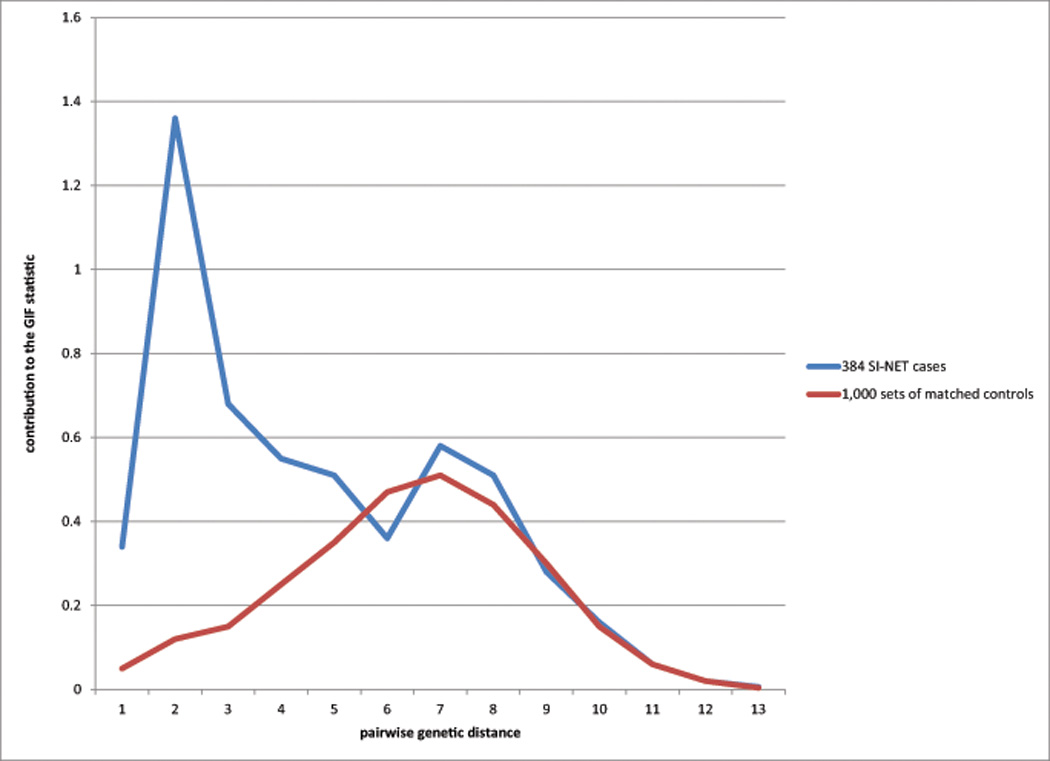
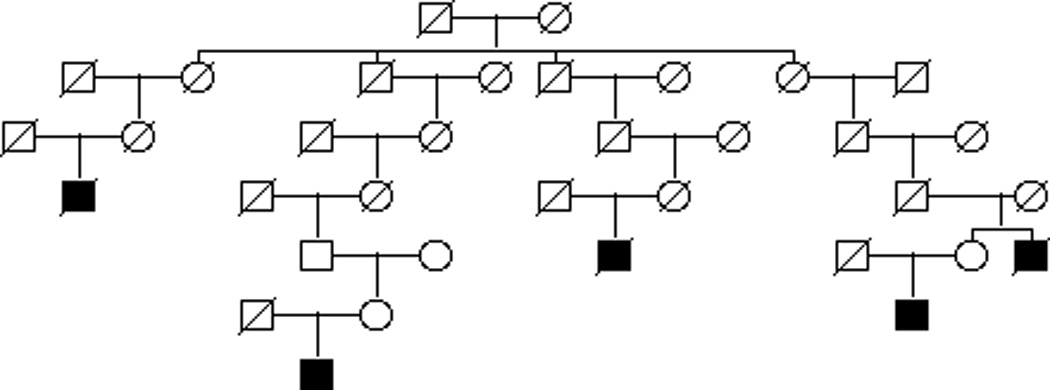
Small intestinal neuroendocrine tumors (SI-NETs) are rare tumors arising from the enterochromaffin cells of the gut. Having a first-degree relative with a SI-NET has been shown to confer a substantial risk arising from shared environment and genetics. Heritable risk was examined using a computerized genealogy linked to historical statewide cancer data. A population-based analysis of the observed familial clustering of SI-NETs was performed to assess the genetic risk in distant relatives. A test for significant excess relatedness of 384 individuals with genealogy data and histologically confirmed SI-NETs was performed by comparing pairwise relatedness of cases to 1000 sets of matched controls. Overall significant excess pairwise relatedness was found for the 384 cases (P<0.001) and was still observed when closer than first cousin relationships were ignored (P=0.041). Relative risks (RRs) for SI-NETs were estimated as a ratio of observed to expected number of SI-NET cases among each relationship class. Siblings have a 13.4-fold (P<0.0001) and parents have a 6.5-fold (P=0.143) RR, suggesting both genetic and environmental influences. The risk extends out to third-degree relatives with a 2.3-fold RR (P=0.008). Metachronous cancers were also reported in 26% of the SI-NET cases demonstrating an increased RR of colon, bladder, non-Hodgkin lymphoma, melanoma, and prostate cancers. Although SI-NETs are rare, relatives of these cases are at a significantly elevated risk of developing a SI-NET due to heritable genetic factors. Definition of the genetic risk factors will be an important tool for earlier diagnosis and better outcomes for SI-NETs.
Keywords: familial; genetics; neuroendocrine tumor; population; relative risk; small intestine.
© 2016 Society for Endocrinology.
Conflict of interest statement
Figures
References
-
- Amin S, Warner RR, Itzkowitz SH, Kim MK. The risk of metachronous cancers in patients with small-intestinal carcinoid tumors: a US population-based study. Endocr Relat Cancer. 2012;19:381–387. - PubMed
-
- Bean LL, May DL, Skolnick M. The Mormon historical demography project. Hist Methods. 1978;11:45–53. - PubMed
-
- DiSario JA, Burt RW, Vargas H, McWhorter WP. Small bowel cancer: epidemiological and clinical characteristics from a population-based registry. Am J Gastroenterol. 1994;89:699–701. - PubMed
MeSH terms
Grants and funding
LinkOut - more resources
Full Text Sources
