Pediatric open globe injury: A review of the literature
- PMID: 26604528
- PMCID: PMC4626939
- DOI: 10.4103/0974-2700.166663
Pediatric open globe injury: A review of the literature
Abstract
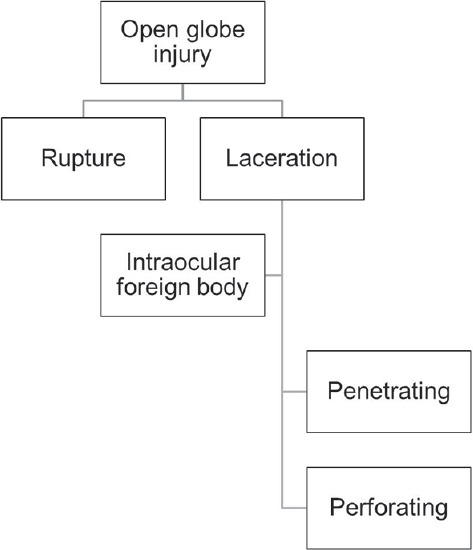
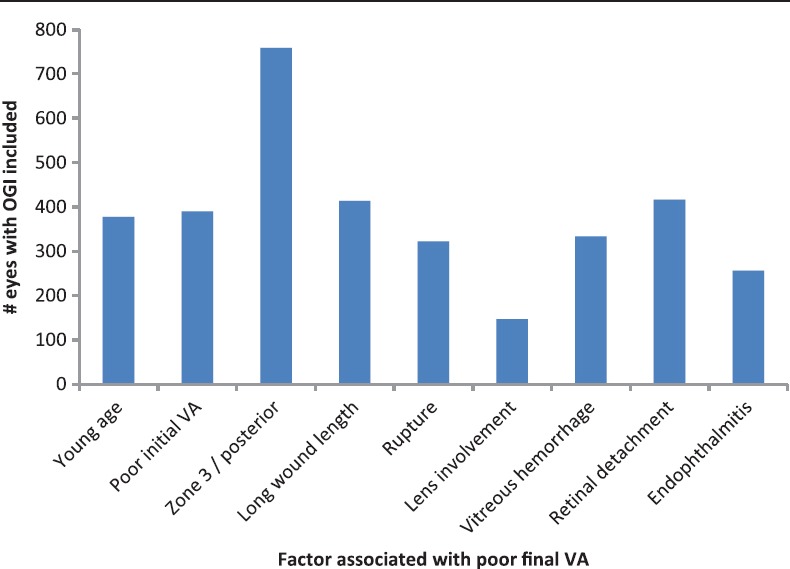
Open globe injury (OGI) is a severe form of eye trauma estimated at 2-3.8/100,000 in the United States. Most pediatric cases occur at home and are the result of sharp object penetration. The aim of this article is to review the epidemiology, diagnosis, management, and prognosis of this condition by conducting a systematic literature search with inclusion of all case series on pediatric OGI published between 1996 and 2015. Diagnosis of OGI is based on patient history and clinical examination supplemented with imaging, especially computed tomography when indicated. Few prospective studies exist for the management of OGI in pediatric patients, but adult recommendations are often followed with success. The main goals of surgical management are to repair the open globe and remove intraocular foreign bodies. Systemic antibiotics are recommended as medical prophylaxis against globe infection, or endophthalmitis. Other complications are similar to those seen in adults, with the added focus of amblyopia therapy in children. Severe vision decline is most likely due to traumatic cataracts. The ocular trauma score, a system devised to predict final visual acuity (VA) in adults, has proven to be of prognostic value in pediatric OGI as well. Factors indicating poor visual prognosis are young age, poor initial VA, posterior eye involvement, long wound length, globe rupture, lens involvement, vitreous hemorrhage, retinal detachment, and endophthalmitis. A thorough understanding of OGI and the key differences in epidemiology, diagnosis, management, and prognosis between adults and children is critical to timely prevention of posttraumatic vision loss early in life.
Keywords: Amblyopia; eye trauma; open globe; pediatric trauma; surgery; visual impairment.
Figures
References
-
- Thylefors B. Epidemiological patterns of ocular trauma. Aust N Z J Ophthalmol. 1992;20:95–8. - PubMed
-
- Saxena R, Sinha R, Purohit A, Dada T, Vajpayee RB, Azad RV. Pattern of pediatric ocular trauma in India. Indian J Pediatr. 2002;69:863–7. - PubMed
-
- Prevent Blindness America. The Scope of the Eye Injury Problem. 2010. Available from: http://www.preventblindness.org/sites/default/files/national/documents/f... .
-
- May DR, Kuhn FP, Morris RE, Witherspoon CD, Danis RP, Matthews GP, et al. The epidemiology of serious eye injuries from the United States eye injury registry. Graefes Arch Clin Exp Ophthalmol. 2000;238:153–7. - PubMed
-
- Lee CH, Su WY, Lee L, Yang ML. Pediatric ocular trauma in Taiwan. Chang Gung Med J. 2008;31:59–65. - PubMed
Publication types
LinkOut - more resources
Full Text Sources
Other Literature Sources