


Detection of Capripoxvirus DNA Using a Field-Ready Nucleic Acid Extraction and Real-Time PCR Platform
- PMID: 26608662
- PMCID: PMC5434827
- DOI: 10.1111/tbed.12447
Detection of Capripoxvirus DNA Using a Field-Ready Nucleic Acid Extraction and Real-Time PCR Platform
Abstract
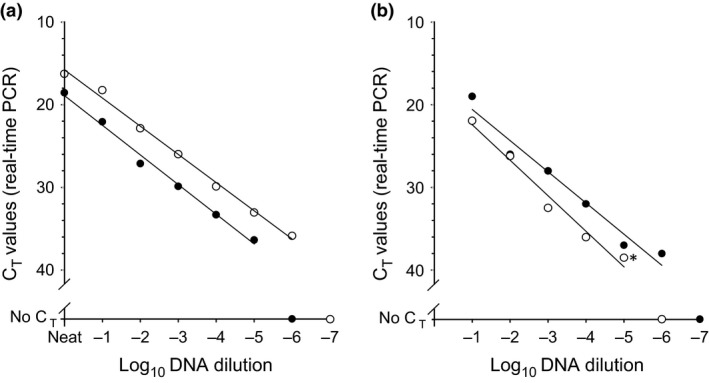
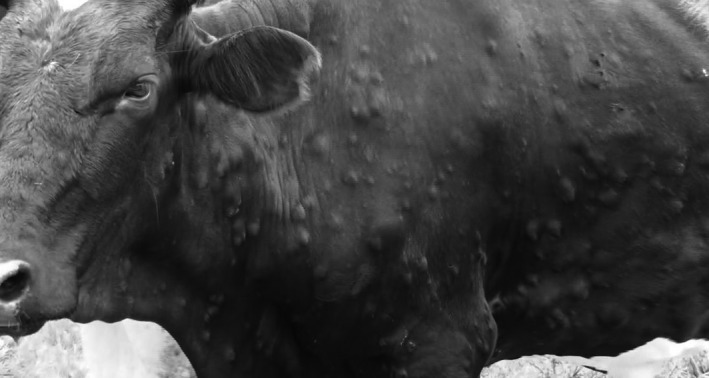
Capripoxviruses, comprising sheep pox virus, goat pox virus and lumpy skin disease virus cause serious diseases of domesticated ruminants, notifiable to The World Organization for Animal Health. This report describes the evaluation of a mobile diagnostic system (Enigma Field Laboratory) that performs automated sequential steps for nucleic acid extraction and real-time PCR to detect capripoxvirus DNA within laboratory and endemic field settings. To prepare stable reagents that could be deployed into field settings, lyophilized reagents were used that employed an established diagnostic PCR assay. These stabilized reagents demonstrated an analytical sensitivity that was equivalent, or greater than the established laboratory-based PCR test which utilizes wet reagents, and the limit of detection for the complete assay pipeline was approximately one log10 more sensitive than the laboratory-based PCR assay. Concordant results were generated when the mobile PCR system was compared to the laboratory-based PCR using samples collected from Africa, Asia and Europe (n = 10) and experimental studies (n = 9) representing clinical cases of sheep pox, goat pox and lumpy skin disease. Furthermore, this mobile assay reported positive results in situ using specimens that were collected from a dairy cow in Morogoro, Tanzania, which was exhibiting clinical signs of lumpy skin disease. These data support the use of mobile PCR systems for the rapid and sensitive detection of capripoxvirus DNA in endemic field settings.
Keywords: capripoxviruses; diagnostics; disease control; disease-freedom; emerging diseases; virus.
© 2015 The Authors. Transboundary and Emerging Diseases published by Blackwell Verlag GmbH.
Figures
References
-
- Buller, R. M. , Arif B. M., Black D. N., Dumbell K. R., Esposito J. J., Lefkowitz E. J., McFadden G., Moss B., Mercer A. A., Moyer R. W., Skinner M. A., and Tripathy D. N., 2005: Family Poxviridae In: Fauquet C. M., Mayo M. A., Maniloff J., Desselberger U., and Ball L. A. (eds), Virus Taxonomy: Classification and Nomenclature of Viruses. Eighth Report of the International Committee on Taxonomy of Viruses, pp. 117–133. Elsevier Academic Press, San Diego.
-
- Carn, V. M. , 1993: Control of capripoxvirus infections. Vaccine 11, 1275–1279. - PubMed
-
- Heine, H. G. , Stevens M. P., Foord A. J., and Boyle D. B., 1999: A capripoxvirus detection PCR and antibody ELISA based on the major antigen P32, the homolog of the vaccinia virus H3L gene. J. Immunol. Methods 227, 187–196. - PubMed
MeSH terms
Substances
Grants and funding
LinkOut - more resources
Full Text Sources
Other Literature Sources
Miscellaneous
