


Cutting Edge: Nonobese Diabetic Mice Deficient in Chromogranin A Are Protected from Autoimmune Diabetes
- PMID: 26608914
- PMCID: PMC4684982
- DOI: 10.4049/jimmunol.1501190
Cutting Edge: Nonobese Diabetic Mice Deficient in Chromogranin A Are Protected from Autoimmune Diabetes
Abstract
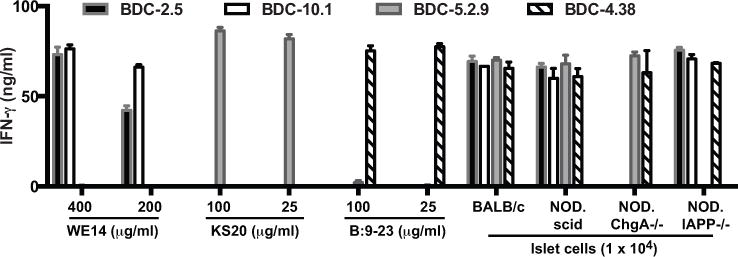
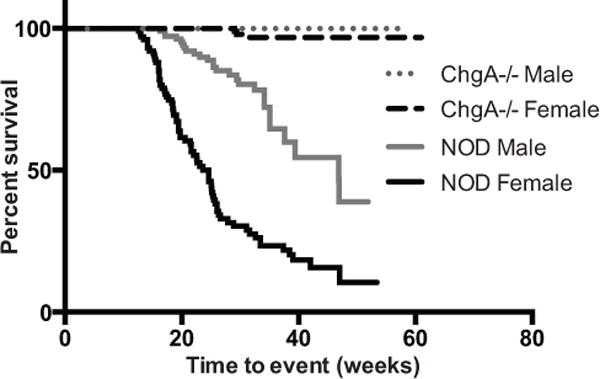
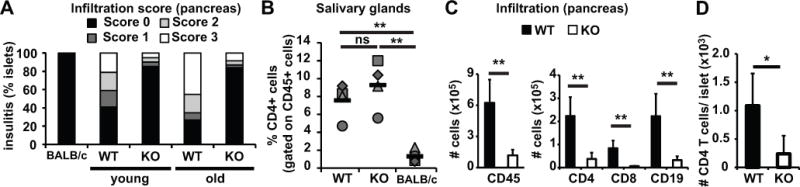
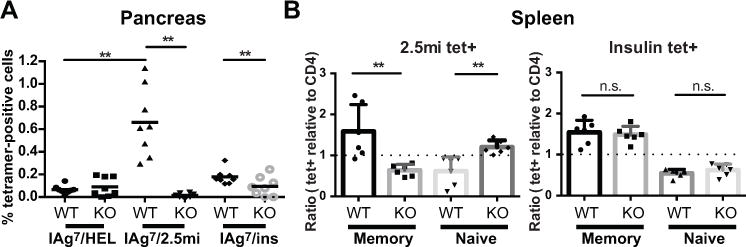
T cells reactive to β cell Ags are critical players in the development of autoimmune type 1 diabetes. Using a panel of diabetogenic CD4 T cell clones derived from the NOD mouse, we recently identified the β cell secretory granule protein, chromogranin A (ChgA), as a new autoantigen in type 1 diabetes. CD4 T cells reactive to ChgA are pathogenic and rapidly transfer diabetes into young NOD recipients. We report in this article that NOD.ChgA(-/-) mice do not develop diabetes and show little evidence of autoimmunity in the pancreatic islets. Using tetramer analysis, we demonstrate that ChgA-reactive T cells are present in these mice but remain naive. In contrast, in NOD.ChgA(+/+) mice, a majority of the ChgA-reactive T cells are Ag experienced. Our results suggest that the presence of ChgA and subsequent activation of ChgA-reactive T cells are essential for the initiation and development of autoimmune diabetes in NOD mice.
Copyright © 2015 by The American Association of Immunologists, Inc.
Figures
References
-
- Yamamoto T, Yamato E, Tashiro F, Sato T, Noso S, Ikegami H, Tamura S, Yanagawa Y, Miyazaki JI. Development of autoimmune diabetes in glutamic acid decarboxylase 65 (GAD65) knockout NOD mice. Diabetologia. 2004;47:221–224. - PubMed
Publication types
MeSH terms
Substances
Grants and funding
LinkOut - more resources
Full Text Sources
Other Literature Sources
Medical
Molecular Biology Databases
Research Materials
Miscellaneous
