


Lewis Y antigen modified CD47 is an independent risk factor for poor prognosis and promotes early ovarian cancer metastasis
- PMID: 26609483
- PMCID: PMC4633904
Lewis Y antigen modified CD47 is an independent risk factor for poor prognosis and promotes early ovarian cancer metastasis
Abstract
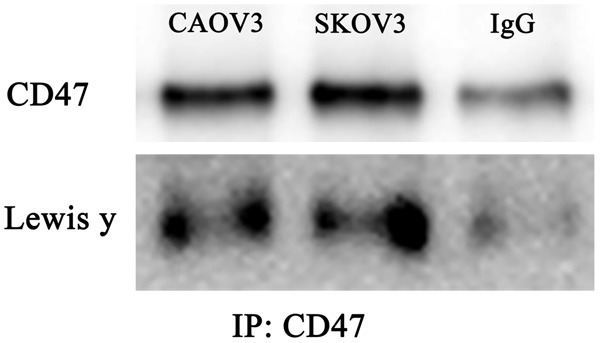
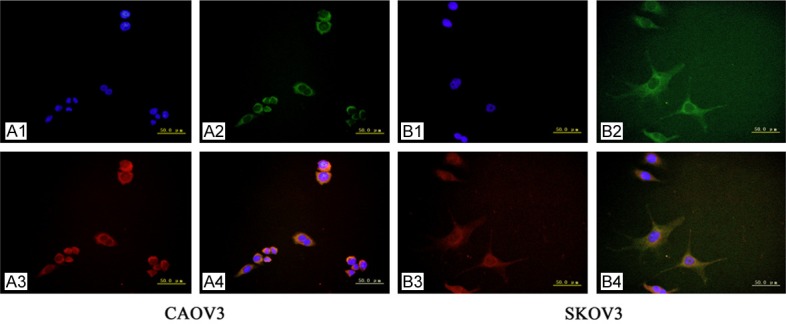
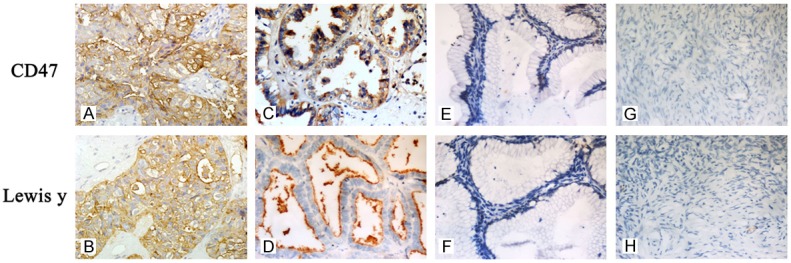
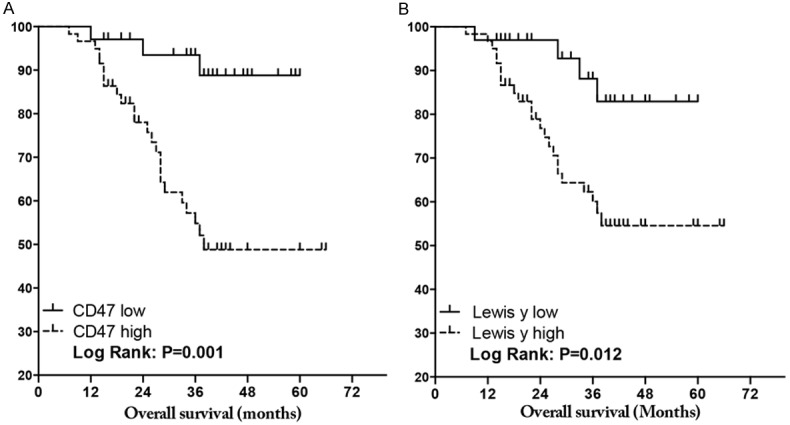
CD47 is a membrane receptor that belongs to the immunoglobulin superfamily and plays an important role in the mechanisms of tumor immune escape. CD47 participates in tumor immune escape by combining with SIRPα to reduce the phagocytic activity of macrophages. There are six potential N-glycosylation sites on CD47, and glycosylation is known to be necessary for its membrane localization. However, it is still unknown to what extent glycosylation influences CD47 ligand binding properties and subsequent signaling. By using immunoprecipitation and confocal laser scanning microscopy, we showed that CD47 contains Lewis y antigen. Immunohistochemical analysis demonstrated that both the positive expression and the overexpression of CD47 and Lewis y antigen in cancer tissues and borderline tumors were significantly higher than those in benign ovarian tumors and normal ovarian tissues (P < 0.05). A linear correlation between the expression patterns of CD47 and Lewis y antigen was evident (r = 0.47, P < 0.01). The high expression of CD47 and Lewis y antigen showed significant correlations with the clinical pathological parameters of ovarian cancer [International Federation of Gynecology and Obstetrics (FIGO) standards, lymph node metastasis, and degree of differentiation] (P < 0.05). The Cox model and Kaplan-Meier tests showed that high expression of CD47 was an independent adverse risk factor for the prognosis of ovarian cancer. Cases with both high CD47 and Lewis y antigen expression had poor prognoses. Our study demonstrates that Lewis y antigens of CD47 may play a crucial role in the development of ovarian cancer, and could be new targets for immunotherapy for ovarian cancer.
Keywords: CD47; Lewis y; ovarian cancer; prognosis; tumor immune escape.
Figures
References
-
- Siegel R, Ma J, Zou Z, Jemal A. Cancer statistics, 2014. CA Cancer J Clin. 2014;64:9–29. - PubMed
-
- Koebel CM, Vermi W, Swann JB, Zerafa N, Rodig SJ, Old LJ, Smyth MJ, Schreiber RD. Adaptive immunity maintains occult cancer in an equilibrium state. Nature. 2007;450:903–907. - PubMed
-
- Shankaran V, Ikeda H, Bruce AT, White JM, Swanson PE, Old LJ, Schreiber RD. IFNgamma and lymphocytes prevent primary tumour development and shape tumour immunogenicity. Nature. 2001;410:1107–1111. - PubMed
-
- Ugolini S, Vivier E. Immunology: Natural killer cells remember. Nature. 2009;457:544–545. - PubMed
LinkOut - more resources
Full Text Sources
Research Materials