


Phospho-4e-BP1 and eIF4E overexpression synergistically drives disease progression in clinically confined clear cell renal cell carcinoma
- PMID: 26609489
- PMCID: PMC4633910
Phospho-4e-BP1 and eIF4E overexpression synergistically drives disease progression in clinically confined clear cell renal cell carcinoma
Abstract
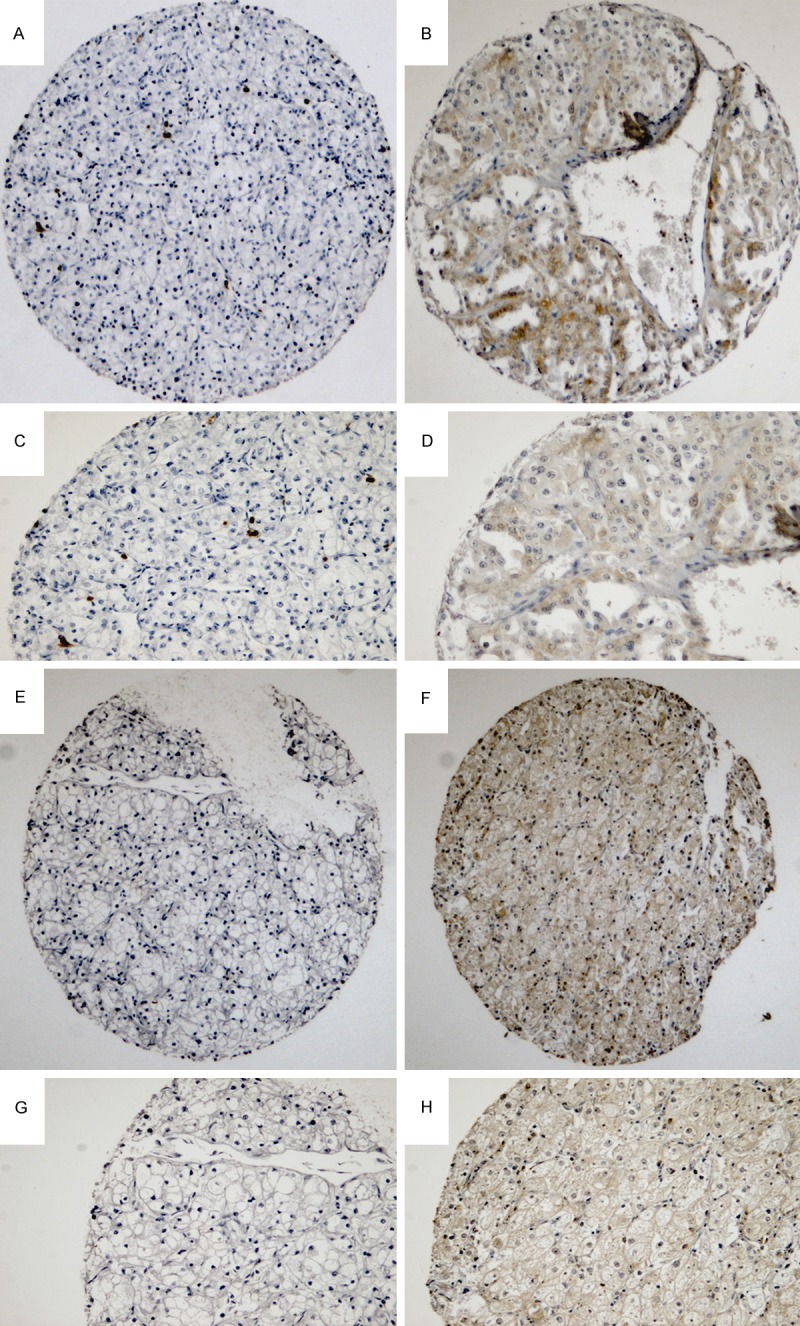
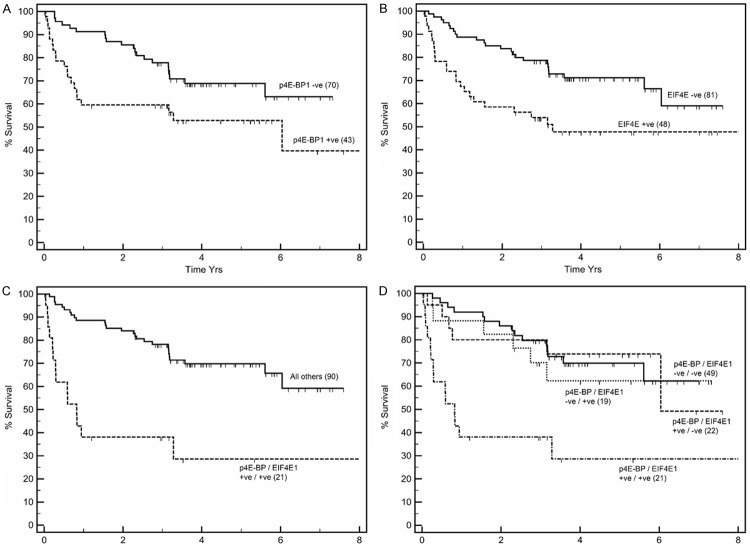
Clear cell renal cell carcinoma (ccRCC), the most aggressive and lethal form of renal cell carcinoma accounts for over 90% of metastasis that occur following curative surgery for clinically confined disease. High relapse rates have prompted the evaluation of targeted therapies for the prevention or delay of metastatic disease in high-risk patients, with biomarkers offering significant potential to guide and improve patient management in this setting. In this current study we examined the value of the 4E-BP1/eIF4E axis for prognostic significance and risk stratification in patients with clinically confined ccRCC. This axis is a critical convergence point for many signalling pathways that are targeted by current therapies for the treatment of advanced RCC. Immunohistochemistry for phosphorylated 4E-BP1 (p4E-BP1) and total eIF4E was performed on tissue microarrays containing tumour cores from 135 patients with localised ccRCC. For both biomarkers 39% of all evaluable cores stained positive, with a strong correlation observed between the presence of p4E-BP1 and the overexpression of eIF4E within the same tumour (P = 0.005). Further, the combined expression of p4E-BP1 and eIF4E was associated with significantly worse disease-free survival of 2.9 vs 5.7 yrs compared to patients whose tumours expressed only one, or neither, of the biomarkers (P < 0.001). Cox-regression analysis confirmed the ability of the p4EBP1/eIF4E signature to independently identify high-risk patients with a Hazard Ratio of 4.2 (CI = 2.1-8.6; P < 0.001), compared to 3.3 for tumour grade 3 and 4, and 2.3 for tumour stage 3 and 4. These data show the powerful prognostic value of the p4E-BP1/eIF4E signature for potential management of patients with clinically confined ccRCC, and in addition provides insights into the possible key synergistic determinants of disease progression and treatment response.
Keywords: 4E-BP1; Clear cell renal cell carcinoma; biomarker; ccRCC; eIF4E; immunohistochemistry; mTOR; metastatic disease; prognosis; stratification.
Figures
References
-
- Stewart GD, O’Mahony FC, Powles T, Riddick AC, Harrison DJ, Faratian D. What can molecular pathology contribute to the management of renal cell carcinoma? Nat Rev Urol. 2011;8:255–265. - PubMed
-
- Smaldone MC, Uzzo RG. Active surveillance: a potential strategy for select patients with small renal masses. Future Oncol. 2011;7:1133–1147. - PubMed
-
- Goyal R, Gersbach E, Yang XJ, Rohan SM. Differential diagnosis of renal tumors with clear cytoplasm: clinical relevance of renal tumor subclassification in the era of targeted therapies and personalized medicine. Arch Pathol Lab Med. 2013;137:467–480. - PubMed
-
- Rink M, Chun FK, Robinson B, Sun M, Karakiewicz PI, Bensalah K, Fisch M, Scherr DS, Lee RK, Margulis V, Shariat SF. Tissue-based molecular markers for renal cell carcinoma. Minerva Urol Nefrol. 2011;63:293–308. - PubMed
LinkOut - more resources
Full Text Sources
Miscellaneous