


Bacterial predation in a marine host-associated microbiome
- PMID: 26613338
- PMCID: PMC5029193
- DOI: 10.1038/ismej.2015.219
Bacterial predation in a marine host-associated microbiome
Abstract
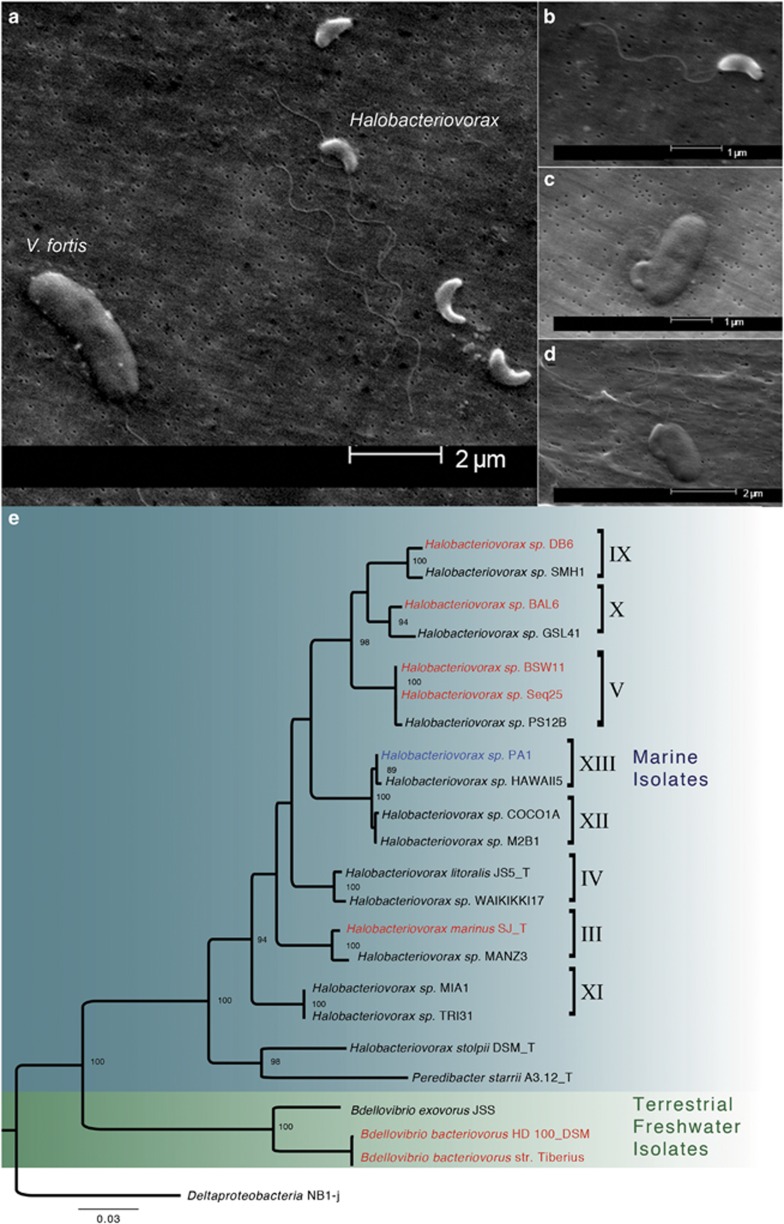
In many ecological communities, predation has a key role in regulating community structure or function. Although predation has been extensively explored in animals and microbial eukaryotes, predation by bacteria is less well understood. Here we show that predatory bacteria of the genus Halobacteriovorax are prevalent and active predators on the surface of several genera of reef-building corals. Across a library of 198 16S rRNA samples spanning three coral genera, 79% were positive for carriage of Halobacteriovorax. Cultured Halobacteriovorax from Porites asteroides corals tested positive for predation on the putative coral pathogens Vibrio corallyticus and Vibrio harveyii. Co-occurrence network analysis showed that Halobacteriovorax's interactions with other bacteria are influenced by temperature and inorganic nutrient concentration, and further suggested that this bacterial predator's abundance may be driven by prey availability. Thus, animal microbiomes can harbor active bacterial predators, which may regulate microbiome structure and protect the host by consuming potential pathogens.
Figures

References
-
- Baum JK, Worm B. (2009). Cascading top-down effects of changing oceanic predator abundances. J Anim Ecol 78: 699–714. - PubMed
-
- Brussaard CPD, Wilhelm SW, Thingstad F, Weinbauer MG, Bratbak G, Heldal M et al. (2008). Global-scale processes with a nanoscale drive: the role of marine viruses. ISME J 2: 575–578. - PubMed
-
- De Boer W, Wagenaar A-M, Klein Gunnewiek PJA, van Veen JA. (2007). In vitro suppression of fungi caused by combinations of apparently non-antagonistic soil bacteria. FEMS Microbiol Ecol 59: 177–185. - PubMed
-
- Faust K, Raes J. (2012). Microbial interactions: from networks to models. Nat Rev Microbiol 10: 538–550. - PubMed
MeSH terms
LinkOut - more resources
Full Text Sources
Other Literature Sources
