


Depression and anxiety in ovarian cancer: a systematic review and meta-analysis of prevalence rates
- PMID: 26621509
- PMCID: PMC4679843
- DOI: 10.1136/bmjopen-2015-007618
Depression and anxiety in ovarian cancer: a systematic review and meta-analysis of prevalence rates
Abstract
Objectives: To systematically review the literature pertaining to the prevalence of depression and anxiety in patients with ovarian cancer as a function of treatment stage.
Design: Systematic review and meta-analysis.
Participants: 3623 patients with ovarian cancer from primary research investigations.
Primary outcome measure: The prevalence of depression and anxiety in patients with ovarian cancer as a function of treatment stage.
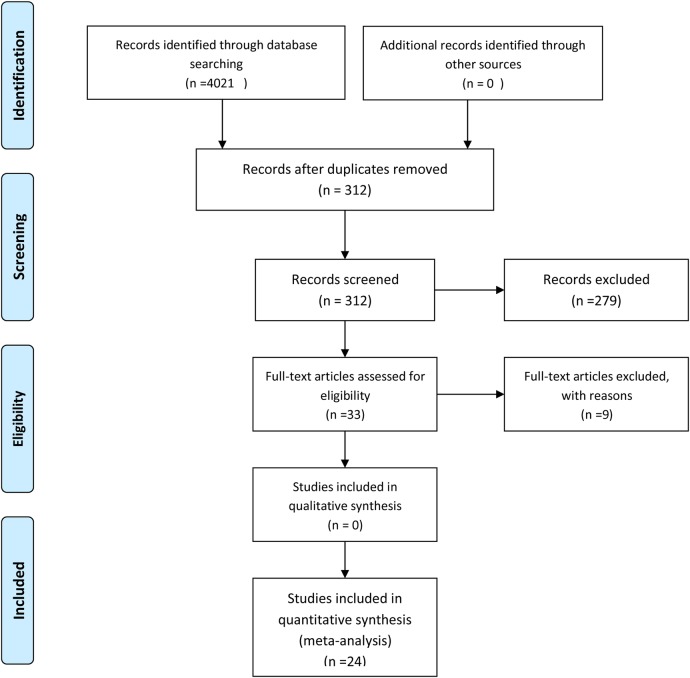
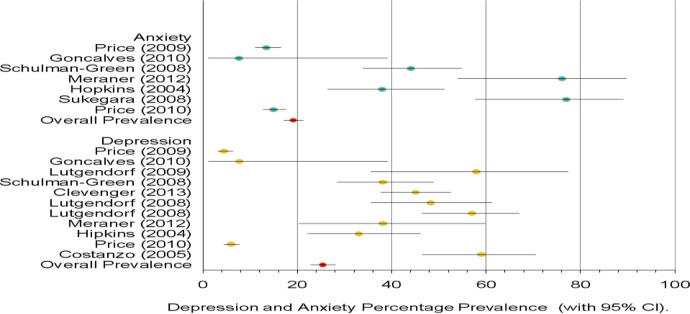
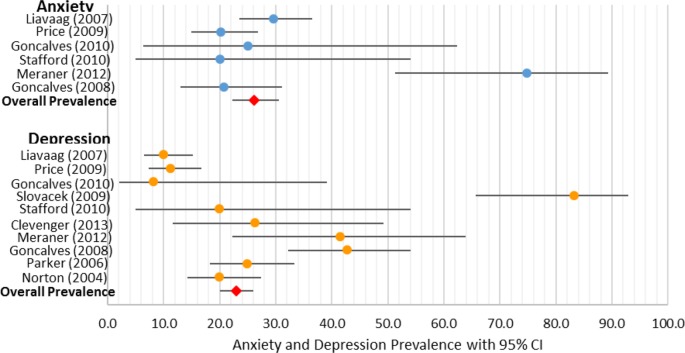
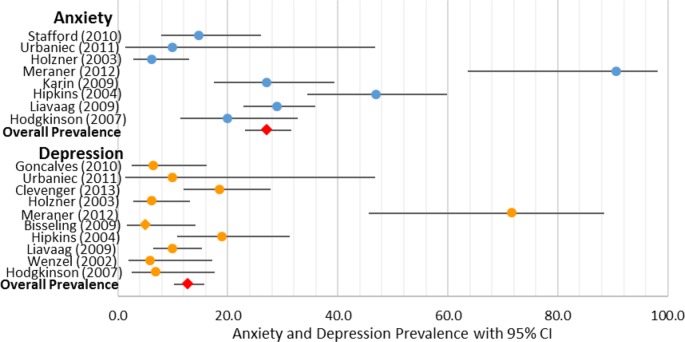
Results: We identified 24 full journal articles that met the inclusion criteria for entry into the meta-analysis resulting in a pooled sample size of 3623 patients. The meta-analysis of prevalence rates identified pretreatment, on-treatment and post-treatment depression prevalences of 25.34% (CI 22.79% to 28.07%), 22.99% (CI 19.85% to 26.46%) and 12.71% (CI 10.14% to 15.79%), respectively. Pretreatment, on-treatment and post-treatment anxiety prevalences were 19.12% (CI 17.11% to 21.30%), 26.23% (CI 22.30% to 30.56%) and 27.09% (CI 23.10% to 31.49%).
Conclusions: Our findings suggest that the prevalence of depression and anxiety in women with ovarian cancer, across the treatment spectrum, is significantly greater than in the healthy female population. With the growing emphasis on improving the management of survivorship and quality of life, we conclude that further research is warranted to ensure psychological distress in ovarian cancer is not underdiagnosed and undertreated.
Keywords: MENTAL HEALTH.
Published by the BMJ Publishing Group Limited. For permission to use (where not already granted under a licence) please go to http://www.bmj.com/company/products-services/rights-and-licensing/
Figures
References
-
- Ovarian Cancer Action. What every woman should know. http://www.ovarian.org.uk/ovarian-cancer
-
- Cancer Research UK. UK Ovarian Cancer Incidence Statistics. http://www.cancerresearchuk.org/cancerstats/type/ovary.
-
- National Institute of Clinical Excellence. Ovarian cancer, the recognition and initial management 2011. http://www.nice.org.uk/nicemedia/live/13464/54194/54194.pdf.
-
- Ries LAG, Melbert D, Krapcho M, et al. SEER Cancer Statistics Review, 1975–2005, National Cancer Institute. http://seer.cancer.gov/csr/1975_2005.
Publication types
MeSH terms
LinkOut - more resources
Full Text Sources
Other Literature Sources
Medical
Miscellaneous
