


Propionibacterium acnes infection after shoulder surgery
- PMID: 26622132
- PMCID: PMC4640005
- DOI: 10.4103/0973-6042.167957
Propionibacterium acnes infection after shoulder surgery
Abstract
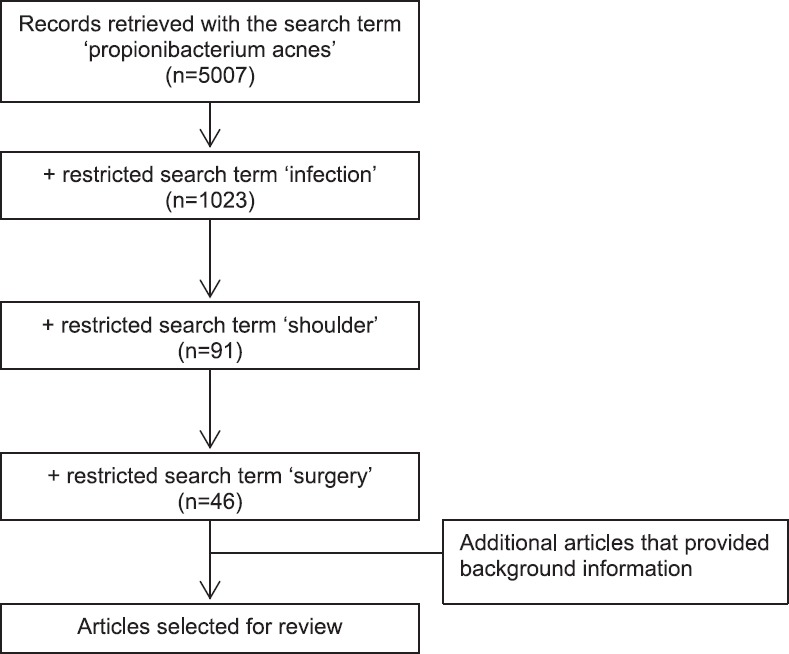
Propionibacterium acnes has been implicated as a cause of infection following shoulder surgery, may occur up to 2 years after the index operation and has been shown to be responsible for up to 56% of shoulder infections after orthopedic implant. Male patients within the population undergoing shoulder surgery are particularly at risk, especially if their shoulder surgery involved prosthesis or was posttraumatic. P. acnes infection can be difficult to diagnose clinically and laboratory techniques require prolonged and specialized cultures. Usual inflammatory markers are not raised in infection with this low virulence organism. Delayed diagnosis with P. acnes infection can result in significant morbidity prior to prosthesis failure. Early diagnosis of P. acnes infection and appropriate treatment can improve clinical outcomes. It is important to be aware of P. acnes infection in shoulder surgery, to evaluate risk factors, to recognize the signs of P. acnes infection, and to promptly initiate treatment. The signs and symptoms of P. acnes infection are described and discussed. Data were collected from PubMed™, Web of Science, and the NICE Evidence Healthcare Databases - AMED (Ovid), BNI (Ovid), CINAHL (EBSCO), Embase (Ovid), HMIC: DH-Data and Kings Fund (Ovid), Medline (Ovid), and PsycINFO (Ovid). The search terms used were "P. acnes," "infection," "shoulder," and "surgery." In this review, we summarize the current understanding of the prevention and management of P. acnes infection following shoulder surgery.
Keywords: Infection; Propionibacterium acnes; orthopedic; prostheses; shoulder.
Figures
References
-
- Aubin GG, Portillo ME, Trampuz A, Corvec S. Propionibacterium acnes, an emerging pathogen: From acne to implant-infections, from phylotype to resistance. Med Mal Infect. 2014;44:241–50. - PubMed
-
- Levy O, Iyer S, Atoun E, Peter N, Hous N, Cash D, et al. Propionibacterium acnes: An underestimated etiology in the pathogenesis of osteoarthritis? J Shoulder Elbow Surg. 2013;22:505–11. - PubMed
-
- Douglas HC, Gunter SE. The taxonomic position of Corynebacterium acnes. J Bacteriol. 1946;52:15–23. - PubMed
-
- Athwal GS, Sperling JW, Rispoli DM, Cofield RH. Acute deep infection after surgical fixation of proximal humeral fractures. J Shoulder Elbow Surg. 2007;16:408–12. - PubMed
Publication types
LinkOut - more resources
Full Text Sources
Other Literature Sources
