


Prevalence and Genetic Characterization of Cryptosporidium Spp. In Diarrheic Children from Gonbad Kavoos City, Iran
- PMID: 26622299
- PMCID: PMC4662744
Prevalence and Genetic Characterization of Cryptosporidium Spp. In Diarrheic Children from Gonbad Kavoos City, Iran
Abstract
Background: Cryptosporidium is an intestinal protozean parasite causing waterborne and foodborne outbreaks of diarrheal diseases. The present study was performed in order to find prevalence and subtypes of Cryptosporidium among children with diarrhea in Gonbad Kavoos City, Northern Iran.
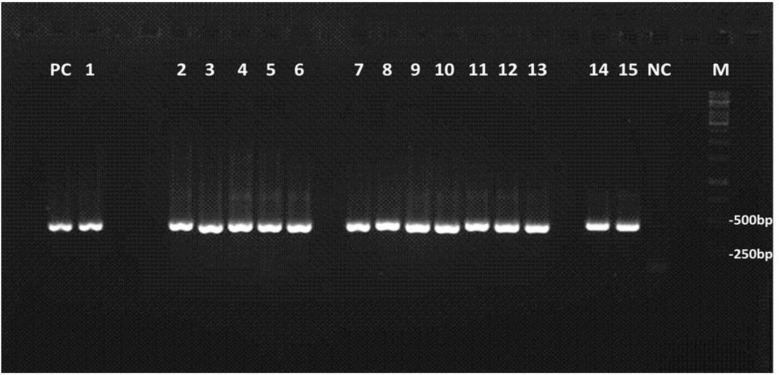
Methods: Diarrheic samples were collected from 547 children. The initial parasitological diagnosis was made based on detection of oocysts using the modified Ziehl-Neelsen acid-fast staining method. The positive microscopically samples were selected for sequence analysis of partial 60 kDa glycoprotein (gp60) gene.
Results: Out of 547 collected samples, 27 (4.94%) were positive for Cryptosporidium oocysts. Fifteen from 27 positive samples successfully amplified in PCR. Sequences analysis of gp60 gene in 15 Cryptosporidium isolates revealed that all of them (100%) were C. parvum. The results showed three subtypes of IIa subtype family (7 cases) including IIaA16G2R1, IIaA17G1R1, IIaA22G3R1 and one subtype of IId subtype family (8 cases). The most common allele was IId A17G1d (53.3%).
Conclusion: The predominance of zoonotic subtype families of C. parvum species (IIa, IId) in the present study is in concordance with previous studies in Iran and emphasizes the significance of zoonotic transmission of cryptosporidiosis in the country.
Keywords: Children; Cryptosporidium; Gp60 gene; Iran; Subtypes.
Figures
References
-
- Fayer R. Cryptosporidium: a water-borne zoonotic parasite. Vet Parasitol. 2004;126(1-2):37–56. - PubMed
-
- Fayer R, Morgan U, Upton SJ. Epidemiology of Cryptosporidium: transmission, detection and identification. Int J Parasitol. 2000;30(12-13):1305–22. - PubMed
-
- Šlapeta J. Cryptosporidiosis and Cryptosporidium species in animals and humans: A thirty colour rainbow? Int J Parasitol. 2013;43(12–13):957–70. - PubMed
-
- Abe N, Matsubayashi M, Kimata I, Iseki M. Subgenotype analysis of Cryptosporidium parvum isolates from humans and animals in Japan using the 60-kDa glycoprotein gene sequences. Parasitol Res. 2006;99(3):303–05. - PubMed
LinkOut - more resources
Full Text Sources
Miscellaneous