Risk Factors for the Development of Hepatocellular Carcinoma in Thailand
- PMID: 26623264
- PMCID: PMC4663199
- DOI: 10.14218/JCTH.2015.00025
Risk Factors for the Development of Hepatocellular Carcinoma in Thailand
Abstract
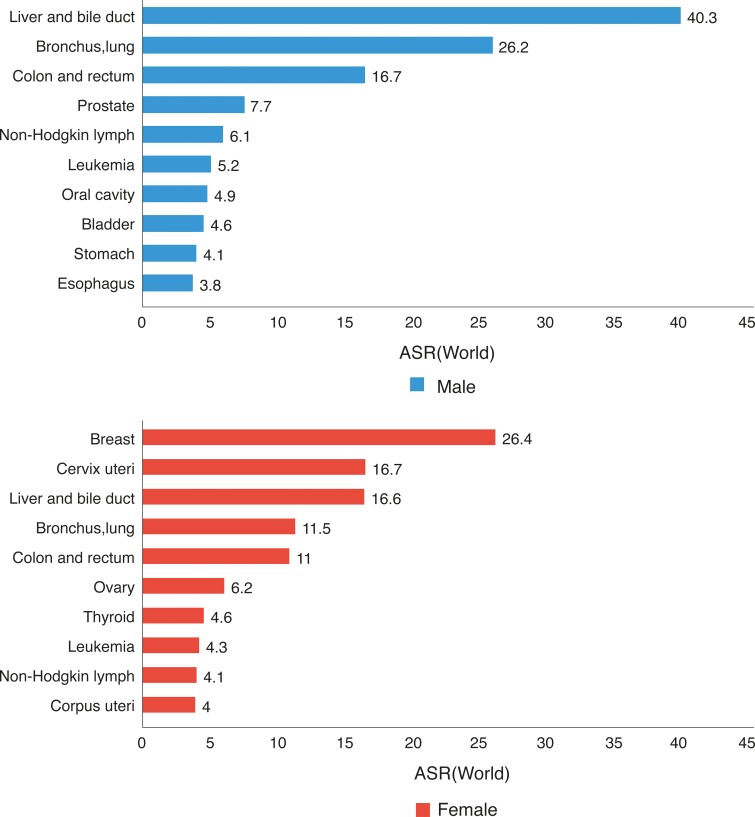
Hepatocellular carcinoma (HCC) is the most common type of liver cancer worldwide. The incidence of HCC is on the rise in Thailand, where it has become the most common malignancy in males and the third most common in females. Here, we review some of the risk factors that have contributed to this increase in HCC incidence in the Thai population. Hepatitis B virus (HBV) is the main etiologic risk factor for HCC, followed by hepatitis C virus (HCV). Patients with HBV genotype C have a higher positive rate of hepatitis B early antigen (HBeAg) and progress to cirrhosis and HCC earlier than genotype B. For HCV patients, 16% developed HCC associated cirrhosis by year 5 after diagnosis, and the cumulative risk for death from HCC at year 10 was 60%. Dietary exposure to the fungal hepatocarcinogen aflatoxin B1 has been shown to interact synergistically with HBV infection to increase the risk of early onset HCC. Chronic alcohol abuse remains an important risk factor for malignant transformation of hepatocytes, frequently in association with alcohol-induced cirrhosis. In recent years, obesity and metabolic syndrome have markedly increased the incidence of HCC and are important causes of HCC in some resource-rich regions.
Keywords: Etiology; Hepatocellular carcinoma; Risk factors.
Conflict of interest statement
Figures
References
-
- Khuhaprema T, Attasara P, Sriplung H, Wiangnon S, Sangrajrang S. Cancer in Thailand 2007–2009. Vol. VII. Bangkok: Bangkok Medical Publisher; 2013.
-
- Parkin DM, Whelan J, Ferlay J, Raymond L, Young J. Cancer Incidence in Five Continents. Vol. VII. Lyon: International Agency for Research on Cancer; 1997. pp. 440–441. IARC Scientific Publications No. 143.
-
- Sooklim K, Sriplung H, Piratvisuth T. Histologic subtypes of hepatocellular carcinoma in the southern Thai population. Asian Pac J Cancer Prev. 2003;4:302–306. - PubMed
Publication types
LinkOut - more resources
Full Text Sources