Review
. 2016 Feb 9;7(6):6476-505.
doi: 10.18632/oncotarget.6390.

MicroRNAs as growth regulators, their function and biomarker status in colorectal cancer

Affiliations
Review

MicroRNAs as growth regulators, their function and biomarker status in colorectal cancer

Lina Cekaite et al. Oncotarget. .

Abstract

Gene expression is in part regulated by microRNAs (miRNAs). This review summarizes the current knowledge of miRNAs in colorectal cancer (CRC); their role as growth regulators, the mechanisms that regulate the miRNAs themselves and the potential of miRNAs as biomarkers. Although thousands of tissue samples and bodily fluids from CRC patients have been investigated for biomarker potential of miRNAs (>160 papers presented in a comprehensive tables), none single miRNA nor miRNA expression signatures are in clinical use for this disease. More than 500 miRNA-target pairs have been identified in CRC and we discuss how these regulatory nodes interconnect and affect signaling pathways in CRC progression.

Keywords: biomarker; colorectal neoplasm; metastasis; miRNA; target gene.


Conflict of interest statement

CONFLICTS OF INTEREST

The authors declare no conflict of interest.

Figures
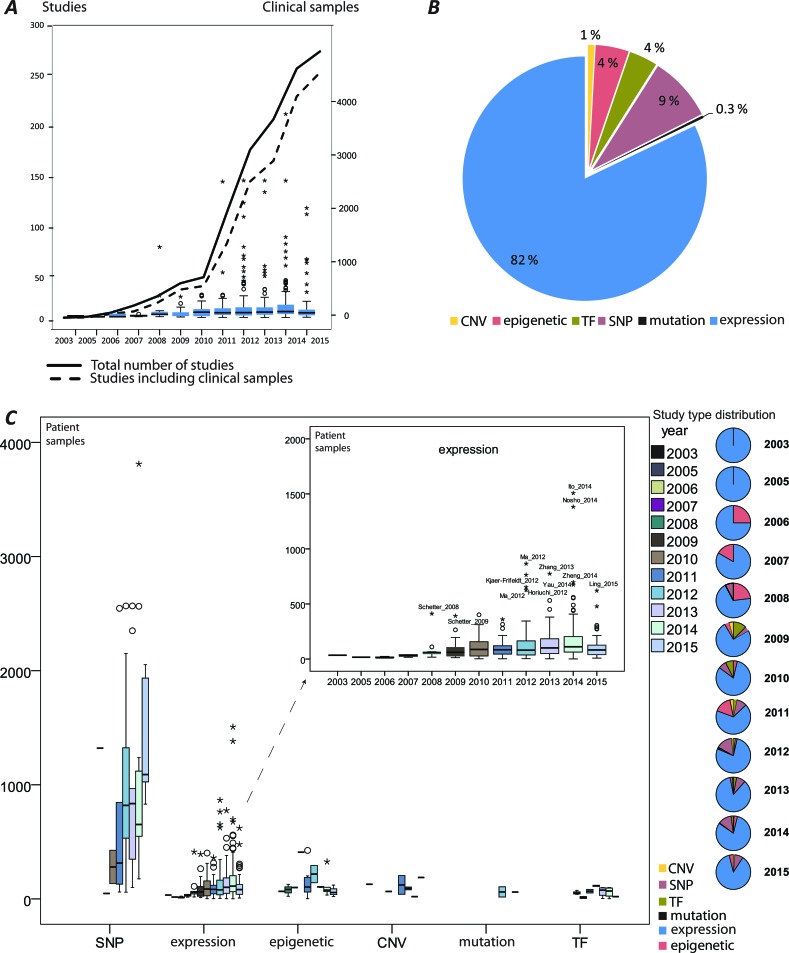
Figure 1
Figure 1. An overview of miRNA studies in colorectal cancer (CRC)
A. A rapid growth of the published research reports illustrated by the number of studies (with and without clinical samples) per year; the box plots represent numbers of the analyzed patient samples per year; B. The proportion of studies reporting aberrant miRNA (expression) and miRNA regulation by copy number variation (CNV), miRNAs regulated by epigenetic modifications, miRNA regulation by transcription factors (TF); single nucleotide polymorphism (SNP) in miRNA coding genes or binding sites of their target genes. C. The quantity of patient cohorts segregated by the type of analysis performed.
Figure 2
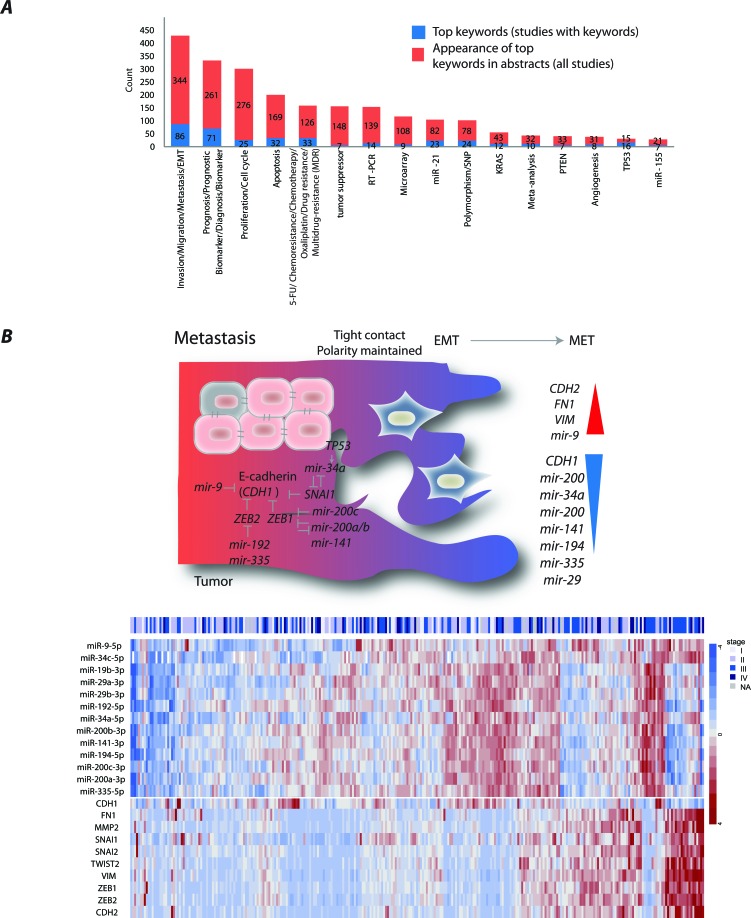
Figure 2. Main miRNA research themes in colorectal cancer (CRC) studies
A. The trends of miRNA research themes exemplified by article keywords. B. An illustration and a heatmap of miRNAs validated to regulate CDH1, its regulators and other mesenchymal markers in CRC. The miRNA/mRNA was obtained from CRC patients registered in TCGA. values represent RPM normalized, median-centered values (for further information see Supplementary Material).
Figure 3
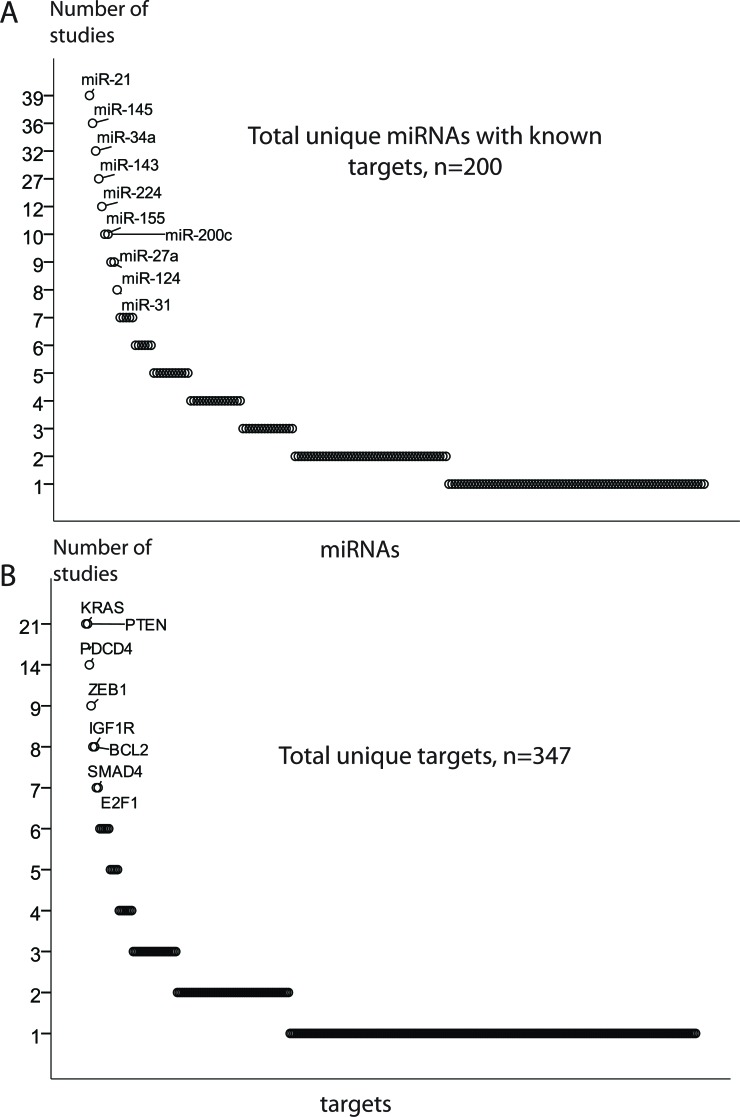
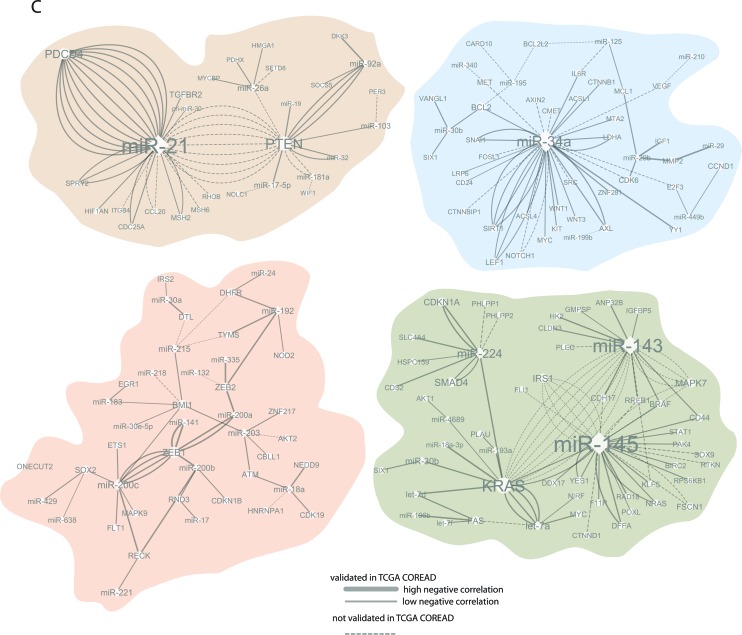
Figure 3. MiRNA regulation of target genes
A. and B. The most frequently validated miRNA and target genes. C. The enlarged leading miRNA-targets nodes generated using the validated miRNA-target pairs. The network edges are coded by degree of expressional miRNA-mRNA associations obtained in TCGA CRC patients. MiRNA nodes are indicated by rectangles, target nodes as ovals. Size of nodes reflects the number of connections, with bigger nodes representing more densely connected regions. The node of miR-143/miR-145-KRAS should be taken with precaution in light of the recent results by Chivukala et. al.[105].
Figure 3
Figure 3. MiRNA regulation of target genes
A. and B. The most frequently validated miRNA and target genes. C. The enlarged leading miRNA-targets nodes generated using the validated miRNA-target pairs. The network edges are coded by degree of expressional miRNA-mRNA associations obtained in TCGA CRC patients. MiRNA nodes are indicated by rectangles, target nodes as ovals. Size of nodes reflects the number of connections, with bigger nodes representing more densely connected regions. The node of miR-143/miR-145-KRAS should be taken with precaution in light of the recent results by Chivukala et. al.[105].
Figure 4
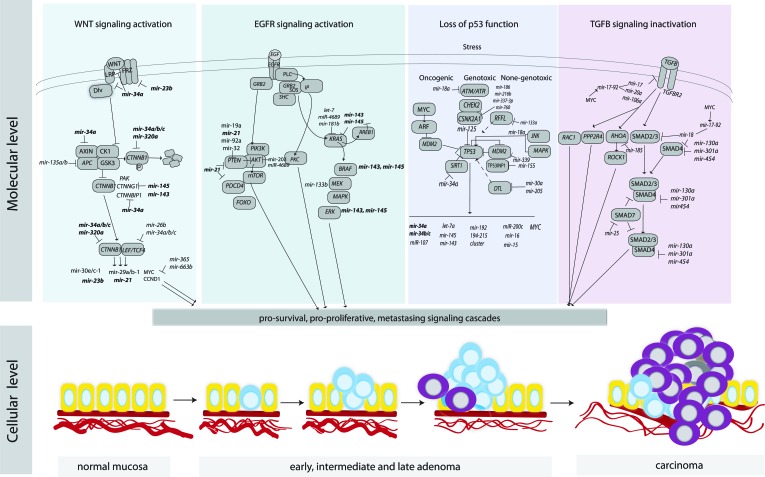
Figure 4. An overview of key signaling pathways in CRC and the regulation of their components by miRNAs
MiRNAs that are involved in multiple pathways and contribute to the cross-talk among the pathways are marked in bold.
None

References

    1. Ferlay J., Steliarova-Foucher E., Lortet-Tieulent J., Rosso S., Coebergh J. W., Comber H., Forman D., Bray F. Cancer incidence and mortality patterns in Europe: Estimates for 40 countries in 2012. Eur J Cancer. 2013;49(6):1374–1403. - PubMed
    1. Stewart B. W., Wild C. P. World Cancer Report. 2014
    1. Friedman R. C., Farh K. K., Burge C. B., Bartel D. P. Most mammalian mRNAs are conserved targets of microRNAs. Genome Res. 2009;19(1):92–105. - PMC - PubMed
    1. Kozomara A., Griffiths-Jones S. miRBase: annotating high confidence microRNAs using deep sequencing data. Nucleic Acids Research. 2014;42(D1):D68–D73. - PMC - PubMed
    1. Mestdagh P., Hartmann N., Baeriswyl L., Andreasen D., Bernard N., Chen C., Cheo D., D'andrade P., Demayo M., Dennis L., Derveaux S., Feng Y., Fulmer-Smentek S., et al. Evaluation of quantitative miRNA expression platforms in the microRNA quality control (miRQC) study. Nat Methods. 2014;11(8):809–815. - PubMed

Publication types