


The phlebotomine sand flies fauna in Parque Estadual do Rio Doce, Minas Gerais, Brazil
- PMID: 26626880
- PMCID: PMC4667417
- DOI: 10.1186/s13071-015-1227-1
The phlebotomine sand flies fauna in Parque Estadual do Rio Doce, Minas Gerais, Brazil
Abstract
Background: Phlebotomine sand flies are dipterans of the family Psychodidae. They are very important to veterinary medicine because some species are vectors of infective forms of Leishmania spp., the etiological agents of leishmaniasis. The Parque Estadual do Rio Doce is located in an area with constant reports of cases of leishmaniasis. In order to better understanding the phlebotamine sand fly fauna of the park, the present work was undertaken with the goal of analyzing phlebotomine sand flies collected there, verifying their seasonality and correlating their presence with forest and/or anthropic areas.
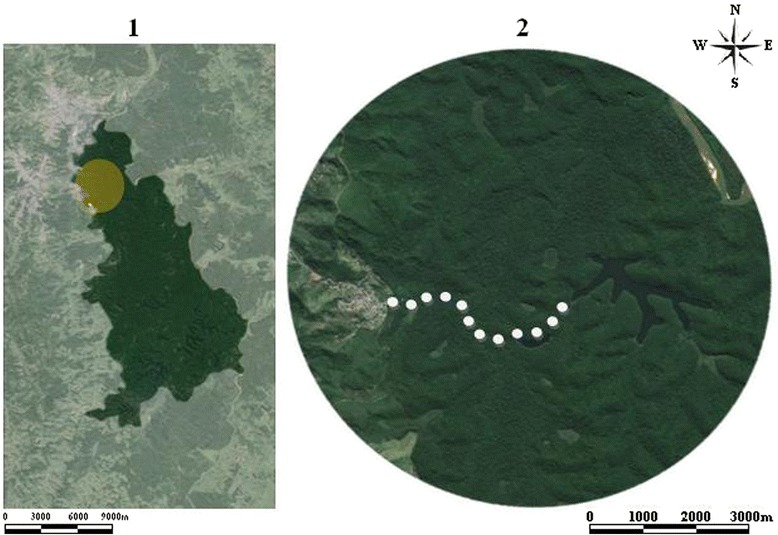
Methods: To analyze the fauna of phlebotomine sand flies, HP-type, model CDC light traps were distributed along the Juquita trail of PERD. Twelve traps were installed between September 2012 and February 2014, and captured specimens were identified to species.
Results and discussions: A total of 1993 phlebotomine sand flies of 30 species were captured. The most abundant species were Pressatia choti, Psychodopygus davisi and Nyssomyia intermedia. The high number of Nyssomyia intermedia captured drew attention because they are considered one of the vectors of the infective Leishmania braziliensis present at PERD. No seasonality was observed in the occurrence of phlebotomine sand flies captured at PERD. The number of captured specimens of vector species, and the distance of traps from the forest boarder, were negatively correlated, showing that these vectors (Nyssomyia intermedia, Nyssomyia whitmani and Migonemyia migonei) were less common inside the forest area and that attention should be drawn to other potential vector species in the forest.
Conclusion: These results can contribute to leishmaniasis prevention strategies directed at the visitors and professionals at or near PERD. The finding of the presence of Leishmania vectors in the park area must be given attention, since disease transmission can threaten people who visit PERD and its surroundings. Therefore, information on the prevention of leishmaniasis needs to be provided to all people who go there.
Figures
References
-
- Young DG, Duncan MA. Guide to the identification and geographic distribution of Lutzomyia sand flies in Mexico, West Indies, Central and South America. Mem Amer Ent Soc. 1994;54:1–881.
-
- Brasil. Ministério da Saúde. Sistema de Informação de Agravos de Notificação - SINAN. Available in: [http://dtr2004.saude.gov.br/sinanweb/]. Access: 10 Jun 2015.
Publication types
MeSH terms
LinkOut - more resources
Full Text Sources
Other Literature Sources
Research Materials
Miscellaneous
