


Low serum ficolin-3 levels are associated with severity and poor outcome in traumatic brain injury
- PMID: 26627059
- PMCID: PMC4666053
- DOI: 10.1186/s12974-015-0444-z
Low serum ficolin-3 levels are associated with severity and poor outcome in traumatic brain injury
Abstract
Background: Ficolin-mediated activation of the lectin pathway of complement contributes to the complement-independent inflammatory processes of traumatic brain injury. Lower serum ficolin-3 levels have been demonstrated to be highly associated with unfavorable outcome after ischemic stroke. This prospective observatory study was designed to investigate the relationships between serum ficolin-3 levels and injury severity and clinical outcomes after severe traumatic brain injury.
Methods: Serum ficolin-3 levels of 128 patients and 128 healthy controls were measured by sandwich immunoassays. An unfavorable outcome was defined as Glasgow Outcome Scale score of 1-3. Study endpoints included mortality at 1 week and 6 months and unfavorable outcome at 6 months after head trauma. Injury severity was assessed by Glasgow Coma Scale score. Multivariate logistic models were structured to evaluate the relationships between serum ficolin-3 levels and study endpoints and injury severity.
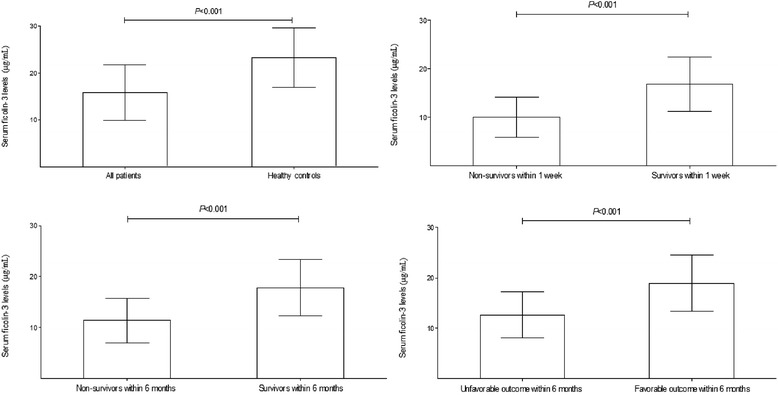
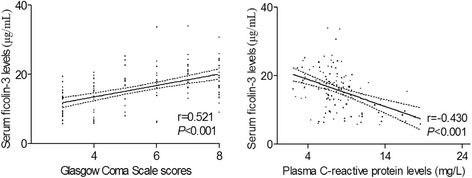
Results: Compared with the healthy controls, serum ficolin-3 levels on admission were statistically decreased in patients with severe traumatic brain injury. Serum ficolin-3 levels were independently correlated with Glasgow Coma Scale scores. Ficolin-3 was also identified as an independent prognostic predictor for 1-week mortality, 6-month mortality, and 6-month unfavorable outcome. Under receiver operating characteristics curves, ficolin-3 has similar prognostic predictive values for all study endpoints compared with Glasgow Coma Scale scores.
Conclusions: It was proposed that lower serum ficolin-3 levels, correlated with injury severity, had the potential to be the useful, complementary tool to predict short- or long-term clinical outcomes after severe traumatic brain injury.
Figures
References
Publication types
MeSH terms
Substances
LinkOut - more resources
Full Text Sources
Other Literature Sources
Miscellaneous
