


Covalent targeting of acquired cysteines in cancer
- PMID: 26629855
- PMCID: PMC4731306
- DOI: 10.1016/j.cbpa.2015.11.004
Covalent targeting of acquired cysteines in cancer
Abstract
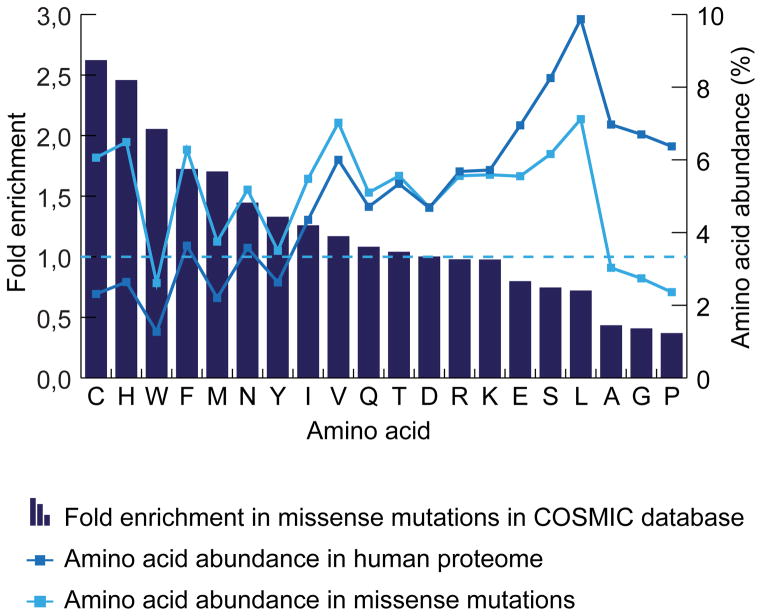
The thiolate side chain of cysteine has a unique functionality that drug hunters and chemical biologists have begun to exploit. For example, targeting cysteine residues in the ATP-binding pockets of kinases with thiol-reactive molecules has afforded increased selectivity and potency to drugs like imbrutinib, which inhibits the oncogene BTK, and CO-1686 and AZD9291 that target oncogenic mutant EGFR. Recently, disulfide libraries and targeted GDP-mimetics have been used to selectively label the G12C oncogenic mutation in KRAS. We reasoned that other oncogenes contain mutations to cysteine, and thus screened the Catalog of Somatic Mutations in Cancer for frequently acquired cysteines. Here, we describe the most common mutations and discuss how these mutations could be potential targets for cysteine-directed personalized therapeutics.
Copyright © 2015 Elsevier Ltd. All rights reserved.
Figures



References
-
- DeSantis CE, Lin CC, Mariotto AB, Siegel RL, Stein KD, Kramer JL, Alteri R, Robbins AS, Jemal A. Cancer treatment and survivorship statistics, 2014. CA Cancer J Clin. 2014;64:252–271. - PubMed
-
- Rimawi MF, Schiff R, Osborne CK. Targeting HER2 for the treatment of breast cancer. Annu Rev Med. 2015;66:111–128. - PubMed
-
- Mulcahy N. Top 10 Best-Selling Cancer Drugs Globally. Medscape 2014 Jun;
-
- Bollag G, Tsai J, Zhang J, Zhang C, Ibrahim P, Nolop K, Hirth P. Vemurafenib: the first drug approved for BRAF-mutant cancer. Nat Rev Drug Discov. 2012;11:873–886. - PubMed
-
- Bauer RA. Covalent inhibitors in drug discovery: from accidental discoveries to avoided liabilities and designed therapies. Drug Discov Today. 2015;20:1061–1073. - PubMed
Publication types
MeSH terms
Substances
Grants and funding
LinkOut - more resources
Full Text Sources
Other Literature Sources
Research Materials
Miscellaneous
