


Refinement of Molecular Diagnostic Protocol of Auditory Neuropathy Spectrum Disorder: Disclosure of Significant Level of Etiologic Homogeneity in Koreans and Its Clinical Implications
- PMID: 26632695
- PMCID: PMC5058964
- DOI: 10.1097/MD.0000000000001996
Refinement of Molecular Diagnostic Protocol of Auditory Neuropathy Spectrum Disorder: Disclosure of Significant Level of Etiologic Homogeneity in Koreans and Its Clinical Implications
Abstract
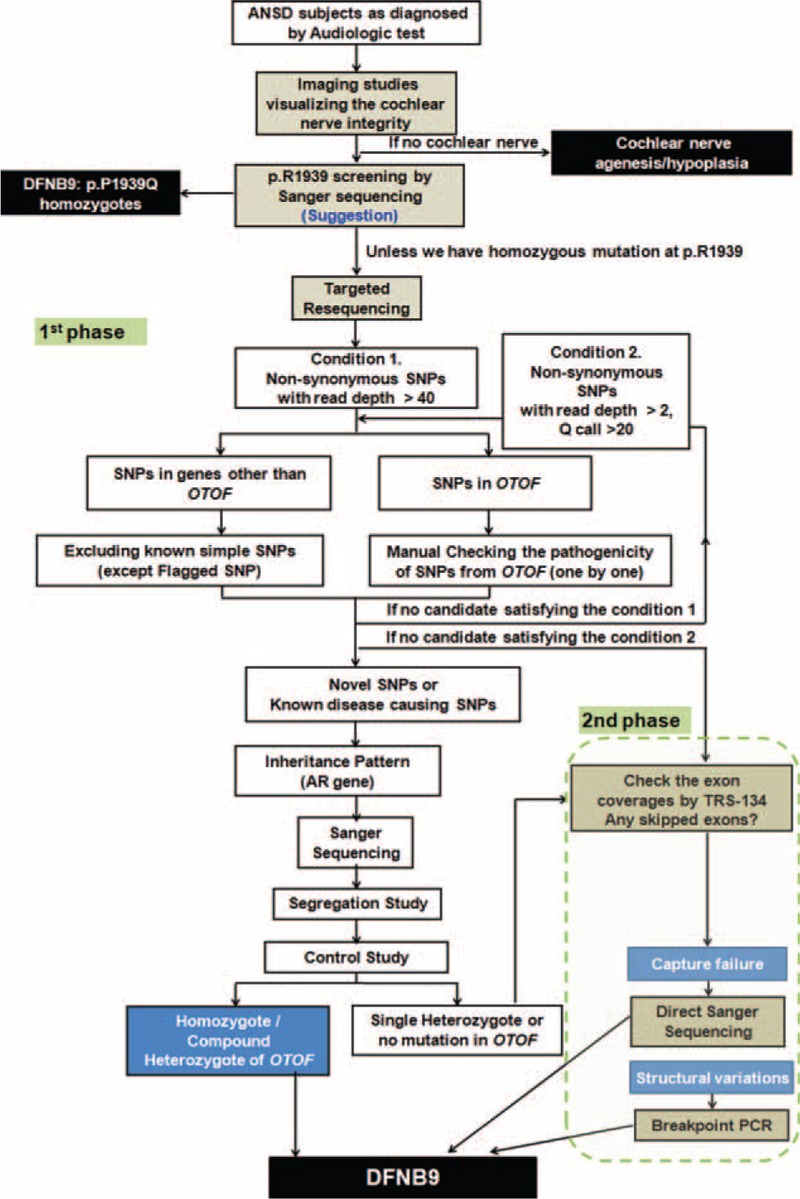
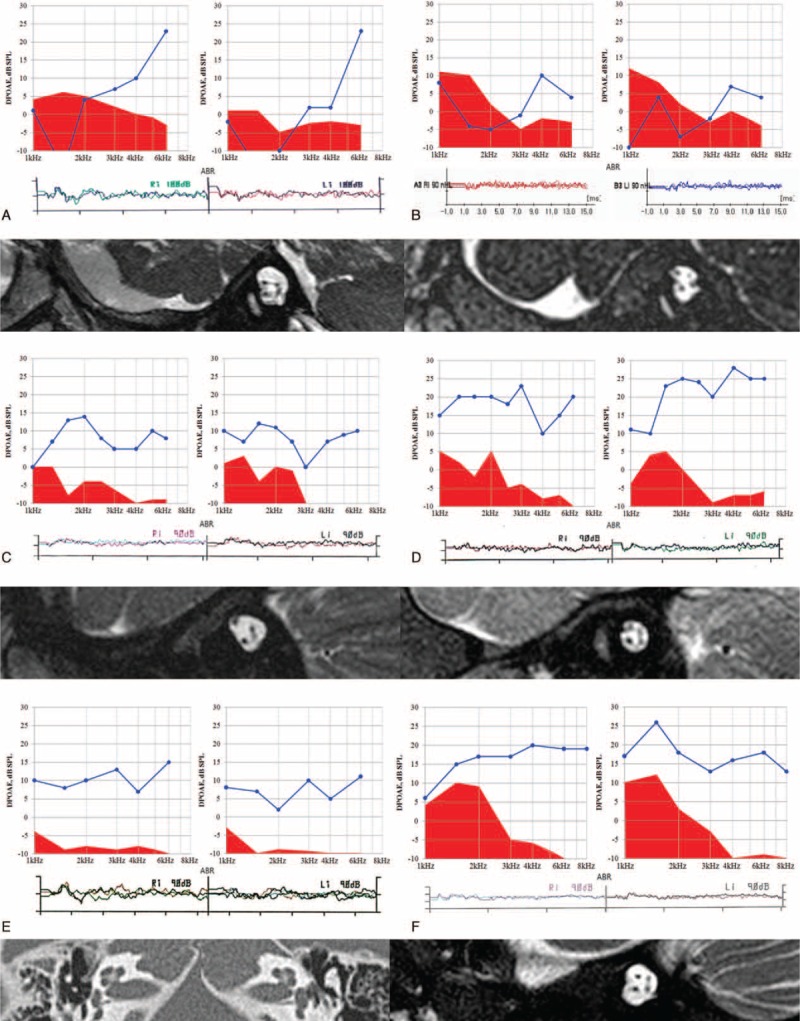
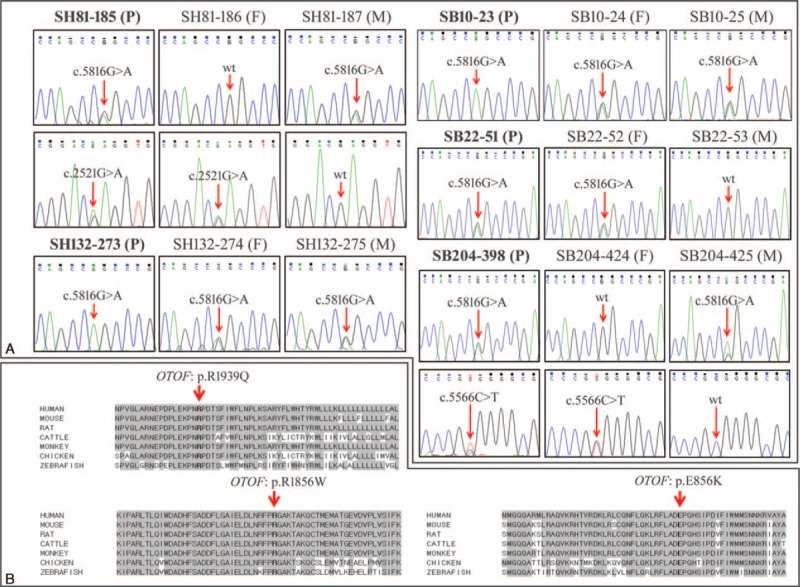
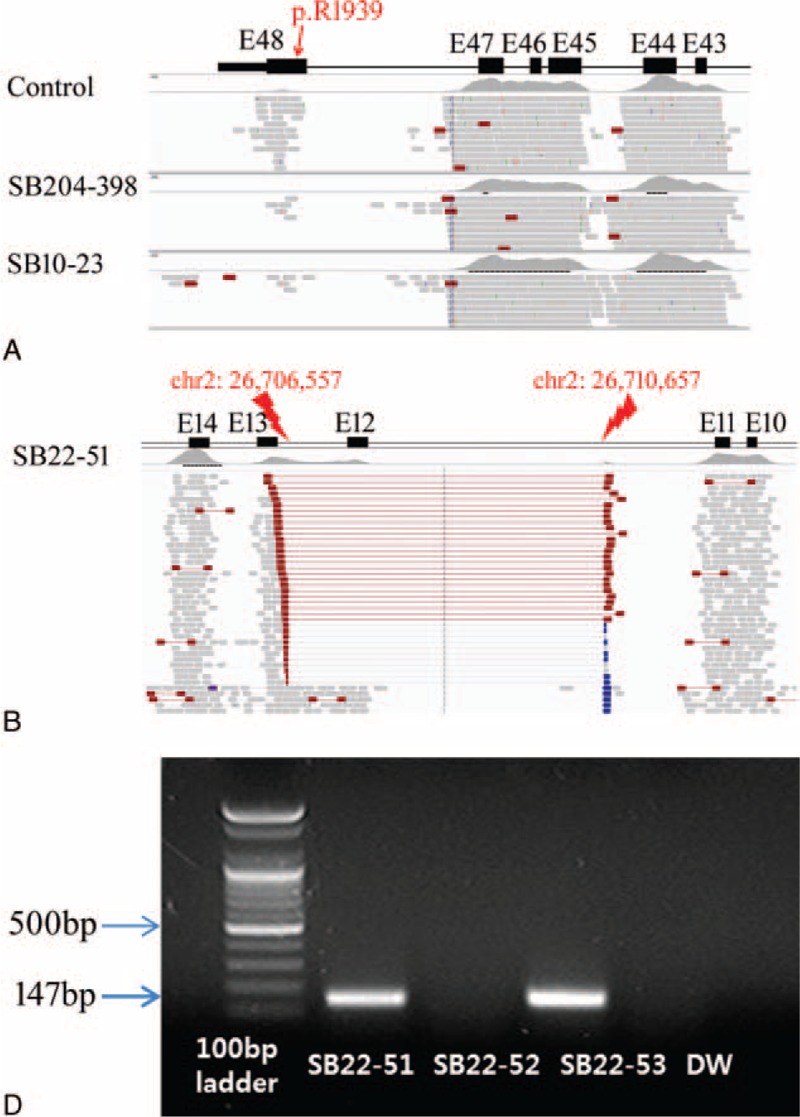
Auditory neuropathy spectrum disorder (ANSD) is a sensorineural hearing disorder caused by dysfunction of auditory neural conduction. ANSD has a heterogeneous etiology, including genetic factors; the response to cochlear implantation significantly varies depending on the etiology. The results of timely cochlear implantation for OTOF-related ANSD (DFNB9) have been reported to be good. Therefore, identifying the causative gene of ANSD, especially OTOF, is an important issue to rehabilitate these patients.Six sporadic ANSD subjects without anatomical abnormality of the cochlear nerve, including the 4 subjects that were previously reported to be without detectable OTOF mutation, were included. We performed targeted resequencing (TRS) of known deafness genes and multiphasic bioinformatics analyses of the data that ensured detection of capture failure and structural variations. Exclusion of SNP was also double checked. The TRS data previously obtained from 2 subjects were reanalyzed. Through this study, we detected 2 mutant alleles of OTOF from 5 (83.3%) of 6 ANSD subjects. All of the 5 subjects carried at least 1 mutant allele carrying p.R1939Q. This variant was categorized as a simple SNP (rs201326023) in the database and it resided in the exon with frequent capture failures, which previously led to exclusion of this variant from eligible candidacy mistakenly. In addition, we detected a structural variation within OTOF from a previously undiagnosed ANSD subject, which was the second structural variation reported in DFNB9 subjects to date.We identify a strong etiologic homogeneity of prelingual ANSD in case of the anatomically normal cochlear nerve in Koreans and now report DFNB9 as the single overwhelming cause. Multiphasic analysis of TRS data ensuring detection of capture failure and structural variations would be expected to reveal DFNB9 from a substantial portion of previously undiagnosed ANSD subjects in Koreans. Based on our results, we propose a novel strategy that incorporates imaging studies, prevalent mutation screening and multiphasic analysis of TRS data in a stepwise manner to correctly detect DFNB9 in Koreans.
Conflict of interest statement
The authors have no conflicts of interest to disclose.
Figures
References
-
- Berlin CI, Hood L, Morlet T, et al. Auditory neuropathy/dys-synchrony: diagnosis and management. Ment Retard Dev Disabil Res Rev 2003; 9:225–231. - PubMed
-
- Starr A, Picton TW, Sininger Y, et al. Auditory neuropathy. Brain 1996; 119 (Pt 3):741–753. - PubMed
-
- Foerst A, Beutner D, Lang-Roth R, et al. Prevalence of auditory neuropathy/synaptopathy in a population of children with profound hearing loss. Int J Pediatr Otorhinolaryngol 2006; 70:1415–1422. - PubMed
-
- Rance G, Beer DE, Cone-Wesson B, et al. Clinical findings for a group of infants and young children with auditory neuropathy. Ear Hear 1999; 20:238–252. - PubMed
-
- Kirkim G, Serbetcioglu B, Erdag TK, et al. The frequency of auditory neuropathy detected by universal newborn hearing screening program. Int J Pediatr Otorhinolaryngol 2008; 72:1461–1469. - PubMed
Publication types
MeSH terms
Substances
Supplementary concepts
LinkOut - more resources
Full Text Sources
