The combination of sugammadex and neostigmine can reduce the dosage of sugammadex during recovery from the moderate neuromuscular blockade
- PMID: 26634077
- PMCID: PMC4667139
- DOI: 10.4097/kjae.2015.68.6.547
The combination of sugammadex and neostigmine can reduce the dosage of sugammadex during recovery from the moderate neuromuscular blockade
Abstract
Background: Sugammadex is a novel neuromuscular reversal agent, but its associated hypersensitivity reaction and high cost have been obstacles to its widespread use. In the interest of reducing the necessary dosage of sugammadex, the reversal time of the combined use of sugammadex and neostigmine from moderate neuromuscular blockade were investigated.
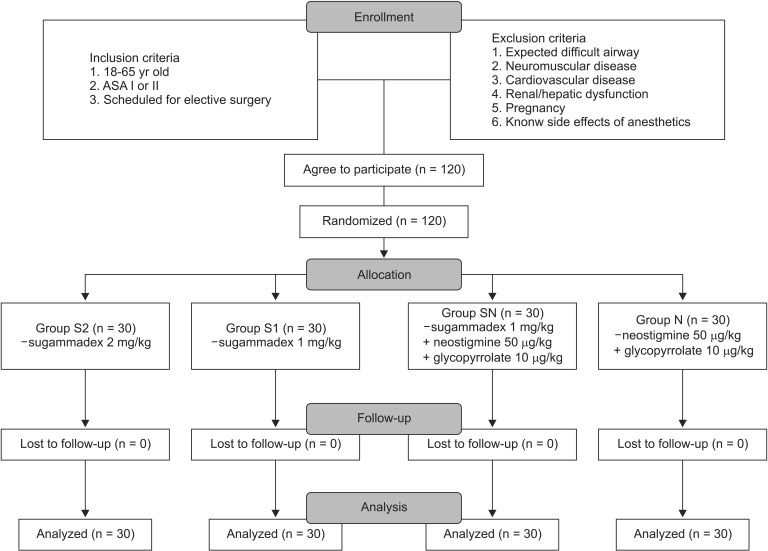
Methods: The patients enrolled ranged in age from 18 to 65 years old with American Society of Anesthesiologists class 1 or 2. The subjects were randomly assigned into one of the four groups (Group S2, S1, SN, and N; n = 30 per group). The reversal agents of each groups were as follows: S2 - sugammadex 2 mg/kg, S1 - sugammadex 1 mg/kg, SN - sugammadex 1 mg/kg + neostigmine 50 µg/kg + glycopyrrolate 10 µg/kg, N - neostigmine 50 µg/kg + glycopyrrolate 10 µg/kg. The time to recovery of the train-of-four (TOF) ratio was checked in each group.
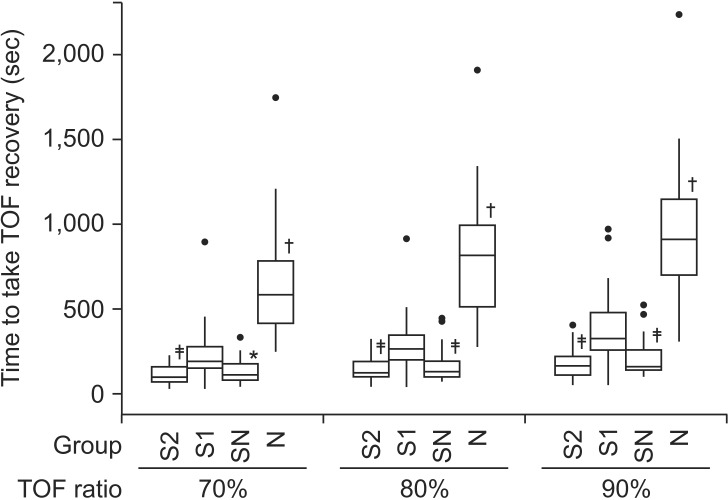
Results: The time to 90% recovery of TOF ratio was 182.6 ± 88.9, 371.1 ± 210.4, 204.3 ± 103.2, 953.2 ± 379.7 sec in group S2, S1, SN and N, respectively. Group SN showed a significantly shorter recovery time than did group S1 and N (P < 0.001). However, statistically significant differences between the S2 and SN groups were not be observed (P = 0.291). No hypersensitivity reactions occurred in all groups.
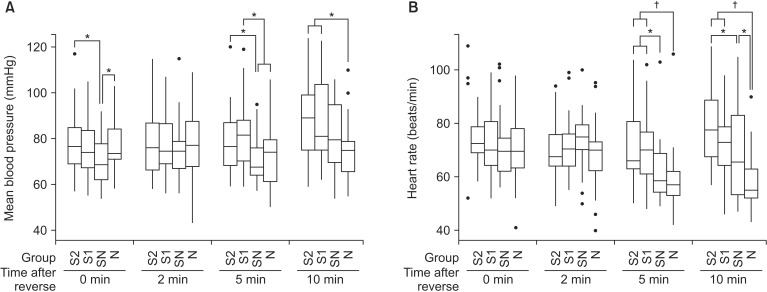
Conclusions: For the reversal from rocuronium-induced moderate neuromuscular blockade, the combined use of sugammadex and neostigmine may be helpful to decrease the recovery time and can also reduce the required dosage of sugammadex. However, the increased incidence of systemic muscarinic side effects must be considered.
Keywords: Neostigmine; Neuromuscular blockade; Rocuronium; Sugammadex.
Figures
References
-
- Srivastava A, Hunter JM. Reversal of neuromuscular block. Br J Anaesth. 2009;103:115–129. - PubMed
-
- Nicholson WT, Sprung J, Jankowski CJ. Sugammadex: a novel agent for the reversal of neuromuscular blockade. Pharmacotherapy. 2007;27:1181–1188. - PubMed
-
- Bom A, Hope F, Rutherford S, Thomson K. Preclinical pharmacology of sugammadex. J Crit Care. 2009;24:29–35. - PubMed
-
- Mirakhur RK. Sugammadex in clinical practice. Anaesthesia. 2009;64(Suppl 1):45–54. - PubMed
-
- Kopman AF. Neostigmine versus sugammadex: which, when, and how much? Anesthesiology. 2010;113:1010–1011. - PubMed
LinkOut - more resources
Full Text Sources
Other Literature Sources
Medical