


Evaluation of the impact of viscosity, injection volume, and injection flow rate on subcutaneous injection tolerance
- PMID: 26635489
- PMCID: PMC4646585
- DOI: 10.2147/MDER.S91019
Evaluation of the impact of viscosity, injection volume, and injection flow rate on subcutaneous injection tolerance
Abstract
Aim: The primary objective of this study was to evaluate the impact of fluid injection viscosity in combination with different injection volumes and flow rates on subcutaneous (SC) injection pain tolerance.
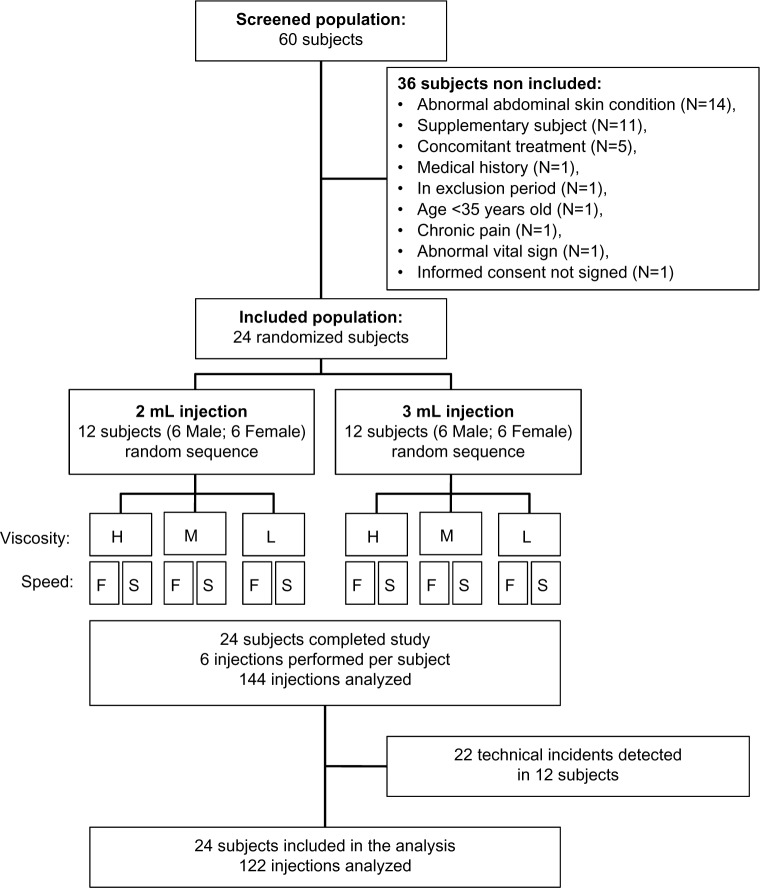
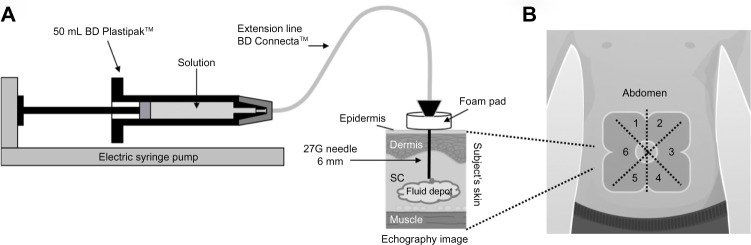
Methods: The study was a single-center, comparative, randomized, crossover, Phase I study in 24 healthy adults. Each participant received six injections in the abdomen area of either a 2 or 3 mL placebo solution, with three different fluid viscosities (1, 8-10, and 15-20 cP) combined with two different injection flow rates (0.02 and 0.3 mL/s). All injections were performed with 50 mL syringes and 27G, 6 mm needles. Perceived injection pain was assessed using a 100 mm visual analog scale (VAS) (0 mm/no pain, 100 mm/extreme pain). The location and depth of the injected fluid was assessed through 2D ultrasound echography images.
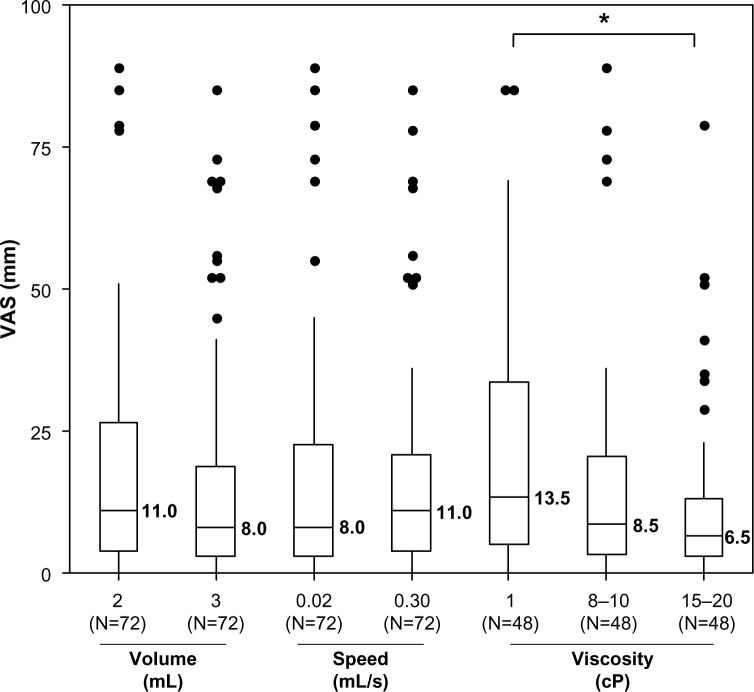
Results: Viscosity levels had significant impact on perceived injection pain (P=0.0003). Specifically, less pain was associated with high viscosity (VAS =12.6 mm) than medium (VAS =16.6 mm) or low (VAS =22.1 mm) viscosities, with a significant difference between high and low viscosities (P=0.0002). Target injection volume of 2 or 3 mL was demonstrated to have no significant impact on perceived injection pain (P=0.89). Slow (0.02 mL/s) or fast (0.30 mL/s) injection rates also showed no significant impact on perceived pain during SC injection (P=0.79). In 92% of injections, the injected fluid was located exclusively in SC tissue whereas the remaining injected fluids were found located in SC and/or intradermal layers.
Conclusion: The results of this study suggest that solutions of up to 3 mL and up to 15-20 cP injected into the abdomen within 10 seconds are well tolerated without pain. High viscosity injections were shown to be the most tolerated, whereas injection volume and flow rates did not impact perceived pain.
Keywords: injection speed; injection viscosity; injection volume; pain; subcutaneous.
Figures


References
-
- Dougan M, Dranoff G. Immune therapy for cancer. Annu Rev Immunol. 2009;27:83–117. - PubMed
-
- Rader RA. FDA Biopharmaceutical Product Approvals and Trends in 2012. Westborough, MA: BioProcess International; 2011.
-
- Kling J. Highly Concentrated Protein Formulations. Westborough, MA: BioProcess International; 2014.
-
- Leveque D. Subcutaneous administration of anticancer agents. Anticancer Res. 2014;34(4):1579–1586. - PubMed
LinkOut - more resources
Full Text Sources
Other Literature Sources
Miscellaneous
