


β1 Integrins as Therapeutic Targets to Disrupt Hallmarks of Cancer
- PMID: 26635609
- PMCID: PMC4656837
- DOI: 10.3389/fphar.2015.00279
β1 Integrins as Therapeutic Targets to Disrupt Hallmarks of Cancer
Abstract
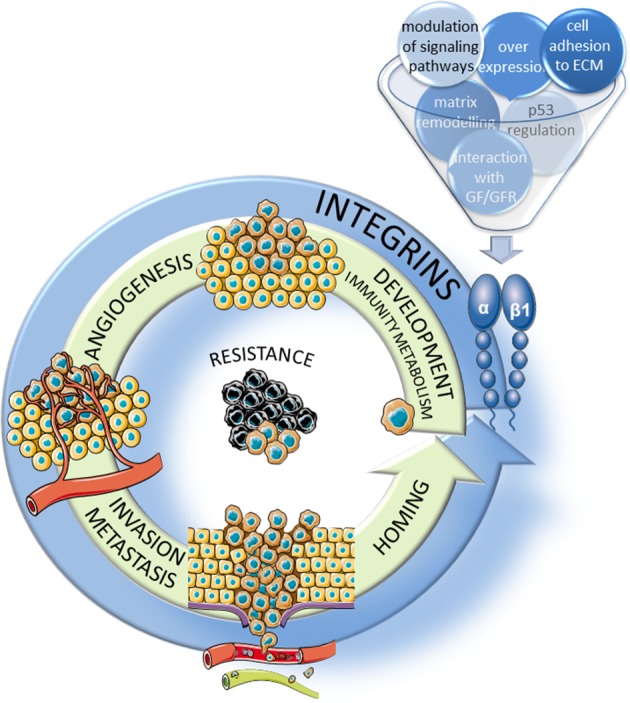
Integrins belong to a large family of αβ heterodimeric transmembrane proteins first recognized as adhesion molecules that bind to dedicated elements of the extracellular matrix and also to other surrounding cells. As important sensors of the cell microenvironment, they regulate numerous signaling pathways in response to structural variations of the extracellular matrix. Biochemical and biomechanical cues provided by this matrix and transmitted to cells via integrins are critically modified in tumoral settings. Integrins repertoire are subjected to expression level modifications, in tumor cells, and in surrounding cancer-associated cells, implicated in tumor initiation and progression as well. As critical players in numerous cancer hallmarks, defined by Hanahan and Weinberg (2011), integrins represent pertinent therapeutic targets. We will briefly summarize here our current knowledge about integrin implications in those different hallmarks focusing primarily on β1 integrins.
Keywords: angiogenesis; hallmarks of cancer; integrins; migrationinvasion; proliferation; resistance to cell death; therapeutic target.
Figures
References
-
- Ahmadizar F., Onland-Moret N. C., de Boer A., Liu G., Maitland-van der Zee A. H. (2015). Efficacy and safety assessment of the addition of bevacizumab to adjuvant therapy agents in cancer patients: a systematic review and meta-analysis of randomized controlled trials. PLoS ONE 10:e0136324. 10.1371/journal.pone.0136324 - DOI - PMC - PubMed
Publication types
LinkOut - more resources
Full Text Sources
Other Literature Sources
Research Materials
